播客文字稿
Nigel Vaz, Publicis Sapient: So you're so focused on the business of today as opposed to taking a step back and saying: will we really be working in this way tomorrow?
You have the opportunity to either make a real difference or some mistakes that have to be corrected very quickly.
Linda Lacina, Meet the Leader: Welcome to Meet the Leader, the podcast where top leaders share how they're tackling the world's biggest challenges. In today's episode, we look at the simple, proven questions and strategies that can bring you to the AI-driven change you actually need. Subscribe to Meet the Leader on your favorite platform. Don't miss a single episode. And don't forget to rate and review us. I'm Linda Lacina from the World Economic Forum, and this is Meet the Leader.
Nigel Vaz, Publicis Sapient: I think if you start from a what or a how, the discussions are a lot more entrenched in the context of what you do today. But I think, if you can start by why are we fundamentally trying to do this, and then move towards that understanding and alignment, I think it really speeds up the process.
Linda Lacina, Meet the Leader: AI is poised to change our world for the better -- but that's only if we deploy it in actually useful ways.
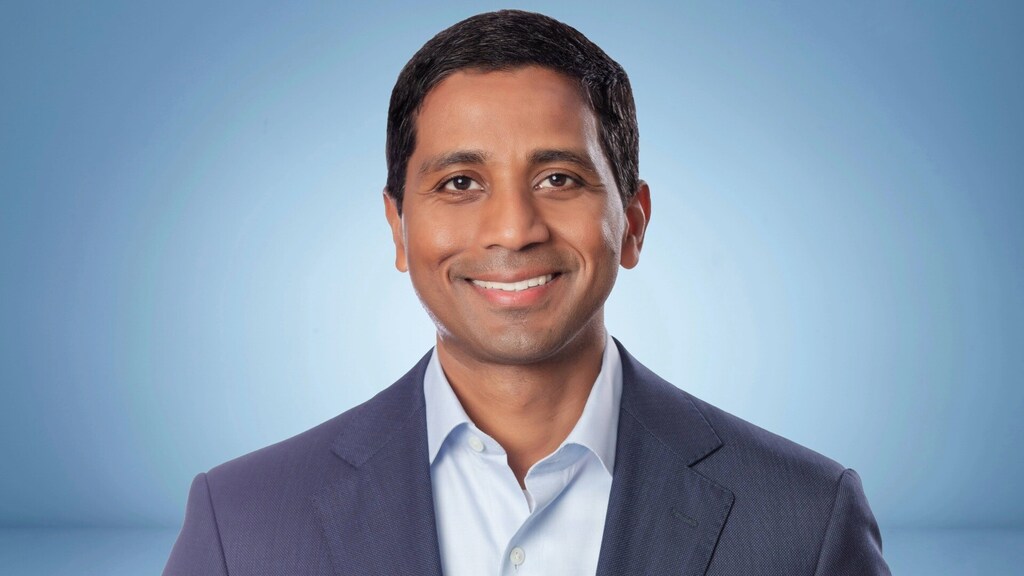
In this week's episode, I talked to Nigel Vaz. He is a man who actually wrote a book on digital transformation, and he is the CEO of Publicis Sapient. That's a company that helps organizations get modernized, helps walk them through things like AI adoption or customer experience – not just for today, but for the days ahead.
Key in that thinking is a ruthless focus that a lot of companies struggle with. A focus on change that brings real value. That value is even harder to land as more and more solutions start to fall in that cavernous gap between expectations and what technologies can often actually deliver.
He's going to drive home to us some simple strategies that can help you drill down with your teams what this value is and scale a mindset that doesn't just drive change for the sake of it. Or build tech just to build it.
And he'll take that value-first approach to our own careers to help us better understand how to do that learn and unlearn thing that we keep hearing about that's so critical in an AI era. Taking us through the expectations that we will need to let go of to leverage our experience and our expertise to tackle new problems – ones that we never thought we'd need to solve but ones that can keep us relevant and keep us adapting. We'll get into all of that, but first he’ll tell us more about the value gap.
Nigel Vaz, Publicis Sapient: I think the biggest thing I'm seeing for 2026 is the shift from this idea of learning about AI and experimentation, primarily through consumer AI technology, to the recognition that enterprises need enterprise-grade AI technology. Where there's recognition that deploying AI at scale to unlock what we call the value gap – the gap between people's expectations and the value that they're getting – closing that gap requires a significant investment in enterprise-grade AI technology that can really scale.
I'd say we're at the beginning of that journey because almost every enterprise now has moved away from automating individual tasks, to automating workflows where they are taking a single process that has some value attached to it and starting to deploy AI to reimagine those. I think we're just at the beginning of them, because when I look at the amount of reimagination that organizations need to do, we're still very much at the beginning at that journey.
Linda Lacina, Meet the Leader: Sure, and what's exciting you about some of the trends that you've been seeing?
Nigel Vaz, Publicis Sapient: What's really exciting me right now is to see how much real reimagination is possible. We work with an insurance company which is monitoring a whole bunch of ambient factors like air quality and then driving specific healthcare interventions, like people with COPD getting inhalers before they even know they need them, making a real difference for the customer and the patient in this case, and saving the insurance company a lot of money. And those kinds of things are starting to become examples of not just taking something that exists today and quote-unquote automating it using AI, but really thinking about where autonomous real deployment of AI can make a difference.
Linda Lacina, Meet the Leader: We need to upskill. In your opinion, if we were on a scale from one to 10 – 10 being the most prepared, one being the least – how prepared are we for the AI future?
Nigel Vaz, Publicis Sapient: I think we're probably at a three. Again, we're right at the beginning. I think there's going to be a lot of shifts. First and most importantly, I think the individual shift because it's so easy to externalize this to institutions like universities or companies.
But first and foremost one of the things I talk to a lot of our teams about is you have to get into the mindset. That this notion that we studied for the first third of our life, we worked for the next third of our life, and depending on how well we did the first two we'll be able to retire for the last third of our life – that industrial-revolution orientation is over. We have to live in a world today where we're constantly learning, unlearning and relearning. And that means the equivalent of a four-year college degree every four years because pretty much everything that you've learned as the loop gets faster and the change gets quicker is gonna start to become obsolete. And so it's not just people who are new into the workforce, it's also people who were existing in the workforce needing to unlearn what they've learned and relearn something new. I think that's probably the beginning of the journey that we need to make.
Linda Lacina, Meet the Leader: This is one of the most difficult things that companies or organizations deal with driving this sort of change. What makes it challenging? Can you give us a sense for what slows it down? Companies that you're working with, what are the challenges that they're seeing in driving that transformation?
On a scale of one to 10 of AI preparedness, I think we're probably at a three. We're right at the beginning.
”Nigel Vaz, Publicis Sapient: I joke often with our teams that so much of the conversation is about technology and with our clients. But actually if you took the people out of the equation, the technology is pretty seamless. The hard part, the change, as you say, is about people. It's about reorienting objectives and OKRs and really thinking about: what are we measuring in the context of people? I'll give you an example. If you're a software developer, should we be measuring you on your ability to write code, which has historically been the expectation? Or now should we be measuring you on the ability to generate code using an AI platform like the kind we built for ourselves? And then actually editing code and starting to think about all of the things that go around that code in terms of making it deployable, right? These kinds of expectations, incentives.
The change process around these, the learning and development orientation, are all of the things that slow people down because a lot of the conversations in organizations are, well, the incentives are misaligned with the expectations, or the expectations weren't set as clearly. And a bunch of these things are the kinds of things that make people hesitate because people are worried about, you know, is this actually going to take my job? Is this actually going to be something that is going to affect the people around me? And I think the recognition that most organizations need to have is we need to engage in those conversations proactively, showing people a path from where they are today to the future that we want them to be in.
The technology is pretty seamless. The hard part is about people. It's about reorienting objectives and OKRs and really thinking about: what are we measuring in the context of people?
”Linda Lacina, Meet the Leader: What are the blind spots you think leaders might have in driving this transformation?
Nigel Vaz, Publicis Sapient: I think a couple of the big ones that we see often is trying to make the irrelevant more efficient. So you're so focused on the business of today that you actually are all about: how can AI transform today? As opposed to taking a step back and saying: will we really be working in this way tomorrow? Will our customers really be working in this way tomorrow? One of the exercises we often do with clients that we work with is tell them to take some of the processes that they use today and go have a conversation with their kids. And it's amazing what CEOs come back with. A banking CEO said to me a couple of weeks ago: “My son said he would never use this.” And I was, like, well, if this is a 15- or 16-year-old teenager telling you that they would never use this, it probably ought to signal a fact that this needs to be reimagined. As opposed to: we will simply deploy technology or AI to make this better.
Linda Lacina, Meet the Leader: It's hard in any time for people to imagine something they've never experienced and can't see. And now we need to do it at a rapid pace and redo, redo, redo, redo. What is something that a leader can do to encourage this sort of imagination and empowering people to maybe rip up yesterday's draft? What can they be doing?
Nigel Vaz, Publicis Sapient: I think one of the things you have to do is contextualize this in the context of things people have experienced before. Something that's worked really well for me is framing this in a context of where we were with the internet in the late '90s and the early 2000s. The most valuable company in the world back then was Cisco, and the reason it was is because the Internet was at the stage where all of the conversations were about browsers and packets getting from one place to the other, and that's where the innovation was happening. But all of the value of the internet came after the bubble burst through so many companies that weren't created in the early days of the internet, and that's because all of that transformation was in the application layer.
If I think today about the AI revolution, today a lot of the conversation is about compute, a lot of the conversation is about models. But most of that transformation is going to come from enterprises and people building applications, and in many cases companies that haven't yet been created, where so much of the value unlock will need to come. And I think framing this for people in the context of something that they can relate to helps them orient about where we are. Because otherwise, every conversation today is about what the new model is and how much compute you need. And it's like, great, we need those things. But those things are the foundation. What are we going to do with them and how do we get into that conversation?
One blind spot we often see is trying to make the irrelevant more efficient through AI. As opposed to stepping back and saying: will we be working like this tomorrow?
”Linda Lacina, Meet the Leader: Is there a practical thing that leaders can maybe put into routines or into the way people work so that there's time for reflection? You mentioned that so many people were like so busy with the work they have to do today that they're not thinking about the future, which means they're not taking that time to reflect. What do you recommend? Is it that they schedule in 15 minutes every couple of weeks for a brainstorm or a chat? What's a way that we can operationalize imagination?
Nigel Vaz, Publicis Sapient: A way to operationalize imagination, for us, right, we use this acronym called SPEED. It stands for Strategy, Product, Experience, Engineering, Data and AI. And for us that strategy moment is the time to reflect, like I was saying earlier, on whether or not you are simply making the irrelevant more efficient, or whether or not you're really reimagining things. So for us, a weekly thing or a monthly thing are great to do personal reflections. But I think we have to build this, as you said, in the context of operationalizing this idea of reimagination strategically at every moment. And that S in the SPEED is very deliberately saying: if you want to move fast, you have to start with that moment of reflection on what is the value that we're trying to unlock here? Is there a different way of doing this? Is there better way to do this? Should we even be doing this or not? Right? And I think asking those questions upfront really makes the downstream process so much better before you start designing experiences and deploying code and trying to test things out with customers or employees.
Linda Lacina, Meet the Leader: It was always hard for people to be asking these questions, but now at the pace of change, what's the risk?
Nigel Vaz, Publicis Sapient: I think one of the biggest risks is you end up spending a lot of money on technology and you don't see anywhere near the value that you want to get back. And this is this value gap idea between the expectation of what AI can do and the reimagination for your business can do, and what it's actually going to do.
Linda Lacina, Meet the Leader: Is there also an element that they're going to fall behind?
Nigel Vaz, Publicis Sapient: Absolutely. I think there's a real competitive risk right now. Just like we saw in the era of the Internet, there are going to be winners and losers. And as customers start to adopt behaviours in the context of engaging with tools that they become familiar with, those inherently have a stickier behaviour. And we saw this with how much further along, despite there being newer models and better platforms, the stickiness of ChatGPT is an example. Because so many people learned to engage with generative AI in the context of that moment.
Linda Lacina, Meet the Leader: Is there a way that Publicis Sapient integrate SPEED, or that you have done this with your own teams? What's maybe a project or a way it has manifested that has had a before and an after? So we can see how it walks and talks.
Nigel Vaz, Publicis Sapient: One of the Sapient things was about SPEED for ourselves, right? One of the big shifts we needed to make is recognizing that our own model of simply being a people-led business wasn't actually going to continue to help our clients evolve. So a few years ago, we had to make a real pivot to say we're moving from a people business to a people and product business. And in the process of building these products, we had to be really thoughtful about: what problems are we trying to solve for our client? So we built this platform called Sapient Slingshot, saying this is a fundamentally different way for us to deliver software to our clients, modernize legacy. We then built another platform called Bodhi on an agentic platform, which was all about: how do we actually codify a lot of the industry expertise and deep solution expertise we have in the context of agents that our clients can very quickly deploy? And then lastly... The IT-managed services space, we built a platform called Sustain, which is all about: how do we actually fix and heal systems that are monitored by AI with AI?
And those shifts for us were really big. I mean, they shifted how we did things culturally. They shifted our business model. They shifted the fact that we were primarily a services business to an enterprise AI technology business. And that required us, at every stage of the SPEED curve, to be asking the questions about, right from the very beginning, what value are we trying to unlock for our clients? What value are you trying to unlock for ourselves? How should we think about the changes required in our own organization in order to embed this in a way that means it takes hold in the organization? Because so many organizations, and ours is no exception to that, have this idea of attaching itself to the way that they've become successful, and any change is hard.
Linda Lacina, Meet the Leader: These different tools that you mentioned, can you tell me the role at the very, very beginning that reflection played? How did you guys sort of get to that moment, that turning point where you're like: if we don't do this, we're never going to catch up. Can you take me to to that realization?
Nigel Vaz, Publicis Sapient: Yeah, absolutely. The realization at that moment that we needed to move from people to people and product, for me, happened in the conversation with one of our clients where they were telling us about the fact that it was going to take them 10 years to modernize about 2.5 million lines of COBOL code. And I was just sort of reflecting in that moment, as you said: 10 years is an eternity, and they're talking about modernizing code that was written in the 70s and 80s by people that didn't exist. And I came back to our teams and said, there's got to be a better way to do this, and we have to lead in this context. And that was the beginning of the journey for us building legacy modernization into the Slingshot platform as an offer that could really accelerate. And if you're interested, that 10 years got done in under three. You know, which is a significant value creation for that client and us. And it was the beginning of us realizing that we really had to make a big shift.
Linda Lacina, Meet the Leader: What was needed within the team to execute that transformation? Did you need to get people on board to be like, hey, why should we be creating this tool? Does that take away from our own insights? What was the shift that needed to happen to make sure that everyone was on board, aligned, but also could put it in place?
Nigel Vaz, Publicis Sapient: I think there were a few shifts that were required. The first and most important one was the mindset shift for why we need to make this shift. And I think people don't make a shift until you can get at the why. Why do we need this? Why do need to do this for our clients? Why do you need to this for ourselves? Once you get over the why, then you have to actually debate the what. What are we actually going to do? Oh, we're not just going to build a tool, we're going to build a product. We're gonna become a product company alongside people. And that shift was a lot of discussion, you know, and a business model question. And then finally, how do you do it? Do we have all of the right people in the company? Do we need to bring people on board? And we had a mix of all of those. But I think that sequence of first asking the why do you need to do something? Then being very clear about what you're gonna do and then finally getting to the how you are going to do what you are going do requires discussion and reflection at every stage because I think you have the opportunity to either make a real difference or some mistakes that have to be corrected very quickly.
Linda Lacina, Meet the Leader: Any kind of transformation is going to sort of face headwinds, you're going to hit walls, and that is the price you pay for innovation. Can you take me to a moment where you have driven a digital transformation, where you hit a wall, and there's one moment where you just aren't sure how you're gonna get over that wall. Take me to one of those moments – what did you learn?
The most important shift needed for transformation is the mindset one. And people don't make that shift until you can get at the why: why do we need this?
”Nigel Vaz, Publicis Sapient: Yeah, I mean, there were so many of those over the course of my career, one that sticks out to me, you know, this is from a few years ago now, where we were actually testing some new monitoring software, and the monitoring software was actually looking at the performance of our digital products. And for the longest time, it was like late in the evening, we were starting to see the progress of this application become slower and slower and slower. Our engineers were debugging the code, they were looking at all of the performance metrics, and they just couldn't figure out why. And we were just like, okay, we don't know what to do. And then somebody on our team, one of the engineers, said: “Hey, this monitoring software is new, we haven't actually spent as much time with it, let's just see what happens if we stop running the monitoring software and run the application.” And we did. And lo and behold, it was the monitoring software that was slowing down the performance measurement of the very thing that it was supposed to monitor.
And you just think about something like that and you think in the context of transformations, there are hundreds of such moments, not one single one. And overcoming every one of those – in some cases, through trial and error, through test and learn, through iterations and closed loops – ultimately starts to get you significantly further ahead.
Linda Lacina, Meet the Leader: Leaders are going to need to adapt quickly. They're also going to be doing these cycles of change so they can sort of help guide and shepherd and steer. It's difficult to do this. For them to be relevant, for their skills to be relevant in the next five years, what should leaders be doing? What do you recommend?
Nigel Vaz, Publicis Sapient: I think one of the biggest things to do is to start to actually get exposure yourself to practical work that is happening in your organization around these technologies. No amount of conversations and understanding this theoretically is really going to help you get a feel. So one of the things I often talk to leaders about is: what are you using AI tools for in a personal capacity? What are you trying to do better?
And there are simple things, like I have a CEO GPT. Which is basically using all of the applications in a sandbox of datasets, of documents, of videos, of interviews, so that I can just ask myself simple questions like when we actually met this client in this context or when we had this, what were we talking about? And it's amazing to be able to just have access to that information in context. My teams use that now, sometimes to say, what would Nigel do or say, right? And it's just a fun but simple way for us to practically test information in the context of things.
I've seen clients do simple stuff, like a client really interested in music, using a bunch of AI apps to create music. And was really starting to get engaged in that in a way that helped them understand some of the bigger challenges from an enterprise perspective that they needed to get to – because they understood the process of creating music so well, and as they saw the transformation of that process, recognizing how much was going to change. And some of these things, I think, allow you as an individual to be able to think about everything in your life that could be better.
I have a CEO GPT, a sandbox of datasets, documents, videos, interviews – so I have access to information in context and can ask myself questions about it. My teams use it now sometimes to say: what would Nigel do?
”Linda Lacina, Meet the Leader: The CEO GPT. Tell me more about that. How did that come about?
Nigel Vaz, Publicis Sapient: It came about because so many of the conversations we were having were about saying: hey, what was the last discussion we had? And you'd look at software, you'd look at notes, somebody would have to dig those up, and then actually start to prepare. Like Davos. It's a perfect example. You come here, you're in meetings from morning to evening, you are having so many conversations with so many people, the amount of prep that goes into recognizing what was the last conversation, what did we agree, how far along are we? All of that now can actually, for the most part, as a baseline be produced by something that can answer those questions anecdotally. I have it right on my phone. If I'm walking into a conversation and I don't remember something, it's a very easy test to say, give me an answer on this. And knowing that that data is safe, it's in a sandbox, it's an enterprise-grade technology where it's not simply passing this on to a model that somebody else could request. All of those things then start to make it even more useful.
Linda Lacina, Meet the Leader: What's a way that you've used it?
Nigel Vaz, Publicis Sapient: I've used it practically like this. You know, I use this all the time in the context of meetings, in the context of preparation. I wrote a book a few years ago on digital transformation, and our team downloaded the entire book into this and then built a virtual avatar to answer questions about the book on the basis of what was in the book. And we've deployed that in the context of so many clients having a conversation with this thing, rather than actually needing to read the whole book. And they found that super-useful. So these kinds of conversational interfaces into large dense sources of information, I've seen very practically be benefiting a lot of our teams.
Linda Lacina, Meet the Leader: And the idea that they could put in a question … what was a type of question that they would ask?
Nigel Vaz, Publicis Sapient: Very simply, like in some cases a very practical thing: what did he do in this context? And in other cases I asked that question: what did I do back then? Because so often you can't actually remember the exact nature of the problem or the situation or the context. And so it's less about trying to establish a benchmark of decision-making, and it's more about making sure that you have access to the facts and information on your fingertips about so many conversations that are happening dynamically.
Linda Lacina, Meet the Leader: And is it also about context? Because if you're putting in something about a company, certain companies might approach certain industries in a certain … is it also something that you can ask the question and make sure that you are understanding how a particular company or leader might be thinking about that? Is that also the case?
Nigel Vaz, Publicis Sapient: Absolutely. The way you think about this is any leader or any situation starts and ends from the perspective of context. So when I talked about our big products like Slingshot and Bodhi and Sustained, one of the things we do for a lot of our clients is build what we call an enterprise context graph across all of these. So that every single conversation, decision, piece of code is being made within the context of that conversation. Because if you don't have the context reflected in those decisions – from something really simple like CEO GPT, which my team and I use for ourselves, to things that we use on behalf of our clients – those decisions and the quality of those decisions aren't gonna be reflective of the values, of the perspectives and frankly, in some cases, of the things that are the imperatives for that company.
Linda Lacina, Meet the Leader: Is there a question that you would recommend somebody to ask to get to a solution like this? What would be something that they were going to step back and reflect so that they could back into something like this, what would you suggest?
Nigel Vaz, Publicis Sapient: I call it the five whys. Every time you're doing something, I would start with why. Do you want to do this? Why? And then eventually after the whys, peel back your own reflections, you start to eventually get to a deeper understanding of what is the root cause problem and for whom that problem is, and what is that value around that problem? Because so often somebody will say, hey, we want to deploy this AI tool or technology or platform or we want to invest in building this feature and function and then you go: why? And then they say, well, because currently it's affecting this audience in this way. Why? Well, because these are the other things in the organization that we have not been able to change and this is the value that gets. And you keep peeling back the layers until you get something that is at the very kernel of why you're trying to do something.
Linda Lacina, Meet the Leader: What led you to the role that you're in and what prepared you for it?
Nigel Vaz, Publicis Sapient: I don't think anything really prepares you for this. I think the thing that led me to the role I'm in is being extraordinarily focused on how I could create value for our clients. And frankly in many instances making sure that I was willing to take the risks in order to solve those challenges and problems because I think you have to kind of put yourself out there and then learn as you go.
Linda Lacina, Meet the Leader: What are your top two priorities that you're focused on?
Nigel Vaz, Publicis Sapient: I think for me, the top two priorities for us as an organization is really scaling our enterprise technology in the context of how we work for clients to deliver value to them. And then the second is helping our organization make this journey to being a people and product company that is leading in the context of AI.
Linda Lacina, Meet the Leader: What's something that you guys do now that you just would never have done even five years ago?
Nigel Vaz, Publicis Sapient: Thinking about what we would have done now that we hadn't done or wouldn't have done five years ago, I would have said is needing to shift our business model to being an enterprise AI technology company, from being a leader in the services space. I often think about ourselves relative to our competitors as kind of Navy SEALs. We were the people that you'd send in small teams to solve really complex problems. And now you're sending these small teams in alongside a product to deploy that, which together is solving a problem. Which is a really big shift.
Linda Lacina, Meet the Leader: Is there something that you do now that you would not have done at the start of your career?
Nigel Vaz, Publicis Sapient: I think probably the biggest thing I do now that is recognizing that people aren't going to value me on the basis of what I know, versus my ability to learn. I think I've come to learn that myself. That learning and the ability to unlearn and relearn is really a superpower. As opposed to I think most people when you begin your career, you're so focused on what you know and defending what you know, as opposed to be willing to let go of what you know sooner in order to learn something better.
Linda Lacina, Meet the Leader: What is the block and tackle of learning and relearning and relearning? Everybody, I bet, would think that they are a lifelong learner. No one wouldn't say that, just like everyone's a great listener and everyone is kind. But what would maybe a habit or routine look like for someone who is actively learning, relearning? What shape does that take?
Learning, and the ability to unlearn and relearn, is a superpower. As opposed to defending what you know
”Nigel Vaz, Publicis Sapient: I think when you really are thinking about putting into practice learning, unlearning and relearning, the first thing that you have to start with is what are the things I'm going to unlearn? What are the things that I'm doing today that I have to unlearn because they've made me successful thus far, and I've got to unlearn that. A simple example is if you're somebody who grew up in the world of software and technology, however phenomenal you were at writing code, you're not going to start by sitting down to write code. You're gonna start by thinking about what code you want to produce and how would you articulate the value of it. That shift between the two starting points is a big unlearn for somebody who's learning to work in this new way. And that's just an example, but there are plenty of examples like that.
Linda Lacina, Meet the Leader: What is your recommendation for people to let go? Because so much of the things that we've learned, we've maybe built our careers, our successes on that expertise, and we need to maybe be less precious about it. What is your recommendation for folks to continue to move forward rather than look behind?
Nigel Vaz, Publicis Sapient: I think that the way in which organizations value what people know and what they've done is one of the reasons why people are so married to the existing status quo. And I think for me one of things to let go and to enable this new future is to ask yourself to visualize what you're trying to create and why. For me, that's always proved a very helpful tool to have a really clear sense of: what are we trying to do this for? What is the why behind why we're trying do this? And then letting go of the past in the context of enabling that why becomes a lot easier. I think if you start from a what or how, the discussions are a lot more entrenched in the context of what you do today. Because lots of people have different points of view about the what and the how. But I think that if you can start by why are we fundamentally trying to do this and then move towards that understanding and alignment, I think it really speeds up the process.
Linda Lacina, Meet the Leader: Young people who are listening to all these conversations and trying to be prepared for this brave new world … do you think that it is better for them to be a specialist or a generalist and why?
Nigel Vaz, Publicis Sapient: I think today the choice between being a specialist and a generalist is framed as mutually exclusive. I think there are going to be roles that require you to be specialist and I think that there are roles that are going require you to be generalist. I think what you've got to ask yourself is: what am I passionate about trying to solve, and what are my interests? And I think you've gotta start to align what you're good at and your interests in order to start to figure out the choice of being a specialist or generalist, because I don't think that's how you start evaluating those choices. I think you start evaluating them from the perspective of: what am I good at and what impact am I trying to create and does that require me to be one or the other?
Asking why we're trying to do something new makes letting go of the past much easier. If you start from a what or a how, the discussions are a lot more entrenched.
”I feel like this notion that AI is going to allow more people to be generalists is true, but there's always going to be roles for specialists using AI in very specific fields. Or not using AI specifically – maybe researching aspects of AI. And I think those roles are gonna continue to be specialist roles. So I think it's a difference of what it is that you're trying to do, as opposed to what kind of person do you want it to become.
Linda Lacina, Meet the Leader: Young people also listening to this, maybe biting their nails on what they should be studying: what do you think? I've been hearing people talk about maybe philosophy is the thing to be, or something in the deep liberal arts. What's the major you might recommend someone study right now?
Nigel Vaz, Publicis Sapient: Well, it's really interesting. I have a son who's a sophomore in high school grappling with exactly this question. And again, I go back to the idea of the reality is the breadth of knowledge allows you to operate today in a way that didn't allow you to historically to evolve careers. So you can be somebody who's studying molecular biology, and then you might be able to cross that with AI and fulfill your passion for technology and biology, right? Or you might be somebody, as you mentioned, who's really good at philosophy and starting to think about those big strategic questions about the future of work, about the way people and machines interact, about the future of hybrids where enterprises have agent workforces and people workforces together.
All of these things today are so fascinating because they're not mutually exclusive. And I think one of the biggest things I would say is rather than simply just thinking about a major and making a decision about the major that you wanna take, think about the major and the minors. And in some cases, those minors crossed with your major, or those minors evolving to become something you do a masters, a PhD, or a job in are actually what creates incredible value.
Linda Lacina, Meet the Leader: Is there a piece of advice you've always been grateful for?
Nigel Vaz, Publicis Sapient: Yeah, I think the one piece of advice that I got very early on is be grateful. And I learned that as a kid from my parents who always reflected on their lives relative to the life I had and always taught me that no matter what's in front of you, being grateful will always make you appreciate your surroundings and the people around you more and give you more joy, no matter what the situation is and I think that served me really well.
Linda Lacina, Meet the Leader: Is there maybe a tough moment where that voice has come into your head and you've used that?
Nigel Vaz, Publicis Sapient: A lot of times. Things like, oh my God, we had a bad quarter, we lost a big deal, or we had a big issue. Any one of those moments allows me to step back and still be grateful for the privilege of being able to lead a company of incredibly smart people, or for the privilege of actually having the opportunity to serve as many clients as we do. Even if we had an off quarter, recognizing that all of the other people that we serve are incredibly grateful. In the context of challenges and issues where you have a problem, allowing yourself to be grateful to learn from that experience. I think it really does have a really meaningful role for me personally.
Linda Lacina, Meet the Leader: Leaders are only as good as the questions that they're asking themselves. We've gone through a lot of things that people should be doing to dig into tough subjects. But in your mind what is the question that you are asking yourself in the year ahead?
Nigel Vaz, Publicis Sapient: Why. Almost about every single thing that we're thinking about, strategically, tactically: why. And I think that constantly forces reflection, forces clarity and ultimately forces better decision-making.
Linda Lacina, Meet the Leader: That was Nigel Vaz. Thanks so much to him. And thanks so much to you for listening.
If you know anyone driving change that could use Nigel's very clear-eyed approach, send them this podcast.
And if you're looking for more skills leaders will need to hone, check out my episode on why managers sometimes struggle to understand their team's capabilities and what they'll need to change. That episode with Workera CEO Kian Katanferoush will be linked in the show notes.
Listen to more podcasts, including my colleagues’ podcast Radio Davos, go to wef.ch/podcasts. This episode of Meet the Leader was produced and presented by me, with Seamus Hart as editor, Juan Toran as studio engineer in Davos and Gareth Nolan driving studio production. That's it for now. I'm Linda Lacina from the World Economic Forum, have a great day.
Are you building game-changing AI solutions? Or just automating low-stakes work that makes the “irrelevant efficient"?
Nigel Vaz, Publicis Sapient’s CEO and a digital transformation expert, talked to Meet The Leader to explain why many AI strategies fall short and what's needed to lead teams through technological change. In this episode, Vaz shares the questions that can refine your strategic discussions on AI and help close the gap between AI expectations and results. He also shares why the hardest part of AI transformation isn't the tech but getting the people part right -- and what helps teams transition.
Key Takeaways:
Vaz shares key examples of how to put this thinking to work, including including a legacy modernization project that cut a 10-year timeline to under three and Publicis Sapient’s own transition from a people-led services model to a people-and-product enterprise AI company. Learn more about this - including the innovative CEO GPT tool Publicis Sapient built that helps teams scale internal knowledge and context.
每周为您呈现推动全球议程的紧要问题(英文)