Top 10 Emerging Technologies of 2026


1. Everything-to-grid energy
Turning every building, vehicle and factory into a power source.


Hot summer evenings, when air conditioners are running at full capacity and the sun has just dropped below the horizon, place the greatest stress on grids. A sudden spike in demand can push the grid out of balance, even as potential sources of flexibility are available but remain unused: charged electric vehicles, energy stored in commercial buildings and rooftop solar installations that are no longer generating after sunset. The issue is not simply the availability of energy, but whether it can be mobilized when the grid needs it most.
Everything-to-grid energy closes that gap. Every building, vehicle and device becomes a place that can store power, return it and help balance supply and demand in real-time, turning the grid into a network of intelligent nodes.
The most consequential change is happening inside the battery itself, where a generation of new chemistries is finally addressing the constraints that have held grid-scale storage back. For two decades, lithium-ion batteries have depended on cobalt and nickel, metals concentrated in a handful of countries and subject to price volatility and ethical controversy.1 Newer chemistries break that dependence by drawing on readily available materials, such as lithium and sodium. Some of them can charge faster, some of them can last longer and most of them cost less.2
In 2025, lithium-ion batteries surpassed traditional nickel-based batteries in global electric vehicle deployments for the first time.3
The hardware that moves power between these batteries and the grid has evolved in step, with new semiconductors preserving almost all of the energy during round trips and new control systems letting distributed storage actively stabilize the grid rather than passively feed it.4 Coordination software stitches millions of these assets into a single orchestrated resource, and compensation frameworks are beginning to pay for storage based on the electricity it delivers rather than only for the energy it delivers.5 What these advances produce together is a layer of distributed storage and intelligence woven throughout the system – coordinated rather than commanded.
Australia offers one of the clearest glimpses of what this looks like at scale. In the second half of 2025, Australian households added more than 180,000 home batteries,6 and state and national programmes7 now pay them to connect those batteries to software networks that can draw on the stored energy collectively, stabilizing the grid when demand spikes. Buildings, vehicles and devices are no longer just electricity consumers; they are now active resources that can help reimagine the grid.
Figure 1: Everything-to-grid transformation map
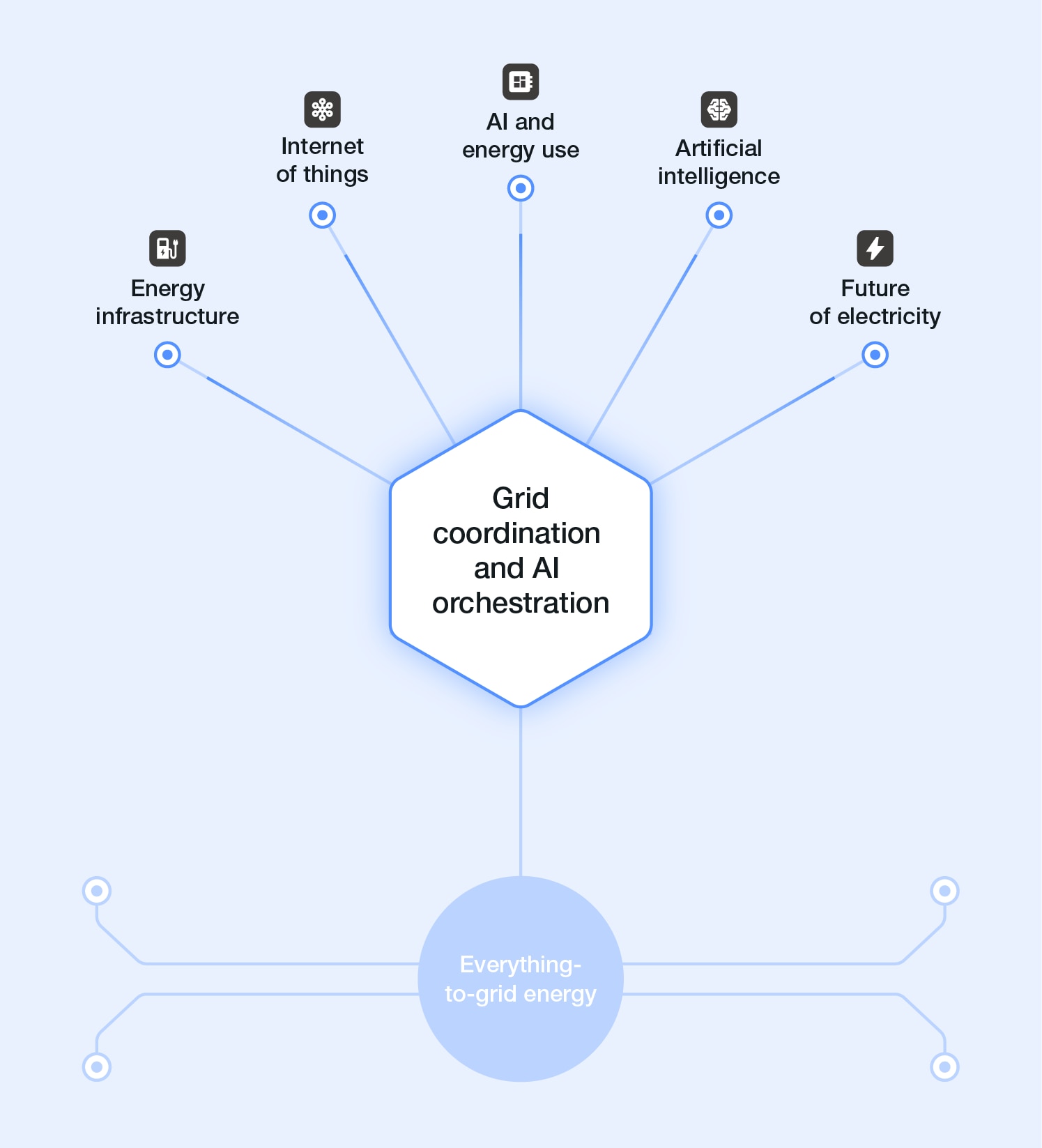

Rather than functioning only as electricity consumers, electric assets can adjust their consumption or even send electricity back to the grid in response to system needs. Collectively, these represent a vast source of distributed flexibility that could help absorb surplus renewable energy, reduce peak demand and support grid stability.
—ZhaoYang Dong (Joe), JC STEM Lab of Future Energy Systems, City University of Hong Kong; Frontiers in Energy Research; Yuechuan Tao, City University of Hong Kong
Imagining 2031
On a residential block of mixed apartment buildings, the energy that used to flow only one way is now moving in both directions. The buildings’ batteries discharge into the local grid through the early evening, drawing on the cool air they pulled in overnight. The cars in the garages charge or discharge according to what each one reads from the grid: the local frequency, the price, the state of the battery and the driver’s plans for the morning. The rooftop solar panel arrays are participating in a market that pays for flexibility delivered, not energy produced. The transformer that used to hum with one-way flow now runs cooler, and the substation it feeds has not called for emergency capacity since the last storm season.
Strategic outlook: Everything-to-grid energy
If buildings, vehicles and factories become active parts of the power system, energy planning will no longer sit only with utilities or energy ministries. For businesses and governments, decisions about fleets, buildings, data centres and procurement will increasingly shape energy costs, resilience and exposure to risk. As electrification accelerates, competitive advantage may depend not only on access to power, but on the ability to manage when and where it is generated, stored and used.
This changes how organizations think about their assets. A delivery fleet, commercial building or factory could provide grid flexibility by storing power, reducing demand or releasing electricity back into the system when needed.8,9,10 Electrification would therefore become less of a standalone infrastructure investment and more of a system-wide planning challenge.
This would require grids to become more flexible and decentralized,11 while regulation would need to move beyond old industry categories. Energy policy will be important, but so will transport procurement, building codes, data infrastructure, software standards and workforce planning. Together, these choices will determine whether energy becomes a more flexible, connected system or remains constrained by sector-by-sector decisions.12
For utilities and other institutions built around the traditional grid, this would be a different kind of transition from the one many are preparing for. Some utilities may need to move from selling power to managing networks of distributed assets. In that model, competitive advantage would depend on coordinating flexibility at scale, rather than owning generation.13 Whether the greatest value flows to asset owners, aggregators, utilities or system operators remains uncertain.
Battery degradation,14 uncertain revenue models and warranty risks could slow adoption,15 while cybersecurity will become increasingly system-critical as power networks, communications infrastructure and cloud platforms become more closely linked.16
As energy becomes more connected across industries, the central question is whether it develops as a shared system of resilience or as a fragmented race to capture control and value.
Related DFF megatrends: redefining finance and monetary systems; evolving ecosystems
Building towards scale: everything-to-grid energy
- Standards and certification: Establish interoperability standards to enable consistent protocols and accelerate cross-market integration.
- Policy and regulation: Redesign tariff and compensation models to reward consumer flexibility and distributed energy participation.
- Developers and manufacturers: Build real-time coordination platforms with embedded cybersecurity to enable grid-wide orchestration.
- Infrastructure and procurement: Integrate distributed resources into grid operations to operationalize flexibility and align system incentives.
2. Direct lithium extraction
More sustainable resources, more secure supply chains.
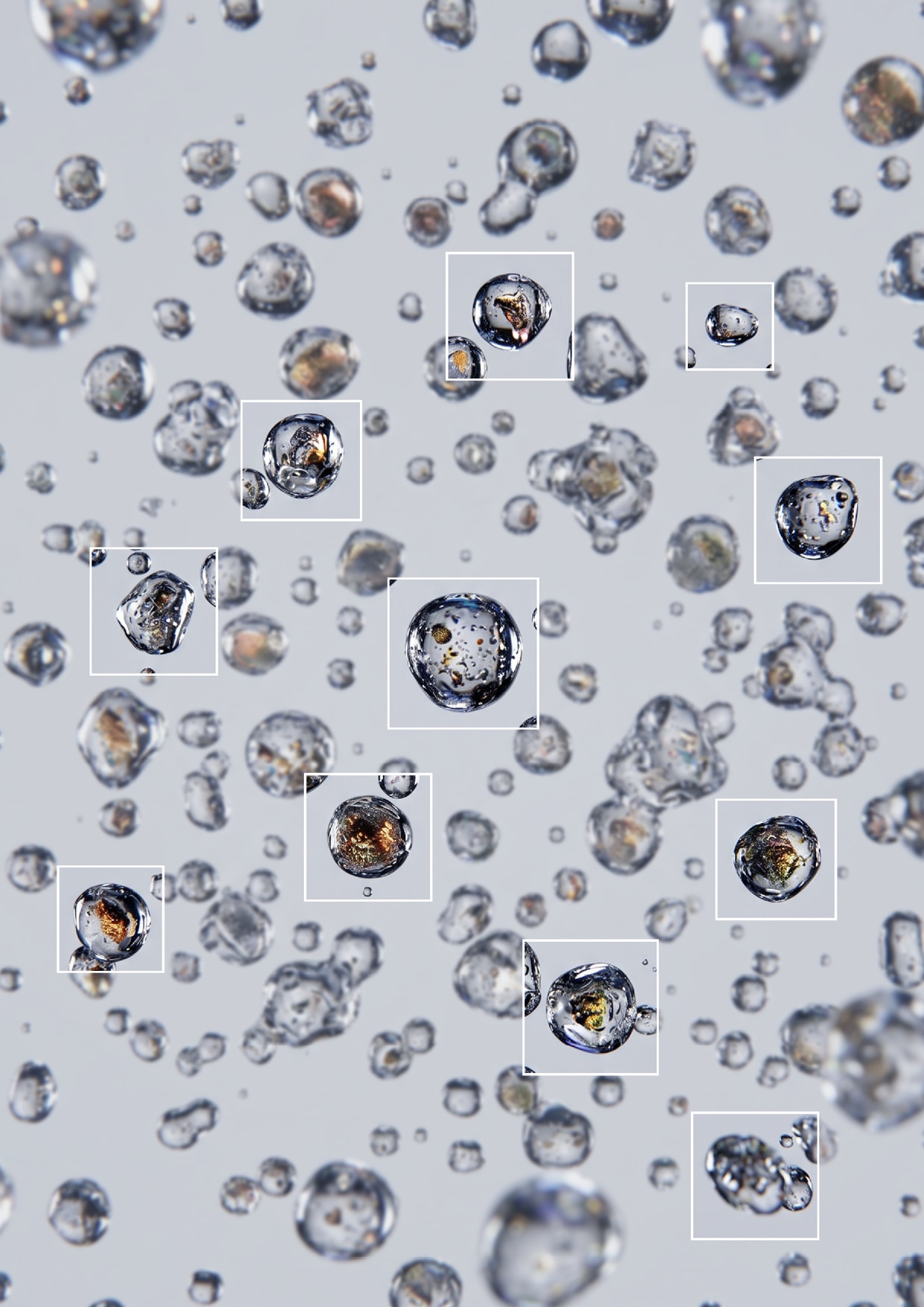

In Chile’s Atacama Desert, lithium-rich brine is pumped into large evaporation ponds that spread across vast areas of the salt flats. Over many months, the sun evaporates the water, concentrating the lithium until it can be refined. The process can take up to two years, requires large amounts of water and works only in specific geological conditions. As electric vehicle production scales17 and decarbonization targets become more urgent, this slow, resource-intensive process is struggling to keep pace with global demand.
Direct lithium extraction narrows that gap. Rather than spreading brine across open ground and waiting for evaporation, engineered systems process the same liquid directly, pulling lithium out in hours and returning the depleted water underground. The underlying approaches of direct extraction differ in their chemistry. Sorbent-based systems use materials, often aluminium compounds, that selectively attract lithium ions, allowing the metal to be captured while the rest of the brine is reinjected. Membrane filtration passes brine through a molecular sieve. Solvent extraction involves mixing an organic liquid with the brine, binding the lithium and then performing a final purification step. The most capable operations sequence these methods, matching the technique to the chemistry of each source.
This flexibility matters for reasons beyond speed. Conventional evaporation ponds only work where brine is concentrated and exposed to reliable sunlight. Direct lithium extraction works with geothermal fluids, oilfield wastewater and, eventually, solutions obtained from battery recycling processes, opening sources that the evaporation model cannot reach. It also recovers more lithium from the brine. Where evaporation captures roughly half, direct extraction can reach 80–95%, and the output can be closer to battery-grade.18
In Argentina’s Puna region, Eramet’s Centenario-Ratones plant is the first industrial lithium operation to run without evaporation ponds.19 With its first production delivery in 2024, the plant is designed to have an annual capacity of 24,000 tonnes. It sits at 4,000 metres elevation in one of the world’s most remote deserts,20 with the intention of proving the technology works at altitude and scale. Centenario-Ratones has now achieved that. At California’s Salton Sea, EnergySource Minerals’ geothermal plant is showing what the next chapter could look like.21 The plant generates electricity from superheated brine and extracts lithium from it before it returns underground. The project received a $1.4 billion federal loan in February 2026 to reach full commercial scale.22
Evaporation ponds are not going anywhere soon, and they will continue to supply a meaningful share of global lithium for years. What is changing is the geography of supply. Direct lithium extraction enables the production of near-battery-grade lithium from locations and sources that conventional mining cannot reach.
Figure 2: Direct lithium extraction transformation map
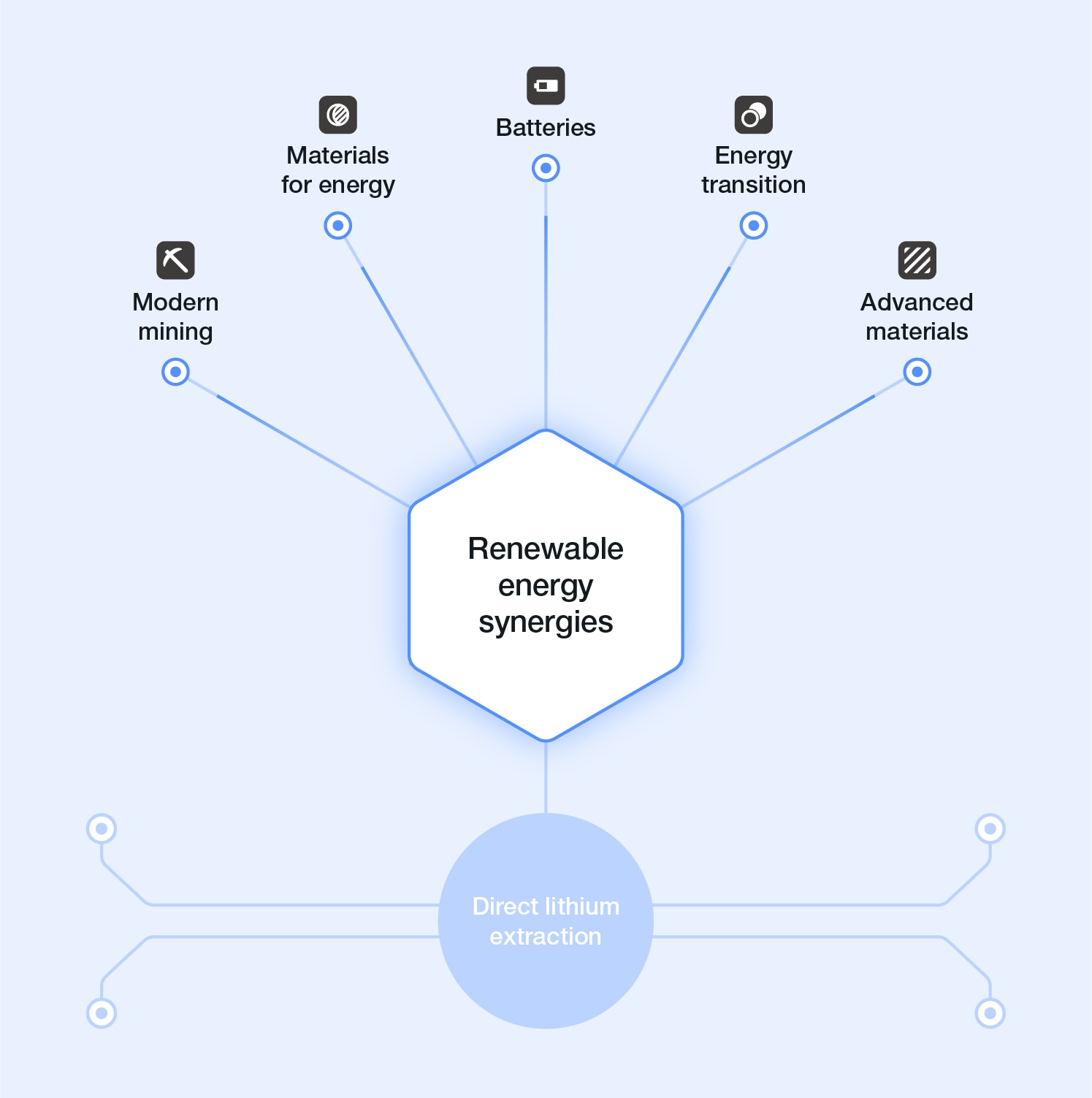

Given both resource and technological constraints, integrating renewable energy into direct lithium extraction systems can further improve sustainability and efficiency. One advantage of solar-driven direct lithium extraction is the potential for dual-use operation, enabling lithium recovery alongside freshwater production via solar desalination.
—Veera Gnaneswar Gude, Director, Purdue University Northwest Water Institute (PWI); Frontiers in Environmental Chemistry
Imagining 2031
A process engineer monitors the sorbent columns at one of the first lithium operations to combine extraction and refining on a single site. The brine entering the columns runs through the selective extraction stage in a matter of hours – rather than the months it would have taken in an evaporation pond – and exits as an intermediate already close to battery-grade. The refinery on the other side of the perimeter finishes the process.
Strategic outlook: Direct lithium extraction
Direct lithium extraction could change lithium production by bringing extraction and refining closer together. In the conventional process, these stages are often physically separated: lithium is extracted in one place and refined into battery-grade chemicals somewhere else, most commonly in China. Direct lithium extraction can produce an intermediate that is already close to battery-grade,23 potentially shortening and simplifying the refining process and allowing it to be co-located with extraction.24 This could result in a more integrated operation, changing both the economics of battery-grade lithium production and the geography of who can compete in it.
Commercial pressure is already building. Vehicle manufacturers are seeking domestically produced battery-grade chemicals, while US incentives create a limited window, likely through around 2028,25 for companies to benefit from policy support for domestic critical mineral supply chains. Strategic advantage could therefore shift from controlling deposits alone to controlling integrated production capacity, bringing new geographies with viable brine sources and co-located refining capacity into the lithium supply chain.
For that future to materialize, capital would need to flow towards integrated facilities rather than standalone extraction assets. Refining capacity would need to be built in new geographies, while the current concentration in China, Chile and Argentina means workforce and supplier ecosystems may need to develop largely from scratch.26 Sorbent technology still needs to be validated across a wider range of brine chemistries; to date, it has proven effective only across a narrower set.27 Regulatory frameworks for water use, subsurface rights and waste streams would need to mature in jurisdictions that have not previously regulated lithium extraction, let alone refining.28
Those conditions are difficult to meet quickly. Refining expertise takes time to build, and new capacity may not come online quickly enough to meet vehicle manufacturers’ contracting timelines. With lithium losing over 80% of its value since 2022,29 economic pressure makes the integrated-hub model a necessity rather than a preference.
The question over the next five years is whether new integrated hubs emerge or whether refining continues to expand in places that already have the workforce and infrastructure.
Related DFF megatrends: materials revolution; evolving ecosystems
Building towards scale: direct lithium extraction
- Policy and regulation: Incentivize regional refining capacity to reduce supply chain concentration and strengthen energy security.
- Infrastructure and procurement: Deploy direct lithium extraction technology in desalination and brine systems to unlock co-production at existing sites.
- Research and academia: Improve sorbent durability and life cycle performance to reduce operational costs at scale.
- Developers and manufacturers: Secure offtake agreements with distributed producers to anchor investment and stabilize emerging supply chains.
3. Passive radiative cooling materials
Zero-energy cooling for a better built environment.


On a sunny afternoon in a dense city neighbourhood, heat settles into the concrete underfoot and the asphalt beyond it. The street’s geometry slows the wind that might help carry this heat away, and the air conditioning units running in every building push more heat outside, where it accumulates. US urban heat islands are now, on average, 0.5–4.0°C warmer than surrounding rural areas during the day.30 The cooling systems used to manage this heat can also intensify it, while contributing significantly to electricity demand growth.31
Although the atmosphere traps most infrared radiation, it allows a narrow range of infrared wavelengths to pass through into deep space. Passive radiative cooling materials are designed to release heat within that same range, allowing surfaces to cool without using electricity. They also scatter over 95% of incoming sunlight before it becomes heat, using microscopic air bubbles that act as mirrors at the scale of a wavelength of light. A surface doing both loses more energy than it gains and drops below the temperature of the surrounding air, without consuming any power. These properties can be embedded into paint, roof tiles, window films and heavy-duty fabrics, applied to new construction or retrofitted onto existing structures.
With this range of applications, two of the world’s largest building markets have written passive radiative cooling into law. California’s Energy Code32 requires cool roof materials on most commercial and high-rise buildings, and China’s Dual Carbon policy33 has incorporated the technology into national green building standards. This regulatory pull has brought chemical giants, including Arkema and Solvay, into the supply chain and helped manufacturing shift from complex laboratory processes to standard industrial coating and film production. Radiative cooling paints cost around $6 per square metre, while 3M and SkyCool have reported energy savings of 15–20% in grocery and retail settings.34
This principle is also being applied to electrical infrastructure. In the United Kingdom, AssetCool has developed a coating for power cables that can keep them cool enough to carry around 30% more electricity through existing infrastructure,35 increasing capacity without new wires or additional energy use. SRI International’s self-cooling paint applies the same logic to grid and building components, reducing surface temperatures by up to 15 degrees below ambient conditions in systems where heat limits performance.36 SPACECOOL, an offshoot of Osaka Gas, has produced a film that reflects 95% of sunlight while emitting an equivalent share of heat into space. The film is now being applied to shipping containers and energy switchboards.37
Figure 3: Passive radiative cooling transformation map
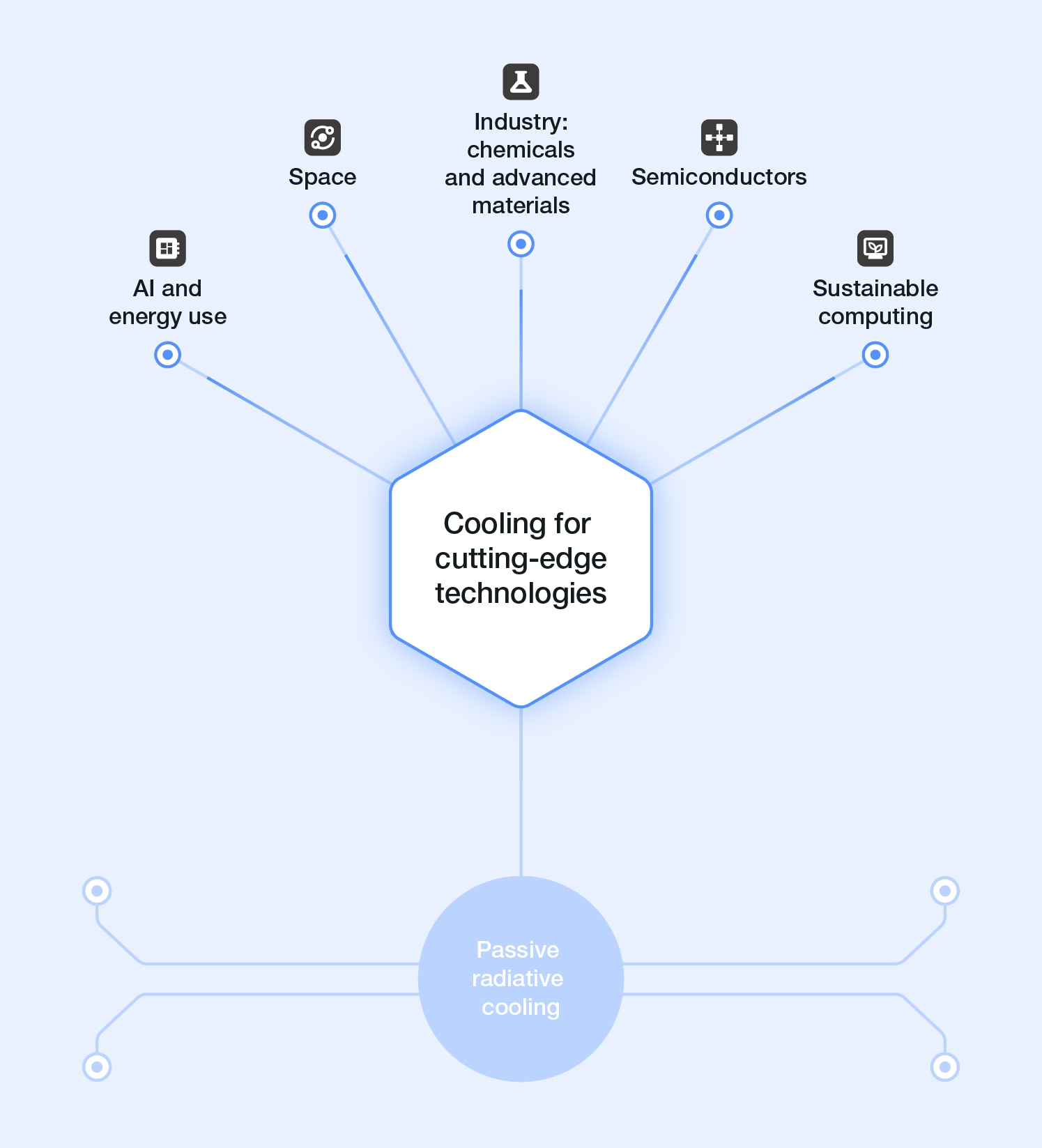

A rule-of-thumb for the lifetime dependence of electronics on temperature is that a 10°C increase halves the lifetime. Keeping the temperature as low as possible was therefore an important goal. Whereas active cooling could have been implemented, this would have required additional electronics, as well as maintenance and repair, increasing costs. The conclusion was to look for a simple passive cooling solution.
—Anish Thukral, Research Scientist III, SRI International
Imagining 2031
In an equatorial region where high cooling costs have long made year-round manufacturing difficult, a new factory is able to operate even through the hottest months. External paint and window film keep the building cool enough for the production line to run, even when outdoor temperatures rise. The films cost less per square metre than one year of additional cooling, turning a recurring operating cost into an upfront design decision made by the architects before the factory’s foundations were poured.
Strategic outlook: Passive radiative cooling materials
Passive radiative cooling could transform heat management from an ongoing operating cost into a materials decision made at the design stage. Buildings that adopt these materials at scale would gain an energy-cost advantage that becomes more valuable as temperatures rise, changing how cooling capacity is priced into the built environment.
As cooling becomes embedded in materials, value could shift from heating, ventilation and air conditioning (HVAC) equipment towards coatings supply, retrofit services and hybrid system integration. This could change how developers assess project economics and how lenders price energy risk.
The economic benefits would be felt first where heat already limits growth. Manufacturers may reconsider locations constrained by energy costs, while food processing could become more viable closer to where food is grown. Indoor temperatures can drop by 5–10°C,38,39 and energy savings can reach up to 42% in hot, dry climates,40,41 making the largest gains likely where cooling demand is already a major burden.
To become standard practice, passive radiative cooling materials still need to prove long-term performance under sustained UV exposure, dust and humidity.42 Standardized testing protocols, warranty frameworks and building simulation tools would help give developers, certifiers and public authorities confidence.
Building codes in most jurisdictions do not yet account for passive radiative cooling,43 limiting its use for regulatory compliance. Integration into rating systems such as LEED44 and BREEAM,45 would help move the technology towards standard practice.
Early regulatory action shows how adoption could accelerate. In Abu Dhabi, Estidama46 is positioned to set standards that reflect where value sits. If other hot-climate regulators follow, passive radiative cooling could become a default specification, especially where public procurement drives construction.
Whether passive radiative cooling becomes standard in the hottest regions will depend on how quickly regulation and standards move. Without that support, it may remain a specialized upgrade as cooling demand and operating costs rise.
Related DFF megatrends: materials revolution; evolving ecosystems
Building towards scale: passive radiative cooling materials
- Standards and certification: Update building rating systems to formally recognize passive radiative cooling as a structural energy contribution.
- Developers and manufacturers: Deploy large-scale demonstration projects to validate long-term material durability across climates.
- Capital and risk: Fund integrated new-build and retrofit pathways to accelerate deployment across existing and future stock.
- Policy and regulation: Embed passive radiative cooling surfaces into public procurement and building codes to mandate adoption in new construction.
4. PFAS destruction
Breaking down the forever chemicals, for good.


In the Arctic, thousands of kilometres from the nearest factory, scientists have found synthetic chemicals in the snow.47 The same chemicals have also been detected in rainwater on every continent48 and in the blood of nearly every person tested.49 PFAS (per- and polyfluoroalkyl substances) were engineered to resist heat, water and chemical breakdown, and sometimes they do their job too well. Conventional treatment can remove them from drinking water, but only by moving them somewhere else. Destroying them means breaking the carbon–fluorine bond, one of the strongest in organic chemistry, and the reason PFAS persist in the first place.
Several approaches have now demonstrated the ability to break these bonds. One heats water past its critical point, into a state beyond liquid or gas, where PFAS molecules dissolve and break apart into water, carbon dioxide and mineral salts. Another runs contaminated water across specialized electrodes, using electrical current to strip electrons directly from PFAS molecules – an approach particularly suited to concentrated industrial waste. A third uses UV light to drive a catalyst, generating a precise burst of chemical energy targeted at the carbon– fluorine bond itself.
Each method is suited to a different contamination challenge. Municipal drinking water, industrial effluent and concentrated chemical stockpiles left behind by decades of use each present distinct challenges in terms of volume, concentration and chemistry. The most capable systems address this by combining filtration and destruction in sequence, first concentrating PFAS before breaking them down. This approach is what makes deployment at scale possible and is what the field has been steadily building towards.
Regulation has helped accelerate the shift from laboratory demonstration to deployment. The European Union adopted legally binding PFAS limits in drinking water in 2020.50 Regulators in the US, Japan and Australia have since moved in the same direction. Now, with a growing and legally mandated incentive to destroy rather than contain PFAS, the results are beginning to show.
In Grand Rapids, Michigan, a facility has been continuously destroying PFAS drawn from landfill runoff since 2023, among the first operations of its kind to reach commercial scale.51 At the other end of the contamination landscape, Daikin Industries, a major PFAS producer, completed a large-scale field trial processing over 170,000 gallons of its own industrial wastewater using UV photochemical destruction.52 Together, the two cases show that from legacy contamination in municipal groundwater to active industrial waste streams, destruction is now operating where it previously could not, and the carbon–fluorine bond is no longer guaranteed to last forever.
Figure 4: PFAS destruction transformation map
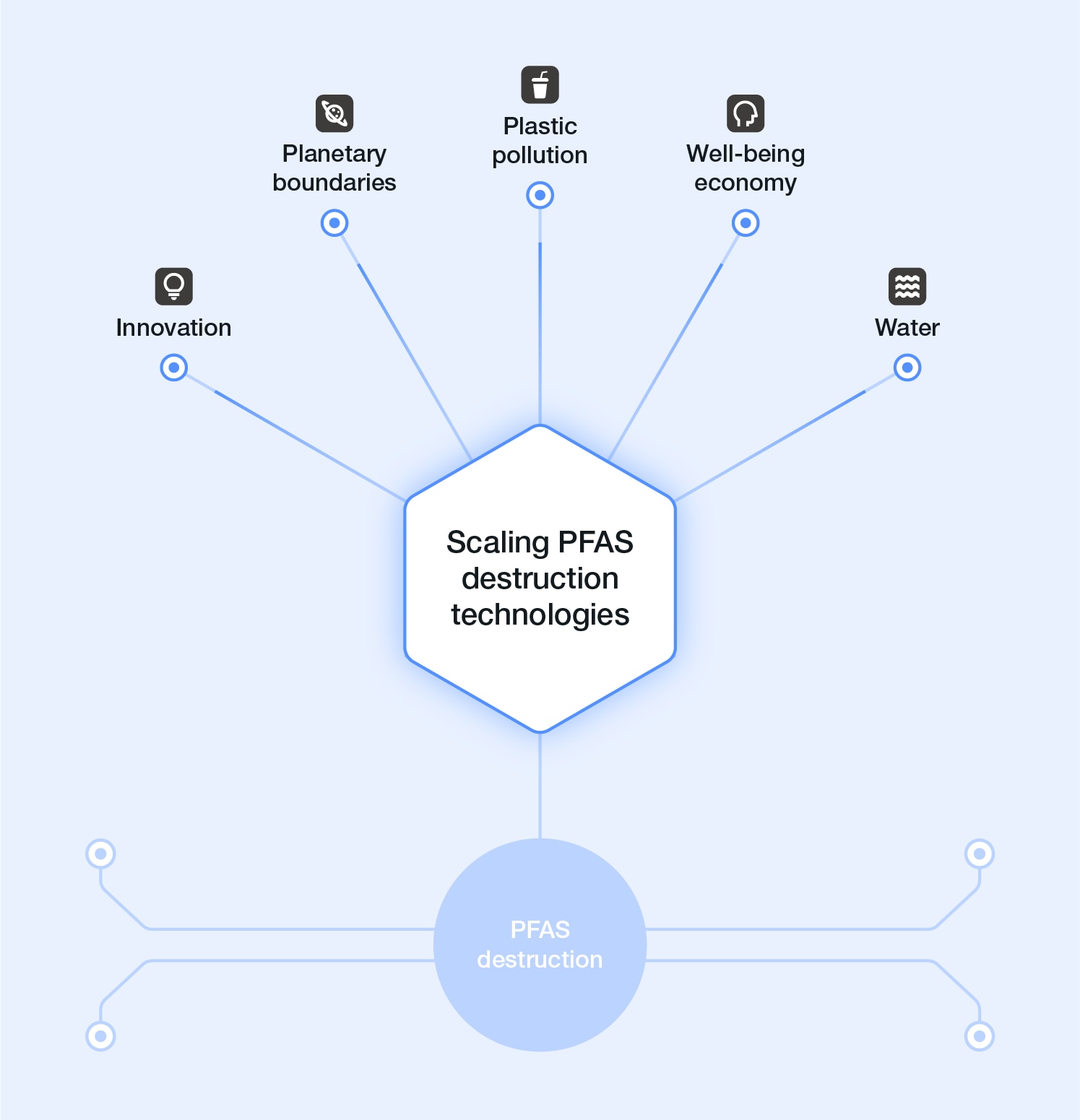

Artificial intelligence-enabled automation could further enhance PFAS destruction technologies and overall treatment performance by adjusting operating conditions in response to changing water chemistry and contamination levels.
—Qingguo Huang, Professor, University of Georgia; Frontiers In Environmental Engineering
Imagining 2031
At the back of an industrial site, an engineer watches as a mobile destruction unit the size of a shipping container processes concentrated waste. When it leaves, a year after it arrived at the site, the soil and groundwater beneath the site are expected to meet clean-up standards that did not exist when the contamination was first recorded decades ago.
Strategic outlook: PFAS destruction
PFAS destruction technologies could turn long-term contamination liability into a more defined treatment cost. If destruction below the limit of detection becomes reliable at scale, contaminated sites could become easier to value, finance and manage.
This also changes the operating model. Today, contaminated foams, sludge and resins are collected and shipped to incinerators, at a cost of $1,000–5,000 per tonne, compared with about $50 per tonne for ordinary municipal solid waste.53,54 As destruction technologies mature, more treatment could happen locally. For high-concentration PFAS waste streams, some systems are approaching destruction efficiencies of 99%, supporting localized treatment models.55
For localized destruction to take hold, regulation would need to recognize destruction rather than containment alone: requiring proof of destruction, supported by harmonized verification standards across jurisdictions.56,57 Effluent-cap rules that make capture and storage the cheapest route to compliance would need to change.58,59 Liability transfer mechanisms would need to be clear enough for service providers to handle contaminated streams without inheriting exposure from the original generator. Without those changes, PFAS destruction may remain technically possible but difficult to value and price.
The harder questions are institutional and political. Verifying complete destruction at scale remains technically complex, and the operational risk of high-temperature systems sits with a small number of specialized providers.60 Making liability addressable could reopen the debate over PFAS restrictions at source. The case for restriction has rested partly on the fact that PFAS cannot be eliminated once released. If manufacturers can commit to end-of-life destruction in exchange for continued production, that may slow upstream restrictions such as the EU’s Annex XV proposal.61
With destruction capacity likely to remain limited, the hardest choices may be about which sites are treated first, and whether the communities facing the worst contamination can attract the capital needed to address it.
Related DFF megatrends: materials revolution; evolving ecosystems
Building towards scale: PFAS destruction
- Policy and regulation: Embed verified destruction mandates into regulation to shift industry incentives away from containment.
- Standards and certification: Scale interoperable verification systems to enable consistent measurement and cross-jurisdiction comparability.
- Capital and risk: Clarify liability frameworks to reduce investor uncertainty and unlock private sector participation.
- Infrastructure and procurement: Adopt performance-based procurement models to align operational costs directly with destruction outcomes.
- Developers and manufacturers: Standardize integration across capture, concentration and destruction systems to enable scalable deployment.
5. Precision fermentation
Micro-factories for food, medicine and materials.


For decades, the global supply of artemisinin, the most effective antimalarial drug ever developed, relied on the sweet wormwood harvest. A poor growing season, a price collapse driving farmers to other crops, or a logistics breakdown between field and factory could each trigger shortages across clinics in Sub-Saharan Africa that have no alternative to offer patients. Precision fermentation addresses that dependency by going directly to its source, the genetic sequence that codes for the molecule itself.
Every molecule a living organism produces, whether a protein, a fat, a pigment or a drug compound, is encoded somewhere in that organism’s genome. Scientists identify the specific genes responsible for the target molecule and transfer them into a microbial host, typically yeast, bacteria or fungi. The microbe does not know it has been given new instructions. It simply reads them, the way it reads its own genome, and produces the corresponding molecule as part of its normal cellular activity. Those microbes are then cultivated in large fermentation tanks, fed on simple nutrients like sugar and left to produce the target molecule at scale. What comes out is purified and chemically identical to whatever the original organism would have made, performing the same way across every application that depends on it. Bringing that to commercial scale required the ecosystem around it to catch up.
Researchers can now use AI to model the most efficient biological pathways before running a single experiment, compressing molecule design from years to months. Regulatory frameworks in the US62 and European Union63 have clarified enough to give manufacturers and investors the confidence to commit at scale. The companies gaining traction are those that combined those conditions with vertical focus, picking a single molecule, mastering the full production chain and getting it onto a shelf.
Perfect Day now supplies fermentation-derived whey protein to multiple US food brands and is expanding production into India.64 In 2024, Nestlé introduced a fermentation-derived whey protein isolate into its functional nutrition line,65 and a year later, EVERY began a nationwide rollout of its precision fermentation-derived egg proteins at Walmart.66 The incumbents are paying attention too. Fonterra, the world’s largest dairy exporter, has invested in Vivici,67 a precision fermentation start-up producing beta-lactoglobulin, the primary protein in whey, at an industrial scale, and using 87% less water than the cattle-derived products.68 Food is where the largest commercial bets are being placed, but the same process is also being applied to cosmetic peptides, pharmaceutical compounds and chemical building blocks currently derived from fossil fuels.
Figure 5: Precision fermentation transformation map
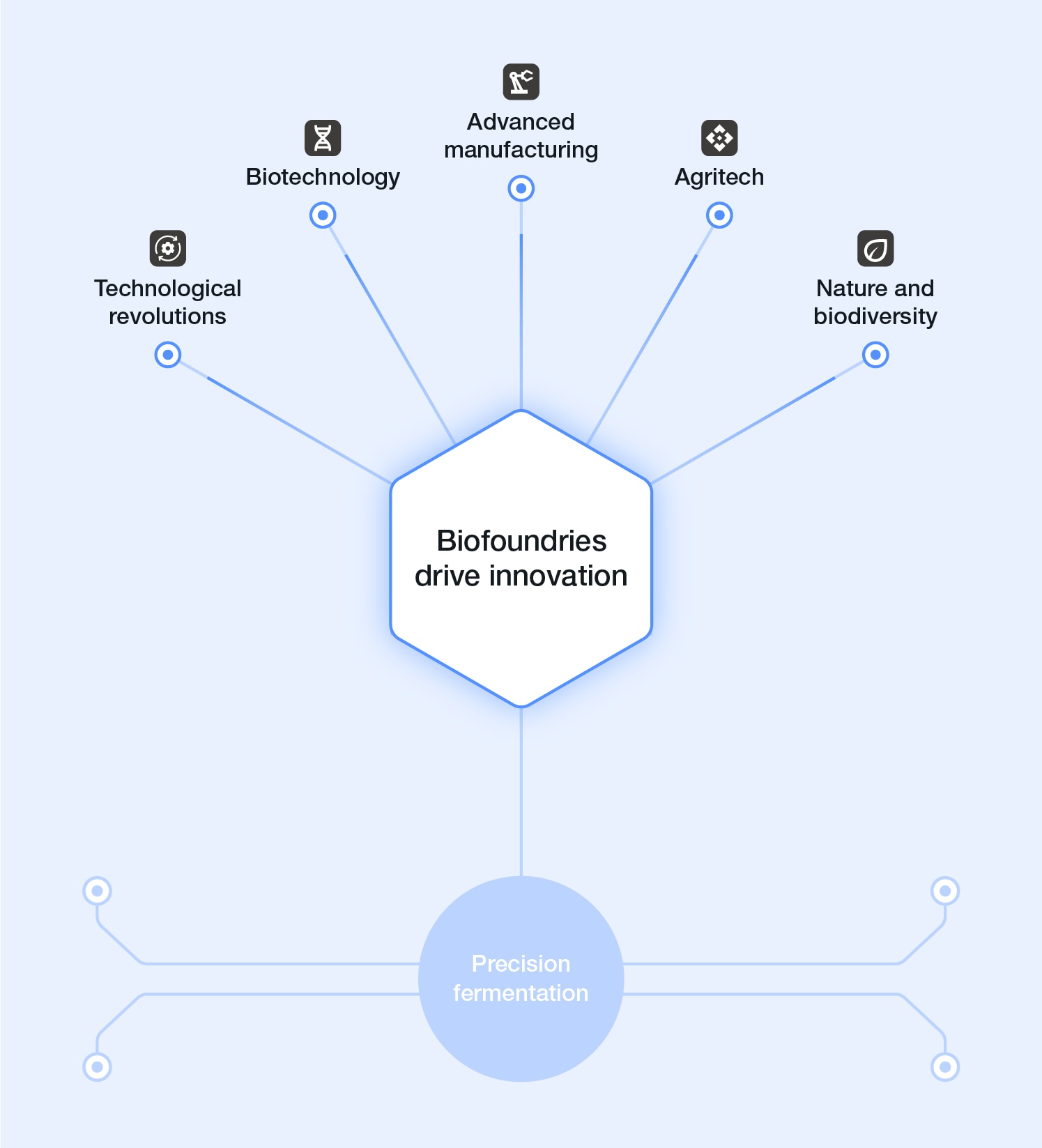

Automated DNA assembly, high-throughput screening and standardized workflows allow researchers to explore many alternative designs and identify optimal production strains more efficiently. By combining automation, data science and biological engineering, biofoundries are helping scale innovation in precision fermentation.
—Tomás García Cayuela, Tecnologico de Monterrey; Frontiers in Food Science and TechnologyMichael E. Himmel, National Laboratory of the Rockies; Frontiers in Industrial Microbiology
Imagining 2031
A plant operator monitors the fermentation tanks at a facility on the edge of a port city whose food economy was, for as long as anyone there can remember, about moving cargo rather than growing it. The tanks have been running continuously on sugar feedstock and clean power from the grid. The proteins and peptides leaving the plant this week will be used in cosmetics, sports nutrition supplements and pharmaceutical excipients. They will ship to customers that the operator’s predecessors could not have reached without an agricultural sector behind them.
Strategic outlook: Precision fermentation
Precision fermentation could shift food security from a question of geography to one of infrastructure. Arable land, favourable climates and established livestock herds have long given agricultural economies a competitive advantage. That advantage could weaken if the same proteins can be produced anywhere with sufficient clean energy, capital and bioreactor capacity. The opportunity also extends to cosmetic peptides, pharmaceutical compounds and fossil-derived chemical building blocks,69 but the structural stakes are clearest in food systems.
Production could move towards places that can supply cheap, clean power and industrial-scale bioprocessing capacity, rather than those that grow feed and raise livestock.70 For energy-rich, land-poor states, this could make food security more of an infrastructure and capital-allocation challenge. For dairy-export economies, it could create the opposite pressure. Sterile, continuous fermentation in repurposed industrial facilities could reduce protein supply exposure to climate disruption, animal disease and geopolitical interference.71
For production to change in this way, financing, regulation and intellectual property would all need to adapt. Proving a fermentation process at commercial scale requires capital between what venture investors will fund and what infrastructure investors usually require. Some companies are beginning to bridge that gap by repurposing idle pharmaceutical and industrial fermentation capacity.
Regulatory pathways outside the US and EU remain fragmented, slowing commercialization in markets where the geographic advantages may be strongest. Questions over foundational biological intellectual property, including who owns engineered strains and on what licensing terms, also sit underneath this transition.
The hardest challenge is displacement. Agriculture supports over a billion livelihoods globally,72 but the jobs and value created by precision fermentation may not emerge in the rural areas where agricultural employment is most at risk. The same transition that could make food systems more resilient could also separate future production from the crops, herds and land-based knowledge on which entire economies depend.
Such displacement could also concentrate control. Unlike farmland, strain libraries and bioreactor capacity are likely to be concentrated in smaller groups of companies, investors and industrial hubs, moving more value away from agricultural regions.
Whether food security shifts from regions that grow protein to regions that can power its production will depend on decisions about capital, intellectual property and regulation made now.
Related DFF megatrends: advanced health and nutrition; evolving ecosystems
Building towards scale: precision fermentation
- Developers and manufacturers: Deploy AI-enabled process controls to achieve continuous fermentation at commercial scale.
- Policy and regulation: Harmonize approval frameworks across jurisdictions to accelerate safe market entry for fermentation-derived products.
- Developers and manufacturers: Expand bioreactor manufacturing capacity globally to meet growing demand for large-scale fermentation systems.
- Infrastructure and procurement: Secure long-term clean energy contracts to stabilize input costs for biomanufacturing at scale.
6. Exosome drug delivery
Using the body’s own couriers to deliver medicine.


Molecular medicine has a last-mile problem. A new type of highly targeted therapies can silence a gene, edit a mutation or deliver a protein directly to a diseased cell, and many of them work in the lab. However, most degrade in the bloodstream before they arrive at their destination, trigger immune responses that neutralize them or fail at the biological barriers the body maintains to keep foreign material out. The most sophisticated therapy in the world is only as good as its ability to reach the cell that needs it.
One solution may already exist inside the body. Exosomes are membrane-wrapped packets that cells continuously produce to deliver proteins, RNA (ribonucleic acid) and genetic instructions to one another, acting like the body’s internal mail system. Unlike synthetic carriers, they carry the molecular signatures the body recognizes as its own, which lets them survive the bloodstream, cross barriers like the one protecting the brain and deliver their contents into cells better than synthetic carriers. Engineering them for drug delivery means loading the packet with therapeutic cargo and reprogramming its surface proteins to find a specific diseased cell and deposit their contents into the cytoplasm. The body accepts the delivery because it recognizes the courier.
Automated systems, three-dimensional bioreactors and new purification techniques arrived close enough together in the early 2020s to change what was possible, increasing yields by up to fifty-fold and making clinical-scale production viable for the first time. Regulatory bodies, including the Food and Drug Administration (FDA) and European Medicines Agency (EMA), responded by classifying exosome therapies as biological medicinal products, giving developers a category to work within as the approval framework itself is still being built. Since 2022, over 200 clinical trials have been launched across cancer, neurological disease and the long-term effects of COVID-19.73
Pancreatic cancer patients with no remaining treatment options showed disease stabilization in a phase 1 trial at the University of Texas MD Anderson Cancer Center. In the trial, engineered exosomes were able to target a mutation that had defeated all previous drugs,74 one example among several early studies testing the potential of this approach. In 2025, researchers demonstrated exosomes carrying gene-editing tools across the blood–brain barrier and entering into neurons without triggering an immune response, a leap forward for ongoing but difficult research into Alzheimer’s, Parkinson’s and glioblastoma.75 A $1.5 billion collaboration between Eli Lilly and Evox Therapeutics suggests the industry has taken note.76
Figure 6: Exosome drug delivery transformation map
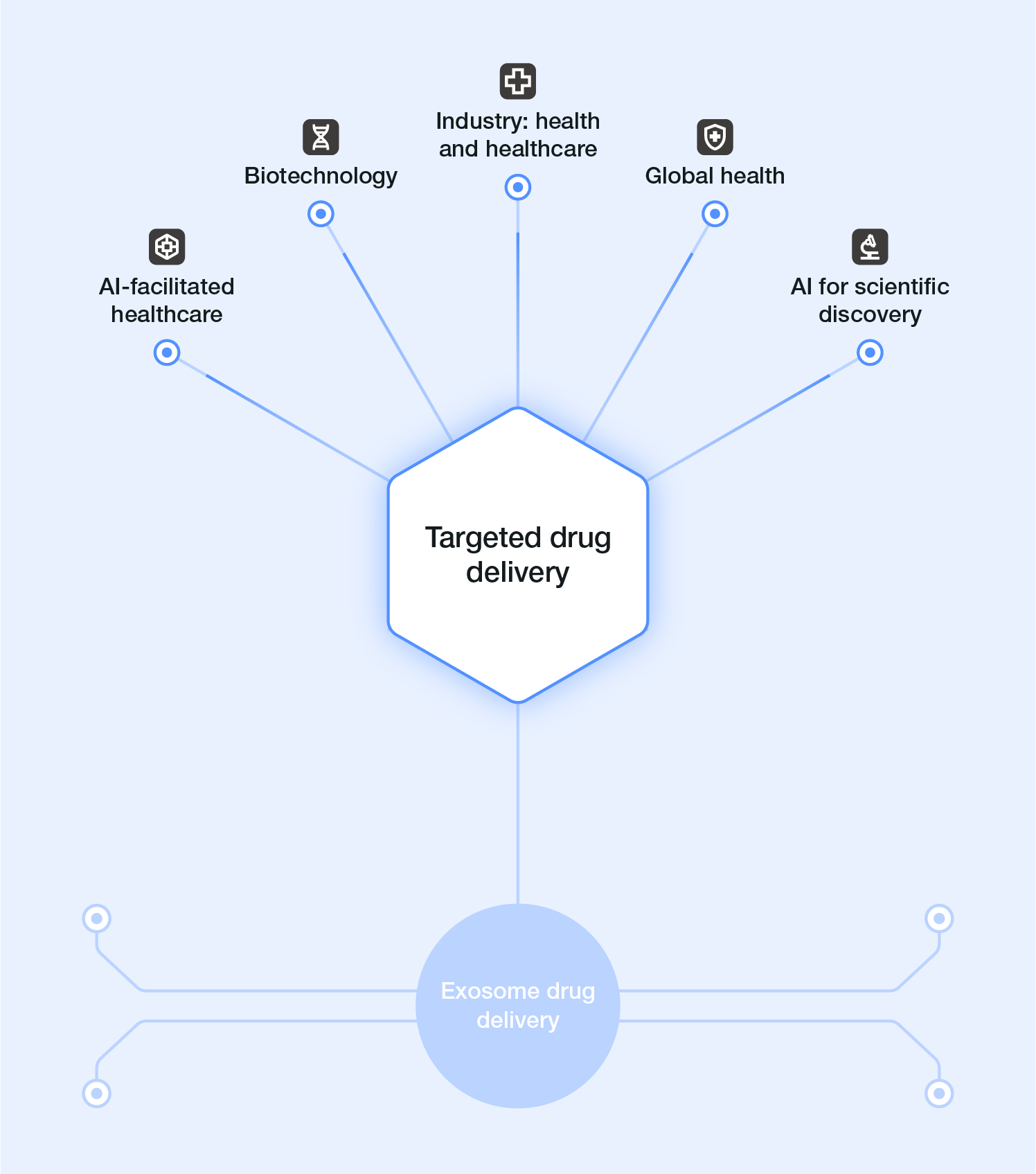

Exosome studies have demonstrated effective delivery of chemotherapies, genetic medicines, therapeutic RNA, proteins and more to the brain, which could revolutionize treatments for a wide range of neurological diseases, including Alzheimer’s disease, Parkinson’s disease, glioblastoma, amyotrophic lateral sclerosis and Huntington’s disease, as well as rare genetic neurodevelopmental disorders and psychiatric conditions. Given the vast global burden of neurological disease, this capability could impact hundreds of millions of patients.
—Gianni Ciofani, Research Director, Italian Institute of Technology; Frontiers in Bioengineering and Biotechnology; Driton Vllasaliu, Reader (Associate Professor) in Biotherapeutics Delivery, King’s College London; Frontiers in Drug Delivery
Imagining 2031
A neurologist administers a therapy to a patient with early-stage ALS (amyotrophic lateral sclerosis) as part of one of the first trials to clear early regulatory milestones for an exosome-delivered medicine. The treatment reaches the motor neurons that the disease has begun to attack, carried by a vessel small and familiar enough to pass through the brain’s defences without triggering the rejection that once made it unreachable. Down the corridor, the manufacturing suite is producing next week’s doses for the trial.
Strategic outlook: Exosome drug delivery
Exosome drug delivery could expand the range of diseases medicine can realistically target. Conditions affecting parts of the body that are difficult for drugs to reach, including rare neurological diseases, could become more viable drug targets.77
This would also change the care models built around longterm management, including specialist nursing, home health and disability support, which could begin to shift towards treatment and recovery.
Targeted delivery could also change what existing therapies can safely do. For example, chemotherapy can be limited by the damage it causes to healthy tissue as it travels through the body. If delivery becomes more precise, some therapies could potentially be used in ways that are currently too harmful.
Early adoption is likely to be in diagnostics, because reading exosomes is easier than engineering them for therapeutic delivery.78 Exosomes can act as early warning signals, detecting cancer, neurodegenerative disease and cardiovascular conditions in blood or saliva before symptoms appear.79 Each clinical validation could build trust, improve understanding of how exosomes behave and strengthen the case for tailored approval pathways for exosome-based therapies.80
Therapeutic use will move more slowly because the field still needs to prove consistency at scale. For example, no exosome-based therapy is FDA-approved as of late 2025, and biological fluids contain many particles of similar size, making pure, reproducible exosomes difficult to obtain.81 Manufacturing remains a bottleneck, while quality control standards still need to develop across targeting precision, distribution through the body, dosing and durability.82
Regulation adds another challenge. Agencies require evidence of how a therapy moves through and is processed by the body, but exosomes are designed to reach specific targets rather than spread widely.83 Measurement is also unsettled: dose can be defined by particle count, protein content or payload activity, making studies difficult to compare.
Whether exosomes reach patients will depend on how quickly the field can characterize, manufacture and regulate a therapy designed to move through the body’s defences. If those questions are resolved, exosomes could open new treatment pathways for some of medicine’s hardest targets that have long resisted targeted therapies.
Related DFF megatrends: advanced health and nutrition; materials revolution
Building towards scale: exosome drug delivery
- Developers and manufacturers: Standardize surface engineering protocols to ensure consistent and reproducible site-specific drug delivery.
- Policy and regulation: Establish regulatory frameworks for targeting specificity and long-term safety to enable clinical translation.
- Infrastructure and procurement: Scale liquid biopsy infrastructure to build the clinical evidence base needed to support therapeutic adoption.
- Research and academia: Prioritize neurological and central nervous system trials to generate efficacy evidence in otherwise inaccessible tissues.
7. Personalized mRNA cancer vaccines
Turning tumour cells into personalized treatment.


Two patients may receive the same diagnosis from an oncologist, yet their prognosis may be very different. The mutations driving one cancer, the proteins marking those cells as dangerous, the vulnerabilities a treatment might target, are entirely unique to that patient. Until recently, treatment could not be built at that level of specificity.
Personalized messenger RNA (mRNA) cancer vaccines work differently from drugs. Rather than attacking cancer directly, they train the immune system to recognize cancer. When a patient is diagnosed, doctors extract cells from their tumour and sequence its genetic mutations to identify the proteins, called antigens, that mark those cancer cells as foreign. An mRNA vaccine is then synthesized around that specific profile, carrying instructions that prime the immune system to recognize and respond to cells bearing those markers. If the cancer returns, the immune system is already prepared.
Two decades of genomics research and the rapid expansion of mRNA infrastructure during the COVID-19 pandemic have converged to give personalized cancer vaccines new momentum. The COVID-19 pandemic transformed mRNA from a research platform into a global manufacturing and regulatory infrastructure. This compressed years of development into months, backed by an estimated $79.4 billion in public investment across global vaccine development programmes.84 Over the same period, the cost and time required to sequence a tumour’s mutations fell dramatically, making it more practical to design vaccines around the specific biology of each patient’s cancer. In March 2026, the US National Cancer Institute announced a $200 million public-private partnership to fund further trials,85 a signal that the field has moved past proof of concept.
In the case of pancreatic cancer, for which global five-year survival rates hover around 13%,86 and few treatments have meaningfully changed outcomes, the question is whether the immune system could be shown what to fight. Early results from a trial at Memorial Sloan Kettering Cancer Center suggest that custom-made vaccines based on unique changes to tumour DNA and delivered using mRNA could be the answer to a global problem. Over the six-year study, the survival rate among patients whose immune systems responded to the therapy after their last treatment was 90%.87
For patients who have had a tumour removed but remain at risk of recurrence from undetectable residual disease, the question is about readiness rather than fighting. In a trial spanning multiple centres across the US and Europe, patients with high-risk melanoma received a personalized vaccine alongside pembrolizumab, a widely used immunotherapy. The combination reduced the risk of recurrence or death by 49% compared to immunotherapy alone,88 a result strong enough to advance the combination into phase 3 trials, now under way.
The same diagnosis no longer has to mean the same treatment. Instead, the biology of each tumour can now define the vaccine designed to target it.
Figure 7: Personalized mRNA cancer vaccines transformation map
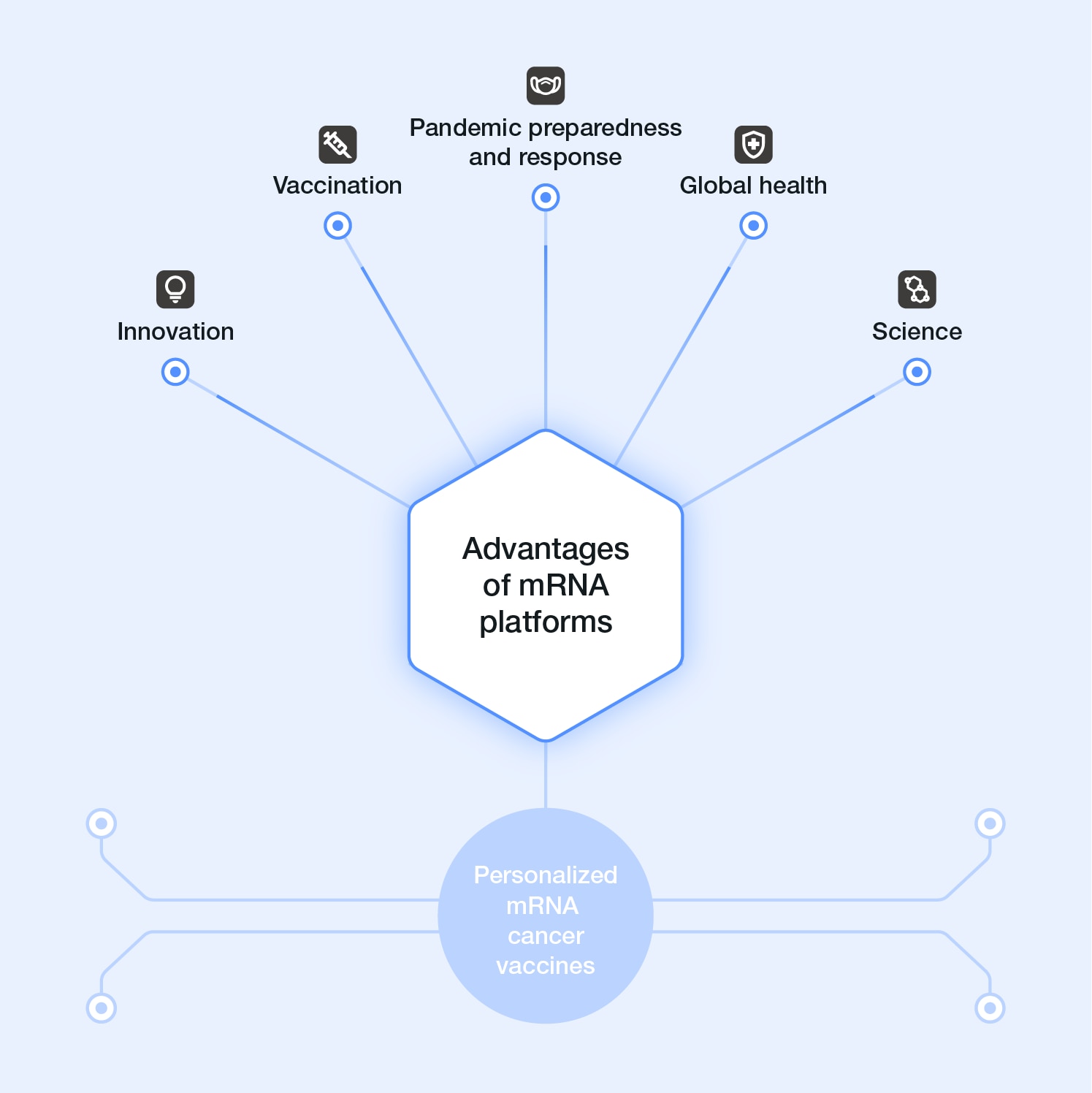

The pandemic accelerated innovations in mRNA synthesis, purification and delivery technologies, which are moving the field closer towards realizing the potential of personalized mRNA cancer vaccines.
—Peter Brossart, Director, University Hospital Bonn; Frontiers in Immunology; Rita Carsetti, President, International Union of Immunological Societies (IUIS); Frontiers in Immunology
Imagining 2031
A patient’s biopsy is taken on Monday, sequenced on Tuesday and the design for the vaccine arrives from the lab on Thursday morning. By the end of the week, clinicians are preparing a treatment from genetic instructions that did not exist a few days earlier. Down the corridor, another patient with the same diagnosis is waiting for a vaccine designed around a different tumour profile.
Strategic outlook: Personalized mRNA cancer vaccines
Personalized mRNA cancer vaccines could make sequencing, design and manufacturing capability a central source of value in oncology.
This would create a second production model alongside conventional drug development. Standardized immunotherapies and targeted agents would continue to be developed for patient populations and manufactured at scale, while a personalized layer is built around one patient at a time. For pharmaceutical companies designed to produce millions of identical doses, this would change the economics of an industry built around scale.
The institutions around cancer care would need to adapt as well. Regulators would need to evaluate a process rather than a single identical product, since no two doses are the same. Insurers and national health systems would need to price treatments for a single patient. Delivering at scale would require sequencing, design and manufacturing to work as one pipeline, rather than as separate handoffs between labs, vendors and hospitals.89
Health systems with sequencing labs, manufacturing partnerships and computational analysis capacity already in place would have an early advantage. Hospitals would need on-site or partnered sequencing capacity, computational design that can turn a tumour profile into a vaccine sequence in hours and manufacturing able to produce thousands of individualized doses each month, rather than millions of identical ones.
The relationship between diagnosis and treatment would also change. A biopsy would no longer only identify disease; it would become the input that determines the medicine a patient receives. If the immune response trained by the vaccine persists after treatment, the body may be better able to detect returning cancer cells, changing what survivorship means and how patients live after diagnosis.
Access is the central risk. Early treatments exceeding $100,000 per patient could limit personalized vaccines to patients in well-resourced health systems, widening global gaps in cancer outcomes.90 Shared neoantigen libraries and hybrid models that combine personalized and off-the-shelf vaccines could help balance cost, speed and specificity, particularly for health systems unable to manage the full sequencing, design and manufacturing process themselves.
The defining challenge over the next five years is whether health systems can deliver mRNA cancer vaccines at scale without turning precision medicine into a privilege rather than a standard of care.91
Related DFF megatrends: advanced health and nutrition; materials revolution
Building towards scale: personalized mRNA cancer vaccines
- Policy and regulation: Establish fast-track regulatory pathways to enable timely approval of individualized mRNA cancer therapies.
- Infrastructure and procurement: Invest in integrated sequencing and bioinformatics infrastructure to support localized treatment delivery.
- Capital and risk: Develop financing mechanisms to ensure equitable access to personalized therapies across low-resource health systems.
- Developers and manufacturers: Scale modular mRNA manufacturing platforms to produce thousands of personalized doses reliably and rapidly.
- Research and academia: Build shared neoantigen databases to accelerate vaccine design and reduce development costs across institutions.
8. Quantum simulation for drug discovery
Mapping drug candidates atom by atom.


A single protein can contain thousands of atoms, each interacting with its neighbours in ways that determine whether a drug will bind to its target, slip past it or trigger an unintended reaction elsewhere in the body. For decades, predicting those interactions has required simplification, which has usually led to errors. Roughly nine in 10 drug candidates that enter clinical trials fail92 for a variety of reasons, including design and computing errors.
Quantum simulation offers a different starting point. Where conventional computers approximate molecular behaviour by reducing its complexity, quantum simulation models it directly, using the same physical principles that govern how atoms and molecules actually interact. The result is a molecular portrait with a level of fidelity that classical computing cannot match, one that can capture how a drug candidate will fold, bind and behave before it ever enters a lab.
For years, this remained more promise than practice. What has changed recently is the engineering. Improvements in error correction have made quantum calculations meaningfully more reliable, and hybrid architectures combining quantum and classical processors have made the technology compatible with existing pharmaceutical workflows rather than requiring researchers to rebuild around it. The pharmaceutical industry has noticed: the quantum drug discovery market has roughly doubled in value over the past five years,93 a pace that reflects genuine investment towards deployment rather than speculative positioning.
The proof is in specific partnerships. In 2025, IBM and Moderna completed the largest protein folding and mRNA simulation run on a quantum computer to date,94 a milestone that had been out of reach just a few years earlier. In France, start-ups Pasqal and Qubit Pharmaceuticals are pursuing a different path,95 using neutral atom quantum computers for small-molecule discovery with backing from the Wellcome Trust.96
What draws the most attention is where quantum simulation begins to expand the possible. Certain diseases have long been considered undruggable because the molecular targets were too complex, too dynamic or too subtle for classical models to resolve. Quantum simulation can now access that level of complexity. It does not guarantee a drug, but it changes what is worth attempting.
Figure 8: Quantum simulation for drug discovery transformation map
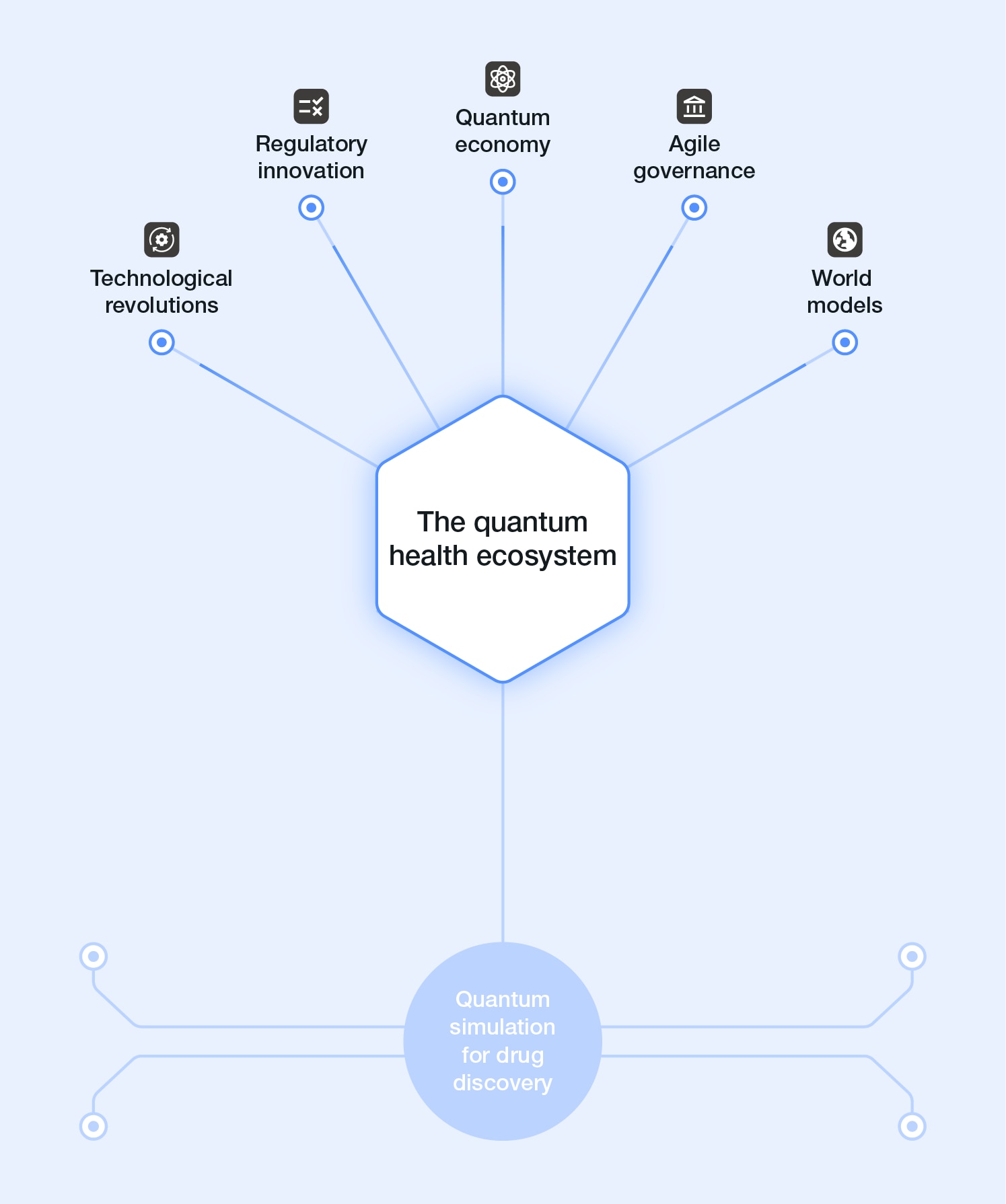

Three pillars of the quantum health ecosystem – creators, deliverers and enablers – illustrate a future in which quantum-enabled optimization of drug discovery, healthcare delivery and system infrastructure could help the health sector accelerate innovation while improving safety, efficiency and scalability.
—Zhen Cheng, Vice-Director, State Key Laboratory of Drug Research; Frontiers in Physics
Imagining 2031
A drug compound now in clinical trials for pancreatic cancer was designed in simulation, before any of it was synthesized in the lab. The team watched candidate molecules fold, bind and move through the target site atom by atom, with every electron accounted for and every interaction predicted; only the candidates the simulation said had the geometry to hold were brought forward. The current trial can be run with a few hundred patients, instead of the few thousand typically needed under traditional trial design.
Strategic outlook: Quantum simulation for drug discovery
Quantum simulation could change which diseases pharmaceutical companies are willing to pursue. For decades, some conditions have been screened out of drug pipelines because the odds of failure were too high to justify the cost. Part of that failure has been computational: classical computers could not model molecular behaviour accurately enough to predict whether a drug would work. If quantum simulation reduces that uncertainty, diseases once considered too costly or commercially marginal could become more viable targets.
This could be especially important for rare and orphan diseases – now the fastest-growing segment of quantum-enabled drug discovery.97 These are conditions that traditional pharmaceutical economics has often treated as commercially marginal. If simulation can help rule out weaker candidates earlier,98 late-stage trials could become smaller and more focused, potentially involving hundreds of patients rather than thousands.
The economics of drug development would change with that prediction. Lower failure rates could affect which programmes are financed and who can run them. Capital priced against a roughly nine-in-10 failure rate could be reallocated if that rate moves, while the cost of running a credible drug programme could fall. Hybrid quantum-classical platforms, where quantum processors work alongside high-performance computing systems, remain necessary until fault-tolerant quantum computers become available.99 Hardware constraints, error mitigation and biological data encoding are still limiting factors.100
Regulators will need shared validation standards before simulation can be accepted as evidence in drug approval decisions. Transparency, reproducibility and quantified confidence will be essential, especially when a drug targets a disease with no prior approval to compare against.101 Those standards do not yet exist. Pharmaceutical companies and quantum hardware providers are generating early data, but proprietary advantage can limit openness, while academic publication alone does not create the shared benchmarks the field needs.
Quantum simulation could make treatments possible for diseases ruled out by old economics. Whether those treatments materialize will depend on decisions about capital, regulation and research priorities, especially for patients whose diseases have long been underserved by conventional drug development.
Related DFF megatrends: advanced health and nutrition; boundless multidimensional data
Building towards scale: quantum simulation for drug discovery
- Standards and certification: Develop standardized validation frameworks to establish shared benchmarks for simulation-derived evidence.
- Developers and manufacturers: Prioritize interoperable hybrid quantum-classical architectures to integrate simulation across drug discovery workflows.
- Research and academia: Align cross-disciplinary incentives to sustain collaboration between quantum, computational and life science communities.
- Policy and regulation: Establish adaptive regulatory pathways to incorporate simulation-derived evidence into drug approval processes.
- Infrastructure and procurement: Invest in translational capabilities to convert predictive simulation outputs into actionable clinical decisions.
9. World models
AI that can think and act in three dimensions.


A nine-month-old who has never heard the word “gravity” already knows that objects fall. She knows this because she has dropped things, watched them fall, heard the thud and felt the jolt in her hand as the weight left it. Before acquiring language, she has already built a small model of the physical world.
Today’s most powerful AI systems learned a different way. Large language models trained on text can describe gravity with fluency and precision, but they learn from human descriptions of the world, not from direct experience of physical reality. Ask a large language model to reason about an unfamiliar physical situation, and the gaps appear quickly.
World models are designed to learn how the world behaves from data, drawing loose inspiration from how babies learn through experience. They ingest data from multiple sensory channels at once – video, depth sensors, pressure readings, motion capture – and compress these inputs into a single shared representational space. A video of an apple falling, a sensor registering the impact and a written description of gravity all map to the same place in that space, because they describe the same underlying event. The model captures the patterns of events, not the medium through which it was recorded.
Scale, data and a single architectural insight made this possible. Models are now large enough to meaningfully compress rich multimodal physical data. A decade of robotics, autonomous vehicles and industrial sensors has produced the vast streams of real-world sensory input the approach requires. Training a model to predict compressed representations rather than raw pixels forces it to learn dynamics and relationships rather than surface appearances. This last puzzle piece is the core insight behind Yann LeCun’s Joint Embedding Predictive Architecture,102 introduced in 2022. Instead of recreating every visual detail, the model learns the structure behind what happens next: how objects move, interact and change over time.
The first platforms built on an understanding of the physical world are now in developers’ hands. NVIDIA’s Cosmos platform, launched in 2025 and trained on 20 million hours of physical-world data spanning robotics, industrial environments and driving, is the most significant early deployment of these ideas.103 Robots trained on Cosmos generalize to physical situations they have never encountered because they reason from an internal model of how things behave, not a library of situations they have seen before.
Climate science has long faced a version of the same problem of oversimplification in modelling. The turbulent, fine-grained dynamics of storms and clouds, and the physical processes that determine whether a forecast is right or wrong at the scale that affects people, have always sat just beyond the resolution of conventional models. In 2026, researchers at Stanford Doerr School of Sustainability showed that embedding world-model approaches into climate simulation can close that gap.104 The atmosphere, as it turns out, also rewards a system that has learned the fundamental laws that dictate how weather systems, and the world, behave.
Figure 9: World models transformation map
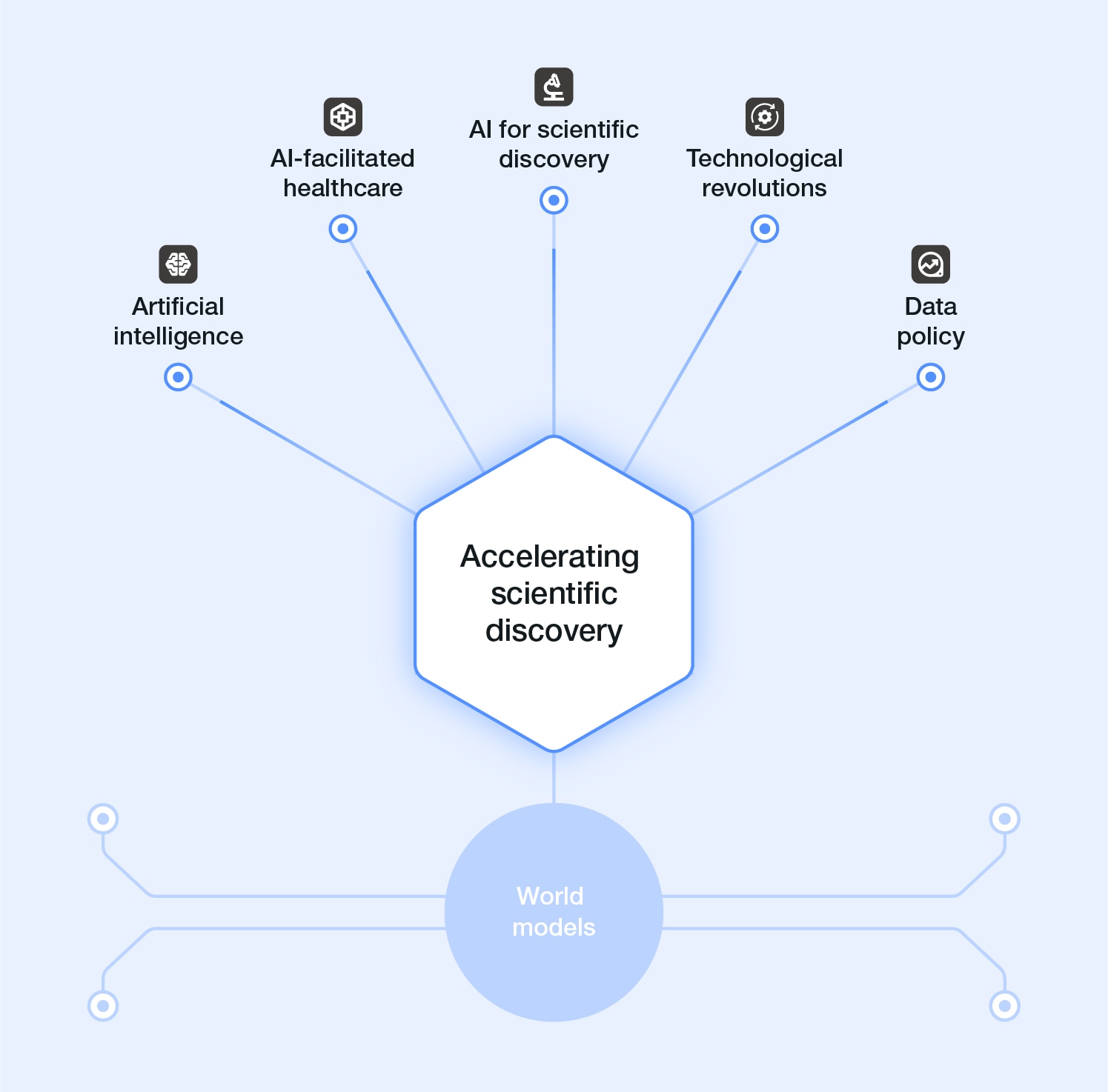

For research institutions and funding bodies, the strategic implication is clear: investment priorities should shift from isolated laboratory infrastructure towards integrated AI-simulation-automated experiment lab platforms that can close the hypothesis-to-verification loop autonomously, while governance frameworks ensure human scientists retain meaningful oversight of an increasingly autonomous discovery process.
—Hiroaki Kitano, Chief Technology Fellow, Sony Group
Imagining 2031
A maintenance lead walks the row of cranes at a port terminal before her morning shift. Inside, the terminal’s model is already testing tomorrow’s loading sequence against the tide, wind forecast and weight distribution of containers that have not yet arrived. By the time she reaches the last crane, the model has run the day twice and revised the schedule once. In the operations room, a dispatcher checks the revised schedule against two decades of notes on what the terminal tends to do in conditions like these.
Strategic outlook: World models
World models could move AI from observing or simulating operations to actively informing decisions in real-world physical settings. As that happens, organizations will need clearer ways to test, govern and hold these systems accountable.
The first changes would be felt in sectors where operations already generate continuous data, including manufacturing and logistics.105,106 In these settings, the model in production can learn from the operation as it runs. This could extend automation into forms of physical work that depend on reading a situation in the moment, rather than following fixed instructions. As the technology matures, industries built on skilled physical judgement, including logistics, construction, manufacturing and elder care, could see their workforces change. The institutions that retrain and redeploy people as roles evolve will help determine how productivity gains are shared.
World models also introduce a different kind of risk: they may not only reproduce data bias, but also build flawed assumptions about how the world behaves.107 A model can be internally consistent and still wrong,108 creating blind spots when systems move from controlled environments into real-world settings. Catching this kind of error would require clear assumptions up front, rigorous stress testing and audits that track data drift, possible tampering109 and changes in the model’s underlying assumptions.
The challenge is that many institutions deploying world models are built around stability and standardization. They are not designed for systems that continuously revise their assumptions. Research institutions could help by operating validated model libraries as shared infrastructure rather than proprietary assets.110 No single organization can generate enough edge cases on its own to make these models reliable; reliability will need to accumulate across the field.
Policy-makers would also need governance frameworks that support accountability, transparency and safe deployment in critical sectors. Those frameworks would need to develop quickly enough to keep pace with adoption.111 Audit frameworks, liability standards and validation benchmarks are still being built, even as deployment accelerates.112 Institutions built for stability will therefore need to govern systems that change continuously.
The impact of world models will depend on whether organizations can identify flawed assumptions before they influence decisions with real-world consequences. If they can, these systems could make critical operations safer, faster and more resilient. If they cannot, errors may be harder to detect and spread further before they are caught.
Related DFF megatrends: life with autonomous robots and automation; digital realities
Building towards scale: world models
- Research and academia: Validate world models in real-world environments to close the gap between lab performance and deployment reliability.
- Policy and regulation: Establish clear accountability and testing standards to govern the deployment of world models in consequential settings.
- Capital and risk: Fund foundational research that stress-tests world model assumptions against real-world data and edge cases.
- Developers and manufacturers: Collaborate across sectors to benchmark and improve causal reasoning in world models against shared standards.
10. Lattice-based cryptography
Protecting today’s data against tomorrow’s computers.


Somewhere on an unknown server, an archive of encrypted internet traffic is growing. The data cannot be read today, but whoever collected it is waiting for the moment it can be. In security circles, this strategy has a name: “harvest-now-decrypt-later”. This threat exists because quantum computers process information differently from classical machines. Once powerful enough, that capability could unravel the mathematical problems underpinning most encryption in use today.
The response to this threat is not to simply build a stronger lock. Lattice-based cryptography works differently. It hides data inside complex geometric structures with noise deliberately added in, like a fog. The system encodes information within a vast multi-dimensional grid of mathematical points, then adds small random errors during encryption. The correct solution is indistinguishable from the wrong ones. Those errors make it extremely difficult for an attacker to work back to the original data: from the outside, the correct solution is hard to distinguish from many plausible wrong ones, even with powerful classical or quantum machines.
This fog has uses beyond keeping adversaries out. The same mathematical properties that make lattice schemes quantum-resistant enable a further capability that classical cryptography cannot match. Fully homomorphic encryption allows computations to run directly on encrypted data without ever exposing it. In 2024, researchers at Asan Medical Center used this approach to train AI models across more than 300,000 patient records from three hospitals, with no hospital’s raw data ever leaving its own servers.113 The models outperformed anything a single institution could have built on its own. With the capabilities proven, the field needed a common foundation to build on.
The National Institute of Standards and Technology (NIST) spent two years evaluating competing approaches to post-quantum encryption before finalizing its standards in 2024.114 Its choice of lattice-based algorithms as the primary foundation gave the entire industry a vetted blueprint to build against, and others followed. The International Organization for Standardization (ISO) and the European Telecommunications Standards Institute (ETSI) aligned behind the same lattice-based encryption foundation, and deadlines for quantum-safe systems have been set. The European Union designated 2026 as the year public systems must begin quantum-safe migration,115 the National Security Agency (NSA) required quantum-safe algorithms across all new national security systems by January 2027116 and SWIFT, the network carrying financial messages between more than 11,000 institutions across 200 countries, is actively engaged in post-quantum migration planning. Google has committed to completing its own transition by 2029.117
Encrypted data may still be being harvested, but the response is no longer theoretical. The task now is to move critical systems onto quantum-safe foundations before that data can be exposed.
Figure 10: Lattice-based cryptography transformation map
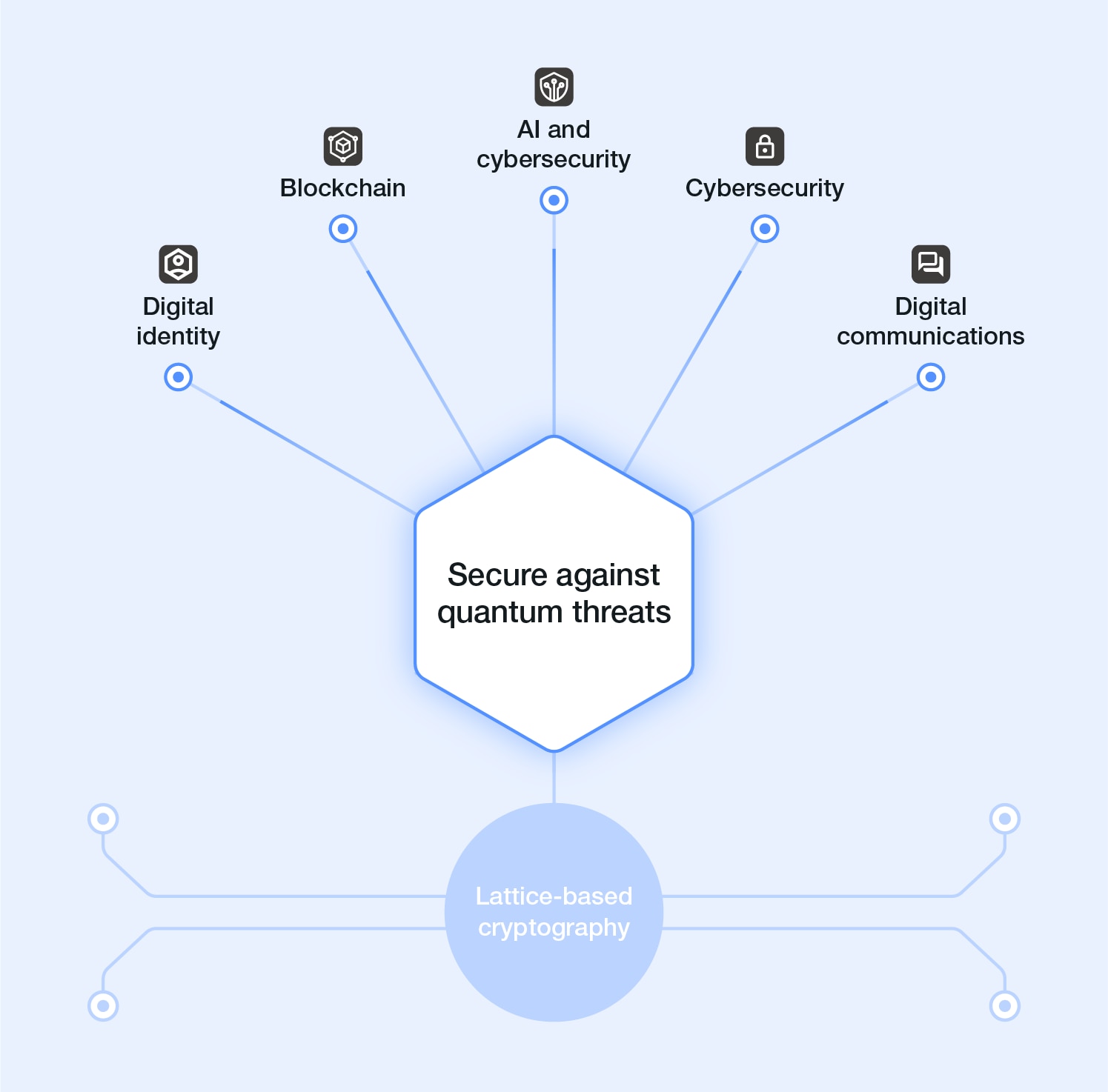

Public key encryption provides confidentiality as the electronic equivalent of putting a message in an envelope before sending or storing. This protects against secure channel decryption, where quantum computing can break encrypted network communications and ‘listen in’ on sensitive conversations. With lattice-based methods, these critical aspects of internet security and operations can be secured in the post-quantum era.
—Daniele Micciancio, Professor, University of California, San Diego
Imagining 2031
A nurse in a tertiary hospital pulls the records of a patient who arrived overnight from a country he has never been to. The medical history loads in less than a second. Somewhere in the infrastructure between the two hospitals, the transfer has been verified against the privacy law of the country where the records originated, the data residency rules of the country where they arrived and the patient’s consent.
Strategic outlook: Lattice-based cryptography
Lattice-based cryptography could allow compliance checks to happen as data moves, rather than after the fact. If actions can be verified in real time without revealing the underlying information, organizations could check whether data is being used correctly at the point of transfer.
This would change how trust is built into digital systems. Sampling records, interpreting ambiguity and negotiating enforcement were necessary when infrastructure could not check compliance at the point of origin. Recent lattice-based protocols have cut verification times from 90 seconds to 20 milliseconds,118 making real-time checks practical for the first time. Trust could become a condition for access rather than something established through later oversight.
For governments, finance and healthcare institutions, the implications would extend beyond encryption. With breaches now costing up to $4.44 million,119 many are redesigning data flows and moving to quantum-safe encryption.120,121 Petabytes of genomic sequences, wearable outputs and financial patterns could become safer to share, compute on and verify, while remaining protected from future decryption by quantum-capable actors.122
For that future to work, compliance rules would need to be precise before they are encoded into systems.
Once applied automatically, rules are followed exactly as written, leaving less room for interpretation after the fact. Software, hardware and institutions would also need to upgrade together.123 Protocols, operating systems and devices would need to adopt new standards in step, without breaking the services that already depend on them.124,125 During the transition, running lattice-based and older encryption side by side would keep existing services working.
The transition will not be even. Smaller devices such as wearables and embedded sensors cannot yet handle the heavier computational load required by lattice-based methods,126 and older infrastructure can be difficult to upgrade, especially when systems are fragmented or outdated. As encryption becomes stronger, attacks may increasingly target design and deployment flaws,127 raising the stakes for engineering and implementation.
Lattice-based cryptography can make data safer to share, analyse and verify; whether that will lead to trusted data systems will depend on the standards, policies and institutional choices built around it.
Related DFF megatrends: boundless multidimensional data; technological vulnerabilities
Building towards scale: lattice-based cryptography
- Policy and regulation: Mandate post-quantum migration timelines to drive coordinated transition across public and private infrastructure.
- Capital and risk: Conduct comprehensive cryptographic asset inventories to identify and prioritize exposure ahead of migration.
- Standards and certification: Accelerate adoption of harmonized post-quantum standards to enable interoperability across global systems.
- Developers and manufacturers: Implement hybrid classical-quantum cryptography in all new systems to ensure resilience during the transition period.
- Infrastructure and procurement: Secure end-to-end key life cycle management across all environments to maintain cryptographic integrity at scale.