
播客文字稿
Carl-Benedikt Frey, Associate Professor, Oxford Internet Institute: Economies that are not growing eventually become a zero-sum game where the only way for me to improve my standard of living is at the expense of someone else. That leads to a mindset that if somebody's better off, I must have lost as a result of that, and it leads to very contentious and polarised politics as we're having today.
Robin Pomeroy, host Radio Davos: Welcome to Radio Davos, the podcast from the World Economic Forum that looks at the biggest challenges and how we might solve them. This week: will AI give the global economy a much needed boost, and help us avoid that “zero sum game”, or will it just pose new threats to social cohesion?
Carl-Benedikt Frey: If AI doesn't deliver a boost to growth, those patterns are likely to intensify.
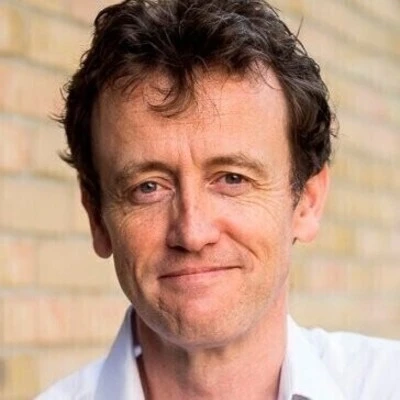
Robin Pomeroy: Carl-Benedikt Frey is an Oxford economist and historian whose latest book is called How Progress Ends. The real promise of AI, he says, isn’t just doing old tasks more efficiently. It’s whether it can help create entirely new industries and new sources of growth. That’s what history shows us.
Carl-Benedikt Frey: Think about it this way, if all we had done since 1800 was automation, we would have productive agriculture, we'd have cheap textiles, but that would be about it. We wouldn't have aeroplanes, rockets, vaccines, antibiotics, computers. Most material progress comes from doing new and previously inconceivable things.
Robin Pomeroy: I’m Robin Pomeroy at the World Economic Forum, and with historian, economist and author Carl-Benedikt Frey…
Carl-Benedikt Frey: If AI does not live up to the expectation in terms of delivering productivity growth fairly soon, I think we are in a lot of trouble.
Robin Pomeroy: This is Radio Davos
Robin Pomeroy: Welcome to Radio Davos, where this week we're bringing you another great interview from the World Economic Forum's Annual Meeting in Davos 2026.
The person asking the questions in that interview was my colleague, Pooja Chhabria. Pooja, how are you?
Pooja Chhabria:, Digital Editor, Public Engagement, World Economic Forum: Good, Robin. How are you, thanks for having me.
Robin Pomeroy: Very well, thank you. Great to see you. Just tell people what you do at the Forum.
Pooja Chhabria: Yes, so I'm a digital editor at the World Economic Forum, and I'm part of the big content machine that we have here, which also involves thinking about how we translate some of the biggest economical and technological shifts of the moment into stories that different audiences would understand.
Robin Pomeroy: Right, exactly. So we work together all the time on producing articles, doing interviews, podcasts, social videos, exactly doing what Radio Davos does every week, which is bringing some of these big stories, explaining them in a way that we hope is engaging. Talking of engaging, you had a very engaging interview with someone in Davos. Who is Carl-Benedikt Frey?
Pooja Chhabria: Carl-Benedikt Frey is an economic historian at Oxford University and he head up this Future of Work programme at the Oxford Martin School. And audiences perhaps may have read his research from 2013, which was on automation and employment. So he was looking at how many jobs rather would be at risk from computerization.
He is really interesting because he looks at technology through this long historical lens and he's doing that right now with AI.
Robin Pomeroy: Why did you particularly want to interview him now? Is it exactly that? Because we're all concerned about what AI might do to our jobs?
Pooja Chhabria: Exactly, it's because there's this moment of enormous excitement about AI, about what it's going to do to productivity. And Carl's argument is that technology alone isn't going to guarantee prosperity because he has historical moments that point to that. So I thought that was quite crucial for us right now, especially as we're seeing this growing concentration in the AI sector and there's obviously a very heavy focus on scaling LLMs.
Robin Pomeroy: It's always hard, you think there is no precedent for when a new technology comes in like this, because it's new. But there have been technologies in the course of human history that have totally changed the way we do things. Air travel, mass-produced automobiles, the printing press. And even in that opening montage that we just heard, he talked about it doesn't always go the way people expect. In the industrial revolution, we could have had all kinds of efficiencies, that in itself wouldn't have led us to have antibiotics or motor vehicles or computers. It's quite interesting how he frames this over the whole sweep of history, isn't it?
Pooja Chhabria: Exactly. Technology's potential isn't necessarily just dictated by the efficiencies it creates. It is more about exploration and seeing what else it can come up with that we potentially haven't thought of.
And the other thing I thought was quite interesting was as well his point about market concentration, where he talks about how we're starting to see very few large firms that are looking to optimise what they already do, so creating those efficiencies. But he says the startups which are more prone to bringing about innovations and new ideas aren't moving fast enough because there are barriers to entry.
And so we're going to see how he talks about the institutions and market structures that are as much important as the technology itself.
Robin Pomeroy: I see you've got an enormous book in front of you there, Pooja. This is his book that he brought out a few months ago. Remind me the title of it.
Pooja Chhabria: It's called, How Progress Ends: Technology, Innovation, and the Fate of Nations. Definitely a good read if you're interested.
Robin Pomeroy: Is it? What did you take away from the book?
Pooja Chhabria: I think for me it's just how we can't just assume progress is a given, just because we have a piece of technology emerging doesn't mean it's going to translate into gains. And we need to create that space for exploration, for new ideas to emerge, or we're just going to stagnate as a society, which is quite interesting.
Robin Pomeroy: Great, let's get straight to it then. You did this interview in Davos, a few weeks ago from when we are recording this. Here's you speaking to Carl-Benedikt Frey.
Carl-Benedikt Frey: I'm Carl-Benedikt Frey and I'm the Dieter Schwarz Associate Professor of AI and Work at Oxford University.
Pooja Chhabria: AI seems to be moving faster than the regulations or the capacity for institutions to absorb it. When you look at it historically, what do you think happens when technological change outpaces institutional adaptation? And do you we're seeing some early signs of that right now?
Carl-Benedikt Frey: So if we go back to the 1990s with the personal computer and the internet emerging, it's absolutely astounding to me that all we get from that is a decade long productivity upsurge mostly confined to the United States.
Because if you think about it, what the computer revolution did was giving us the world's stored knowledge in our pockets, connected the best scientists and inventors around the world. It streamlined the research process enormously.
And so you would have expected a tremendous and sustained upsurge in productivity growth because what we invented was a tool for innovation. And I think that should tell us something.
And what it should tell is that the technology itself is not all that matters. Institutions and incentives matter too.
And so in academia, for example, the incentive is publish or perish. That means that academics tend to pursue many projects at a given time. And what you can do if you get a new powerful productivity tool is that you can either do more things, or you can use that productivity tool to drill deep. And what the evidence shows is that we've opted for doing more things. And that means that our attention spans are more thinly spread across more projects, which means that we are less likely to push the boundaries and make a breakthrough in any given domain.
Today, there's a lot of excitement around AI and its potential to boost productivity, but I firmly believe that we need to solve institutional challenges in order to realise the productivity potential from AI.
One of the most promising applications is in medical discovery, but you still need to go through clinical trials to bring a drug to market. That's very expensive. It means that you still need to partner with a large pharmaceutical company, and that means that there are still bottlenecks for bringing new drugs by new players into the marketplace.
And we have institutional bottlenecks like that across multiple industries.
If you take a technology like the cloud, for example, it's reduced the cost of setting up a new company enormously. And yet, from the United States to China, what you're seeing is a decline in business dynamics, a decline in entry of new firms. I think that tells us that the bottleneck isn't just technological, it is institutional.
Pooja Chhabria: So what you're again pointing to is more institutional flexibility in that regard. So we don't lock in the technology just yet, but we give it more flexibility to be able to innovate more.
Carl-Benedikt Frey: I think that is important because what happens when you add compliance cost is that large firms are able to offset that often by capturing a larger share of the market, whereas smaller firms struggle more with these compliance costs.
And that's something we see in the context of the GDPR in Europe. Young companies have suffered, whereas larger technology firms have offset compliance costs by capturing a larger share of the market.
I'm not saying that there should be no regulation and that there are no risks with AI. There are real risks and there needs to be regulations in place to mitigate some of those. And so it is a balancing act.
But if you're looking at a regulatory regime that looks similar to what we have in the pharmaceutical industry, you can be sure that there will only be a few players that are able to compete in that market.
And that also means that governments around the world will become dependent on a handful of companies, which will have tremendous economic and political power. And that's not a healthy situation either.
Pooja Chhabria: But the last time we met, you also said something interesting about concentration among AI using industries, whereby there was a lot of focus purely on LLMs or the development of the technology in one particular sphere. Would you still agree that it's putting us on a trajectory where AI is more likely to be used for automation rather than the development of new industries or more innovative applications, so to speak?
Carl-Benedikt Frey: So I think market concentration matters for innovation for the reason that large firms, they have scale. And so they intend to use new technologies like AI for process improvements and automation. They like to do what they're already doing at lower cost and that tends to drift towards automation.
Smaller players on the other hand, don't have scale and they are more likely to push boundaries and develop entirely new products and industries. And that's really important for growth over the long run.
Think about it this way, if all we had done since 1800 was automation, we would have productive agriculture, we'd have cheap textiles, but that would be about it. We wouldn't have aeroplanes, rockets, vaccines, antibiotics, computers. Most material progress comes from doing new and previously inconceivable things.
Pooja Chhabria: And if we go into the kind of era that is actually entering now, we do see smaller firms that are innovating and pushing the limits of AI. And you have the bigger firms, as you say, trying to better their processes, optimise and automate. But if future historians were to look back at this period, this particular point in time, how do you think they would describe this period that we're now entering? How would you define it?
Carl-Benedikt Frey: So what we've seen with AI over the past decades is an era of scaling. Firms have been taking existing approaches and scaling them up, adding more data and compute. I think that period is now coming to an end and what we need is more research, more new ideas.
Most people know of AlphaGo beating the world champion at Go back in 2016. What few people know is that human amateurs using standard computers actually beat the best Go programmes relatively easily two years ago by exposing them to positions that they would not have encountered in training.
And so what that means is that even when you achieved superhuman performance, you cannot be sure how well those algorithms will work when new circumstances and events happen. And the world around us is changing all the time.
And so what we need is AI that is capable of generalising to new kinds of situations the way humans are going forward and that will require more research.
And that also means that we don't know exactly what the path forward is.
And that means that what we actually need is different players taking different bets in order to explore more technological trajectories and know and learn what is likely to catch on.
Because if you go back to the 1990s, for example, when Bessemer Venture famously declined to invest in Google, they probably regret it today. But it also illustrates that Google was no safe bet at the time, right? AltaVista and Yahoo were dominating search. And so the only way to figure out which approaches that to AI that will work and which won't is for somebody to invest in those.
Now we are now living in an increasingly fragmented world. And that is a big change. It's a big shift. If you go back to the post-war period, European growth, Japanese growth, Korean growth, growth around the world heavily relied on American technology. America essentially exported the system of mass production to the world, and in large part through martial aid to Europe, for example.
We're in a very different situation now because America is showing much less interest in free flowing technology. And if Europe cannot rely on the United States as a partner, it will need to develop its own technology.
And I think that's something that we will see in many places around the world, which used to rely on catch-up growth, adopting technology invented elsewhere, they will now have to shift towards a more innovation-led model.
Pooja Chhabria: Where are you seeing a different kind of innovation unravel when you say we should be taking different trajectories as countries to try and see what sticks? Are you seeing country at the moment that seems to be doing it differently?
Carl-Benedikt Frey: I don't have a good case in point for how to do it. Unfortunately, if you look globally, productivity slowdown is a problem in Britain, in Europe, in the United States, and even in China.
What I would say is that Europe, I think, is increasingly coming to realise that in order to compete in digital, it needs to do something because it's becoming increasingly squeezed between the United States and China. And that means harmonising the single market in services.
The IMF estimates that if you take all barriers to trade in services inside the European Union and add them up, they amount to something like 110%. So Trump Liberation Day tariffs self-imposed on services inside European Union. That means that the return to innovation in Europe is capped by the size of the market. So it's lower. We need to change that.
What the United States and China have in common is that they both have large harmonised markets to scale into. And we need to reduce barriers to entry for new firms and players.
And therefore, we need to look at rules and regulations like the GDPR that have been costly for smaller firms in particular. I think Europe is slowly coming to a realisation that those are musts and we now need to act upon them.
Pooja Chhabria: Our latest Chief Economists Outlook does indicate optimism on productivity gains, which are largely related to AI for the coming year. But in the event that it doesn't happen and productivity continues to remain weak, what kind of a political and social era do you think that would usually produce? Do we have any historical precedent for a long period wherein technology advancements have happened rapidly, but work has become less meaningful or less upwardly mobile?
Carl-Benedikt Frey: So, economies that are not growing eventually become a zero-sum game, where the only way for me to improve my standard of living is at the expense of someone else. And that leads to competition for resources. That leads to a mindset that if somebody's better off, I must have lost as a result of that, and it leads to very contentious and polarised politics as we're having today.
And so if AI doesn't deliver a boost to growth, I think unfortunately those patterns are likely to intensify.
And because a lot of investment has gone into building up AI infrastructure, which is pushing up interest rates. Which means that borrowing costs are becoming higher at the time when debt levels are already very high indeed, that could lead to an even greater squeeze on public services, for example.
And so if AI does not live up to the expectation in terms of delivering productivity growth fairly soon, I think we are in a lot of trouble.
Pooja Chhabria: And there's also a slightly more extreme view that is also coming in, in terms of the impact on jobs, the displacement, and also a potential reality where some claim a lot of time will be freed up in the future by AI where we wouldn't have to do a job. What is that reality likely to look like? Are you going to see an un-linking there between technological progress, productivity gains, and economic growth in general?
Carl-Benedikt Frey: So I think the question of what will happen to jobs in the age of AI depends a lot on what we use AI for. So if we only use AI automation, I think we will see a growing decoupling between productivity and job growth. But I also think that productivity growth will be relatively modest in such a world because also most growth comes from new sectors, new activities that are emerging.
And if we do see those sectors emerging, I think we will also see new jobs being created. We will see new wealth being created that will lead to more spending on in-person type of services that we value will create jobs in those sectors as well.
So I think it is a choice.
And I think if we see AI leading to very significant job displacement, I think for many knowledge workers, they are not prepared for the loss in status. They are likely to see as AI either automates their work or makes it much easier for somebody with lower levels of skill to do their job at lower cost. And so that is not just a question of economics. It's also a question of meaning and purpose.
Pooja Chhabria: Maybe historically as well. I don't know if you have an example you could point at, but how long do societies usually have to course correct once a new technology's trajectory has become clear? And I mean, I guess it's still too early in the window with AI where we are currently, hopefully.
Carl-Benedikt Frey: Well, so if you go back to the first industrial revolution, it took around seven decades for the benefits of the factory system to trickle down to the broader population.
Now, of course, Britain was not a democracy back then by any stretch of the imagination. Property ownership was a requirement for voting and so people voted with sticks and stones.
Today, in societies that have democratic, institutions in place, there are more mechanisms for self-correction and that's something you saw in the United States during the Gilded Age, for example, where the public mobilised against the rise of new tech monopolies and the widespread corruption in the political system becoming apparent. And that then led to the creation of a meritocratic civil service with the Pendleton Act. That meritocratic, civil service then went on to regulate American monopolies through the Sherman Antitrust Act, for example.
And so this played out over several decades. And that's how long it can often take for that correction to happen. I only hope that it happens a lot quicker in the case of AI.
Pooja Chhabria: But as you said, we don't quite know what is the right way at the moment. For some of the more developing and emerging economies, if they aren't able to import the technology, we don't quite know what is the best way forward with the technology itself. What do you think is the best course of action for them? Because it is a race, there is a lot to catch up on. What is the the right strategy for some of these countries in the current era?
Carl-Benedikt Frey: So I'm actually more optimistic about developing and emerging economies than any, because I think what AI in its current form does is really reducing barriers to entry in knowledge work.
It's a bit like GPS technology for taxi services. And so with GPS technology, knowing the name of every street in New York City or Beijing was no longer a particularly valuable skill. And so new companies could enter with digital platforms, matching supply and demand. And then anybody with a driver's licence could get into their car and top up their incomes on the side.
What we see with knowledge work is obviously that that work is more tradable than taxi services. And what we also see is that If you compare the wages of an accountant in New York City to an accountant in Manila, the accountant in the New York city earns an order of magnitude more. Now, if AI reduces that productivity differential, which I think it's likely to do and we have good experimental evidence suggesting that, then you will see more of that work shift toward Manila.
And what we're also seeing is that AI is making language barriers less of an issue. Most trade and services have historically been confined to English-speaking countries, but with machine translation more countries can actually participate in service trade.
And so I think there's a real opportunity for emerging economies to pursue service-led growth in large part because of developments. Artificial intelligence.
That does not mean that, you know, catch up is automatic, but I think it creates a new opportunity for low-income countries to catch up.
Pooja Chhabria: And what kind of institutional flexibility would that require? Decentralising models?
Carl-Benedikt Frey: I think in this case, you would not necessarily need to be at the cutting edge, the frontiers of technology, to do that.
It's a little bit similar to what we've seen with manufacturing, where the auto industry emerged in Detroit, then spread across locations in the West, eventually migrated to places with lower labour costs in countries like China. And as a consequence of that, you saw 800 million people being lifted out of poverty as manufacturing industry migrated.
What we might see with AI is something similar happening in services as well.
Pooja Chhabria: You said, finally, to sum it up, the kind of period we're entering right now is closing the era of scaling and entering a new era where we might begin inventing this.
Carl-Benedikt Frey: I think with regards to AI, what we need is a new paradigm of research because we need new ideas.
And so it's far from clear that the future of AI is large language models. It might be small language models, it might be symbolic AI, it may be a fusion between large language and symbolic AI. It might be something else.
And to explore those trajectories, we need a new paradigm of research and we need more decentralisation.
And because we've seen so much capital flowing into the AI sector in terms of infrastructure development, we've been able to support the scaling paradigm.
But I think that the new models that we'll see emerging in the future will need to be much more similar to humans, which are much more energy efficient and much more data efficient, capable of learning from only a few examples.
And so, if the AI bubble bursts and we don't see as much capital flowing into the AI sector any longer, it will probably force firms to actually invest more in data compute energy saving AI and that will also make energy less of a bottleneck to AI development than it is in the scaling paradigm we have today.
Robin Pomeroy: Carl-Benedikt Frey was speaking to Pooja Chhabria at the World Economic Forum's Annual Meeting in Davos in January. You can also hear the talk that Carl-Benedikt Frey gave in Davos called Progress Is not Inevitable - available on our sister podcast Agenda Dialogues or watch the video on our website - link in the show notes.
This episode of Radio Davos was presented by me, Robin Pomeroy. Editing was by Jere Johansson. Studio production was by Taz Kelleher.
Radio Davos will be back next week - please follow us wherever you get podcasts. But for now thanks to you for listening and goodbye.
Artificial intelligence is set to have huge impacts on economies and our lives, but exactly how it will change the world will depend on much more than just the tech.
Historian and economist Carl-Benedikt Frey, author of "How Progress Ends: Technology, Innovation, and the Fate of Nations", says innovation and institutions will be key to whether AI delivers on its promise.

每周为您呈现推动全球议程的紧要问题(英文)

Michele Stansfield and Eva Borge
2026年3月22日