播客文字稿
This transcript has been generated using speech recognition software and may contain errors. Please check its accuracy against the audio.
Adam Tooze, Director, European Institute, Columbia University: Despite the pushback on the climate agenda, which has been a feature of the last 18 months, two years given the shift in politics in the US, at the global level and even in the United States itself, the green energy revolution continues. And this war is an affirmation of the need to go on doing that.
Robin Pomeroy, host, Radio Davos: Welcome to Radio Davos, the podcast from the World Economic Forum that looks at the biggest challenges and how we might solve them.
Adam Tooze: This is the 14th major shock to the fossil fuel system since the early 1970s. So the idea that fossil fuels are the reliable source of power, at least as far as oil and gas are concerned, is profoundly discredited at this point.
Robin Pomeroy: My guest on this episode is historian and podcaster Adam Tooze.
Adam Tooze: That's another element of the deep rationality of China's strategy, is there's one thing the government here does, is it just drives electricity prices down and then produces abundant supply, and then you see what kind of industrial facilities can cluster out. Whereas in Europe we've seen the opposite strategy. So rational strategy for Europe will be one that basically produce low electricity prices for consumers and then major incentives to shift electricity generation into green and carbon penalties for those that are still dirty.
Robin Pomeroy: Find Radio Davos on Apple Podcasts, Spotify, YouTube, wherever you get podcasts, Spotify, YouTube wherever you got podcasts and at wef.ch/podcasts.
From the World Economic Forum…
Adam Tooze: It's the single most dramatic story in the history of energy or industrialism or the economy in history.
Robin Pomeroy: This is Radio Davos.
I'm joined by Adam Tooze. Adam, how are you?
Adam Tooze: Pleasure to be here.
Robin Pomeroy: You're a, what's the word, a poly-hyphenated talent in that you are a historian, you're an author, you're a podcaster. How do you, in a nutshell, how do you tell people what you do?
Adam Tooze: I am somebody that's really in the sort of sense-making business, I'm trying to make sense of things. I started out as a historian and I'm interested in contemporary history, a colleague of yours asked me this morning what it was that got me out of bed in the morning and I said it was curiosity. I think that's the long and the short of it.
Robin Pomeroy: There's plenty to make sense of right now and plenty of history being made, I guess.
We last spoke a year ago, you were a guest on Radio Davos again at this event, the AMNC in China. And at that time, if you remember, suddenly, almost out of nowhere, US and Israel were bombing Iran. That was a year ago, then that stopped. Then we've had a war, which supposedly has now stopped as well. There's a memorandum of understanding for a peace deal. How do you view the situation now and maybe in the next few months with Iran?
Adam Tooze: I mean it's a difficult issue especially I think for a forum like Davos because the basic premise of Davos is that we're dealing with people of good will who are interested in common prosperity, stability, growth, development, all of that kind of motherhood and apple pie kind of approach to global history. And the American and Israeli attack on Iran demonstrates that that's just not the world that we are in.
You can stack this up any way you like. The Iranian regime are no innocents. This is a regime which pursues its own power politics, its own axis of resistance, as they call it, its own proxy wars. But nevertheless, the escalation of violence and a full-scale assault by the US and Israel, the decapitation, as they like to put it, in other words the murder or assassination of the Iranian leadership, is an indigestible, violent reality of our current world.
And here we are at the Forum discussing how we maintain stability as the basis for growth when we have two actors for whom that clearly isn't the priority.
In the case of the Israelis, it seems that sheer mayhem in Iran will be enough for them. And there does seem to have been a conviction that the Iranian regime could simply be shifted. And it turns out to be a tough nut to crack, and the Americans aren't the first person to learn this, right? And it's hit back...
So, we're in a world which doesn't yield to the basic diagnosis of, you know, overcoming technical obstacles to economic development, which is one of the core premises of a meeting like this.
So it's a slightly schizophrenic situation that we're all in, or at least one of cognitive dissonance, I think.
Robin Pomeroy: Are a lot of people talking to you at this event about that situation?
Adam Tooze: Not publicly, certainly, and I was at a private meeting, which I won't say more about because it was a private meeting, but nevertheless there was an awful lot of euphemism and not a lot of direct talking, because it's difficult to digest the fact that if, given the way also the Europeans essentially lined up early on with the Americans and Israelis in this attack, you're left essentially with China as the one big anchor of stability in the world, and I think that's a reality. I think it's something that's hard to acknowledge. It's one of the reasons why we're here and so many of us are willing to come to Dalian and to take part in this conversation because unless you recognise that fact about the world right now, I do think you're deluding yourself.
China of course has its own strategy, its own direction, its' own purposes, its own interests, but they are at least pursuing them in a way which right now is stable, predictable based around projects of prosperity, technological development, which are at least potentially mutually beneficial and win-win.
Robin Pomeroy: So that war has reminded us we don't live in a world that's motherhood and apple pie. Another thing that's happened that might have reminded us or revealed something is the Strait of Hormuz closure. I think it's reminded a lot of governments and a lot people, a lot companies about the realities of the global economy as well. What have we learned in the last few months from that?
Adam Tooze: Well, we've really learned about asymmetry, haven't we?
Because if you're in a prosperous part of the world with purchasing power, or with relatively autonomous energy supplies, it's been one experience which has been less dramatic than many people predicted. This is, after all, in physical terms, the largest interruption to the global energy system ever, essentially. It's the nightmare scenario. And yet, you know, life has gone on.
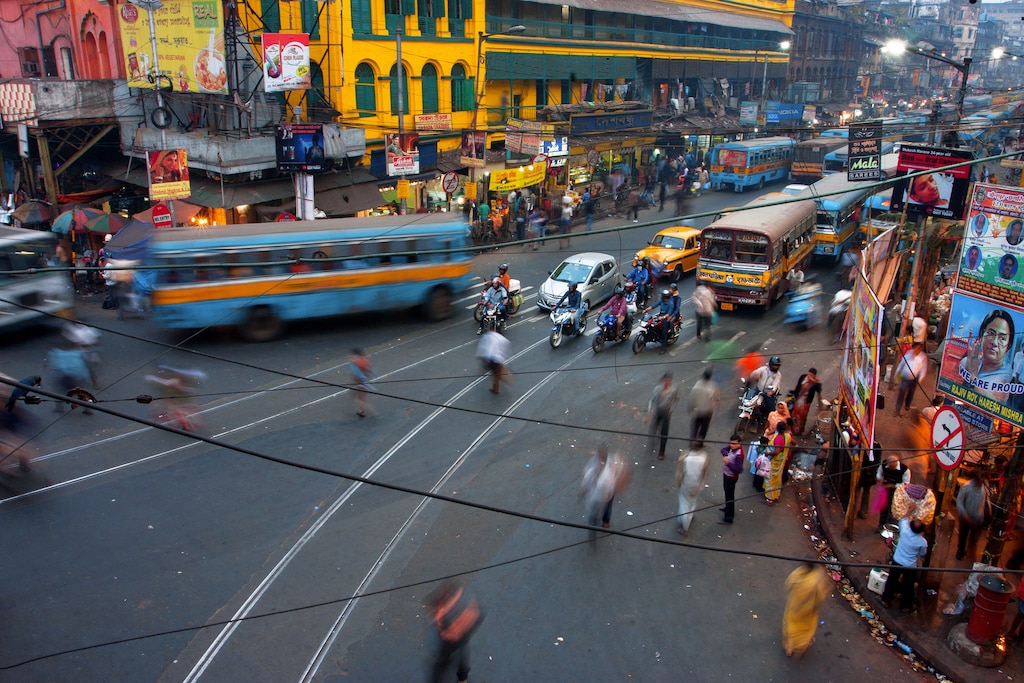
Except not if you're in Thailand or not if you're in India or Pakistan or Bangladesh, in other words lower down the pecking order of purchasing power and access to energy and we have yet to see what impact the interruption of fertiliser supply and the incredible shocks to fertiliser prices will have on lower income farmers, not now immediately but in the next cropping cycle. So we're yet to I think see the consequences of that.
But it's another moment in which, through shocks, through crises, we've learned things about the global economy we probably should have known anyway. But how many of us had really thought seriously about the Gulf as a major source of inputs to the fertiliser production chain? Not enough, clearly.
Robin Pomeroy: Do you think we'll see any major kind of structural shifts as a result of that?
Adam Tooze: I mean, I think the simple story is that people are going to diversify away from oil and gas. Why wouldn't they at this point?
There are alternative sources of supply. The Americans have been making hay with the promise of LNG. The Europeans have taken advantage of that. This time it's one of the reasons why the shock has been less dramatic there.
I think, the more optimistic reading is that we're going to see a surge in imports of Chinese green technology, of green electrotech, as Ember likes to call it, so that's solar panels, batteries, EVs as well.
So despite the pushback on the climate agenda, which has been a feature of the last 18 months, two years, given the shift in politics in the US at the global level, and even in the United States itself, the green energy revolution continues. And this war is an affirmation of the need to go on doing that.
I think Javier Blas's number from Bloomberg is this is the 14th major shock to the fossil fuel system since the early 1970s. So the idea that fossil fuels are the reliable source of power, at least as far as oil and gas are concerned, is profoundly discredited at this point.
Robin Pomeroy: It's interesting to see what impact those shocks had. I mean, from the European perspective, in the '70s, a lot was invested in more efficient cars, which probably didn't happen in the United States. Now you have to assume - there are cars out there that don't need oil products.
Adam Tooze: Yes, we're moving in a different direction. I mean even in the US know that the the 73-79 shocks are an inflection point. You see it incredibly clearly in the fossil fuel consumption and in CO2 emissions in the developed world. The curve breaks. In the U.S. It then starts to ease back up again in Europe it's one way from there on in.
I think the current moment,and it's as much the questions as it is the actual reality of prices, right? Because prices have not gone through the roof Many people would have been predicting $150, $200 a barrel. That's not happened. But it's the fact that you're asking yourself the question.
I have members of my family that spent most of the last couple of months planning for a world in which the UK couldn't access diesel to maintain basic logistics. No one should be forced to ask themselves that kind of question. And electrification is a way of diversifying and ultimately just simply moving away from this kind of model of imported energy dependence.
Robin Pomeroy: If countries wanted to make that switch rapidly to electrification through renewable energies, they would have to rely on Chinese products, solar panels, wind turbines. It's available now. A lot of countries are reluctant to do that. Why do you think they are?
Adam Tooze: Well, because they are basically making themselves dependent on another monopoly supplier, in this case, in fact, even more monopolistic, because China's dominance of green electrical technology is far more clear than, for instance, that of OPEC over oil and gas.
So that's one aspect. The other one is, are issues around China's politics itself, China, especially from the European point of view, who would be the high income countries most likely to do this, the Americans have made abundantly clear that they're not interested in Chinese EVs or photovoltaics and they'd do without batteries if they could. And obviously the president, as we heard at Davos in Switzerland, has a thing about windmills.
But if the Europeans were serious, as you say, they would go hell for leather. And it's the alignment of China with Russia in the Ukraine war that makes that profoundly problematic from the European point of view. Because they, for obvious reasons, see Ukraine as an existential threat. And China's alignment with Russia, at least as perceived from the Europeans side, really raises the red flags.
Nevertheless, in 2022, there was a huge spike. Tens of gigawatts of photovoltaics were imported. That continues. And for the rest of the world, I think the fundamental point, after all, is that if you buy the hardware, of course at some level there's a dependence.
And some of the technology, the inverters for photovoltaics, are rumoured to potentially have kill switches. And the Chinese have not worked as hard as they might to disprove these rumours. So there's anxiety around that kind of conditionality.
But the basic difference is that once you bought the kit, as long as you can keep it operating, you've got no further dependence. You don't have to regularly import oil or gas. And that's what structurally makes this a different bargain.
Of course, it's a kind of dependence. But I think radical independence, full autonomy in the modern world is an illusion in any case, right? The real question is how you pick your risks, how you manage those risks, how you hedge, how you diversify. How you maybe look for political mechanisms. I mean, to my mind, it's a real miss that Beijing, for instance, isn't organising a global forum on energy security in which they systematically show up and display their green technology and answer questions about its security implications.
Are there or are there not tracking devices in BYD cars? Break them down and just show that there aren't to their satisfaction. Make the case. And I feel that's a great missed opportunity because the questions out there and it's not being addressed in a systematic way, you need some sort of test and verify kind of mechanism I think to address this concern.
Robin Pomeroy: Even if BYD and the hundreds of other Chinese car manufacturers could do that to the European satisfaction, the Europeans aren't suddenly going to open their doors, are they, to cheap, high-quality, high-tech cars?
Adam Tooze: They're literally going to insist that they cost a minimum price. The condition of entry to the European market is that European consumers should pay more, over the odds than for what they could have the cars for.
Because other things matter, it's always a complicated equation. In the European case, as far as cars are concerned, because the motor vehicle industry is a huge established industry with over 12 million employees in Europe in the broader supply chain, it's those jobs that really, really matter.
That's a perfectly legitimate concern. It's a matter of what in a different context would it be called a just transition. And the sooner I think Europe and China can get talking turkey about this and just be very clear, put their cards on the table and say, look, this is what matters for us. Yes, we understand that these are high quality products at incredible prices. We think these are the subsidies which help generate that. Can we talk about the terms that are necessary to get to a deal? The sooner we get there, the better.
Because that's what this is about, right? It's not a fundamental objection to buying any Chinese cars as anyone who's been in Europe recently knows they're coming anyway. And this isn't like in the US where even Joe Biden put 100% tariff on Chinese EVs and then asked Canada and Mexico to do the same. So I think the Europeans and the Chinese need to start having what we call by the cliche an adult conversation about what the bottom lines are.
You know, this is a concept Chinese diplomacy understands, after all. And if it were to be the case that 12 million industrial jobs are one of Europe's bottom lines, OK, let's figure out how we make this work. Is it FDI? What are the conditions for FDI from the Chinese side?
All of these conversations are actually already ongoing. To my mind, if they manage to make this into a trade war right now, it's for a lack of political will, fundamentally, because the technical issues and the stakes are pretty transparent.
Robin Pomeroy: How do you see China's energy transition? Has it reached, it looked like the greenhouse gas emissions from China were rapidly becoming the highest for any country, which they now are. But it does look like it's plateauing and coming down. Would you agree with that? And also then, has China got lessons for other countries? How could other countries look at what China achieved by doing that, which did include a massive increase and a huge use of fossil fuels and coal, what can we learn from China if they have achieved this remarkable feat of now being on the down slope potentially of greenhouse gases?
Adam Tooze: Yes, it's the single most dramatic story in the history of energy or industrialism or the economy in history, in world history and the history of our species.
Exactly as you say, this incredible surge from 2000 onwards as China's growth goes to 7, 8, 9 per cent per annum and then a plateauing from the, slow plateauing from the mid 2010s and now what looks like a genuine plateauing the moment really of the COVID shock and the deliberate slowing down of the heavy construction sector and of course Xi Jinping's you know double carbon the promise to peak and the promise then to achieve net zero by 2060.
So it looks like the most dramatic as you say also however hair-raising effort at macroeconomic management within planetary limits or perhaps somewhat beyond planetary limits than we've ever seen.
The idea that, you know, government policy is dead as a driver of the global economy, it's all completely negated by this Chinese experience, which is the most dramatic.
In terms of the techniques of policy, they have used nothing that isn't clearly on the agenda or in the repertoire of every other sophisticated state around the world. It's a matter of industrial subsidies, demand stimulus, fixed prices of various types, feed-in tariffs, carbon pricing almost, they're getting there.
All of this array of policies that the Chinese have used have been experimented with in different forms, whether it's in the US or in Europe.
Europe is the closest match and the Chinese experts know this. If you speak to any of the Chinese climate people here, they'll tell you, you know, they took lessons from the Europeans.
But even on the U.S. side, clean air regulation is a key part of the Chinese strategy because one of the things that drives this is not just concern for the global envelope, but the pollution crisis that would have dominated our reality in a place like Dalian or Tianjin, you know, 10 years ago. And the incredible improvement in the environment here is one of the big drivers.
The difference to everywhere else in the world is not at the level of the policy instruments, sits at the level of the willingness of the senior political leadership to commit, to very publicly commit, to underline that commitment, to make that commitment into a mantra of political leadership. Everyone in this country can repeat the two mountain theories, you know, that clear rivers and lush mountains are mountains of gold and silver.
This is one of Xi Jinping's core messages to the Chinese people. If you look at five-year plan communication, amongst all of the things they could be talking about in the top 20 list, number four is climate. So they put it at the absolute centre, they commit credibly, and then you open the soft budget constraints in the Chinese system and money actually flows.
Not crazy amounts of money, right? Best Western estimates of the total subsidy for the EV industry, which is a world-changing event, are in the order of $150 billion over 15 years. So that's $10 billion a year. This is not radically out of kilter with what other societies have been thinking about spending in terms of green industry. It's just applied more consistently, and it's very, very credible because it's coming from the absolute top of the ruling party.
And so that's what I think fundamentally makes a difference, plus Chinese entrepreneurship. Like, you give a bunch of Chinese business people the signal, the right signal, that this is where we're going, people will go at it with such energy and with real almost obliviousness for the bottom line, because people aren't making a lot of money right now in photovoltaics or batteries or EVs in China. It's really hard to earn any money at all. But the promise is that you might emerge as the national champion and then not just your profitability but also the the purpose of what you're doing will be written in red letters across this huge, giant country. And that's pretty motivating.
Robin Pomeroy: Policy stability is good for entrepreneurship and investment in any country. I guess China doesn't have the inconvenience of the electoral cycle that we have in Europe or North America, lots of parts of the world.
How do you see things, and maybe this will change after the Hormuz crisis, but I do remember when in Europe, everyone took climate change seriously. In America, it's always, the pendulum's swung every four or eight years, and it's still doing so. Astonishingly to anyone who believes in the science really, I mean, you can make differences in policy, but to deny the science seems a bit strange. But in Europe now that seems to be becoming a thing as well with these rise of populist right-wing parties. Where do you see that going? Because politicians surely should be able to say, even the most fiscally conservative should be able to say, climate change is happening, we know why it's happening, we've got to do this, that, or the other in a array of different ways to achieve it. And that used to be the case, think of the Conservative Party in the UK ten years ago. It's not going that way now. How do you see that developing?
Adam Tooze: Well, it's one of the biggest challenges for democracies in general, I think, is that you could come to the sobering conclusion that a one-party regime that is committed to the legacy of Marxist revolutionary theory, from Lenin to Stalin to Mao to Xi Jinping, those names are written unabashedly and unashamedly written in the legacy of the party, finds it easier to consistently cleave to a science-based policy than policy in the West.
And that, if that were to prove to be the case, would be a sobering conclusion with which to start the 21st century.
And we are on the cusp of ending up in that kind of position, I think. Because America, as you say, has been consistently fickle. And if you look at the underlying political economy, if you at the underlying resource endowment of America, perhaps this is unsurprising, because America has re-emerged as a major fossil fuel producer.
But Europe, for heaven's sake, is an energy importer. It's a fossil fuel importer, it's a hydrocarbon importer So what's going on there? And this brings us back to the car industry and why the car is so neuralgic. Because it's an absolute test case, not just that, it's also this huge manufacturing sector where we see a failure of leadership which is really grievous and puts us now in the position where there are really hard trade-offs.
Because the European car industry should have seen decarbonisation coming 15 years ago. It was in the EU's plans. Europe has historically been more committed to climate than anywhere else. There weren't any serious climate sceptic parties in European politics in the early 2010s. So you would think that the leadership of all of Europe's motor vehicle industries would be laser focused on alternatives to the internal combustion engine and what were they doing instead? Perfecting the turbo diesel. Now that's a very economical engine. It is the perfection of internal combustion but it's never going get you to net zero. Never, ever, ever.
And instead of realising this and taking Tesla as the warning sign and the harbinger of the future, as was true, at least for the new Chinese companies, there's plenty of dead defunct internal combustion engine makers in China as well. But in Europe, that's the norm, right? And it's really a disaster of European leadership, both in the corporate and at the industrial level, and then the political level that the owners of the biggest European car firms were allowed to milk them for dividend in the late 2010s as the, it's largely private ownership in the German case, they took tens of billions of euros in dividends, which should have been ploughed back into the next generation of technology.
And then you face this profound dilemma, because what does a democratic government do under those circumstances when the private sector has failed to really provide the leadership you need?
We're in tough territory here and the compromises the Europeans are making are difficult. In a sense what we need to do is to get to bargains that cut losses, make the best of the situation we're in and to some extent guarantee employment in those sectors because otherwise the political fallout will be even worse.
Once you have a Reform in the UK or an AFD bursting through in Germany, both of which are more or less explicitly. Climate sceptical where Reform has threatened to undo long-term contracts for offshore wind farms, the AFD is an anti-green party, it's a disaster and we have to face it like a real failure of rationality on the part of Western democracy. There's no other words for it.
Robin Pomeroy: Surely if green energy is cheaper and obviously cleaner, who's not going to vote for that?
Adam Tooze: Well, this is what we see in Texas, so this is one of the kind of more optimistic stories.
But that argument doesn't work in Britain, for heaven's sake. And part of the problem is that another element of the European green strategy, apart from the failure to have an EV industrial strategy, another part of it has always been to drive the price of energy up.
Why? This had an element of rationality about it to make people more conscious of energy they were using, drive them towards efficiency. And at the margin, of course, effectively price out of the game, they hope, the dirtier producers.
One of their side effects is it just raises energy bills. So now in Europe, you have this association between the green energy transition and energy prices, which is completely paradoxical because, in fact, the wind and the solar, on a good day, is next to free, or indeed the price is even negative. But the marginal price, which is what governs the price in a de-unbundled electricity market, is being set by the polluting gas and coal-fired power stations.
So that's another element of the deep rationality of China's strategy, is there's one thing the government here does, is it just drives electricity prices down and then produces abundant supply, and then you see what kind of industrial facilities can cluster out, whereas in Europe we've seen the opposite strategy.
So rational strategy for Europe will be one that basically produce low electricity prices for consumers. And then major incentives to shift electricity generation into green and carbon penalties for those that are still dirty. You need three instruments effectively to be working and to be working consistently.
Robin Pomeroy: Why hasn't that happened? That's been clearly what should have happened 30 years ago. Why not?
Adam Tooze: Well, there was too much confidence, I think, over optimistic belief in the logic of carbon pricing per se, which was what not then coupled to hard thinking about the logic of unbundled electricity systems in which it would be the marginal gas plant that set the price. So that's one element of the story.
There is a kind of fiscally austere desire to up price energy so as to induce efficiency, Inefficiency shouldn't be underestimated as a key element of the story. I mean, that's another part of this.
And then when it came to industrial policy, there was really until, well, as recently as five or six years ago on the European part, an allergy against aggressive promotion of the technologies you wanted to go for. You'd use an indirect mechanism like feed-in tariffs or something like that to provide the incentive. But you weren't going to actually support the manufacturers themselves directly. You'd do that in all sorts of indirect ways. Largely to the benefit of dirty technologies.
So there's a real incoherence here of policy rules.
It's not fatal, it's not the end of the game. The European Green Deal was absolutely a step in the right direction. Next Gen EU also had components that were right. And then of course the whole European picture has just been disrupted by Russia's aggression against Ukraine. That's been so damaging to the coherence of European policy.
Robin Pomeroy: I heard you speaking on Kaiser Kuo's podcast, but I believe you just recorded another one with him, Sinica. He put this thing to you, which I'd not heard of before, the flying geese paradigm. So you were talking about the development of the kind of miraculous development of China's economy over the last 20, 30 years. And the flying geese paradigm is where, as I understand it, lower cost manufacturing should migrate to other countries as a country like China gets, the wages go up, the standard of living goes up. Some of those factories, which maybe were profitable 30 years ago, they might go to less developed countries.
And he put it to you that because of automation, maybe also abundance of electricity, with factories that can work just with robots throughout the night, that that manufacturing won't go to other countries. Is that a risk and is it a problem and what might be done?
Adam Tooze: There's mixed evidence on this.
One can imagine really disastrous scenarios in which there's a complete cessation of that kind of development up the supply chain. It isn't after all what we've seen in South Asia or Southeast Asia so far.
In the Bangladeshi development story where Bangladesh has really established a very important position in global textiles and clothing supply chains is, I would say, you know, a counter example of a relatively successful and relatively classic dispersion of industrial technology, much of it Chinese, to a lower labour cost producer with good access to Western markets.
You could say the same about much of Southeast Asia. I mean, Vietnam famously, notoriously, some would say, became an entrepôt essentially for a diversionary strategy for exporting Chinese technology to the United States. But that's not all that happened in Vietnam. Vietnam rapidly began to establish clustered industrial strength of its own, it actually began to retain large numbers of Chinese green electrotech products for its own decarbonisation strategies. Because if you've got a rapidly growing economy like Vietnam, which does have coal but doesn't want to go down the coal path, there's an alternative now.
So I think there are counter-examples to this trend.
And as far as the most desperately poor and least developed parts of the world are concerned, I have to say I find this argument somewhat specious because they weren't industrialising. African industrial development was halted dead in its tracks by the oil shocks of the 1970s and by the subsequent IMF programmes, the HIV crisis. China didn't kill the prospects of industrialization in Africa. They were the victims of the late 20th century crisis.
What China offers for the first time is essentially affordable, clean electricity which can be deployed at scale. And there's very substantial programmes now from the African Development Bank partnering with the World Bank to electrify the homes of about 300 million people in Africa. And they can do it for peanuts, relatively speaking. A couple of $10 billion will get you there because soccer fields full of photovoltaics and a battery and an inverter are incredibly affordable now and that's enough to electrify 300 households which all of a sudden gain access to reliable cellular telephony and all of a sudden can keep the lights on and operate basic equipment and charge the battery maybe on an electric tuk-tuk. And all the sudden we're in a development cycle that would have just been completely out of reach ten years ago.
So is it going to be the same path? Are the lowest income countries going to be able to replicate Chinese growth? No, evidently not. But then no one ever did that, right? No one ever has, I think we need to be thinking forward what the new options are.
And affordable, clean electric power just cannot be a bad thing. Like, to my mind, that's almost a contradiction in terms.
Sure, it creates questions for local competitors, but they're effectively, people will say it undermines the grid, but you show me where the grid is in Nigeria. It's not there. That's Nigeria's problem, right? So if the grid was never going to be built in the first place, certainly not anytime soon, then let's improvise and move outwards to non-standard, non-normative models of growth, but which are growth nevertheless.
Robin Pomeroy: We're coming to the end of the time we've got. Are there things you're looking at that the rest of us aren't looking at? This time next year what do you think we'll be talking about in terms of global relations, in terms all the things we've just been talking about that could surprise us if you look into your crystal ball?
Adam Tooze: I mean, I still wonder about why we don't talk more about pandemics. I mean here we are doing another Davos meeting and you and I probably both remember the one in 2020.
Robin Pomeroy: It's my first one.
Adam Tooze: And we were on the cusp of a shock which meant there wasn't a Davos 2021.
Robin Pomeroy: No, 2019 was the last Davos. Yes, 2020 did happen, yes, you're absolutely right, I'm sorry, I was at it, it was my first.
Adam Tooze: So January 2020, and there's almost a sort of shame-facedness about bringing it up, doom-mongering, you know, there you go, conjuring these nightmare scenarios. But I mean, it was entirely predictable that something like that would happen, you know, the Forum and other similar global bodies have been hosting conversations about those kind of risks for 20 years. Literally since the late 1990s and the early 2000s when finally the world began to come to grips with the scale of the HIV AIDS pandemic in Africa, the Forum was important in helping to bring those conversations together.
We have an incredibly serious Ebola outbreak in Africa right now. I don't see it featuring at the level that you would anticipate and yet we know we are just rolling the dice every single year on this. And COVID was mild by comparison with what we should expect. And we know that the conclusion there about our collective illability to manage this was pretty sobering after all.
And both of us kind of smirking at each other and going like, oh, should we really be talking about this? If you're seriously weighing truly macro shock risk, this I mean, I don't mean to say this in a polemical way, but, you know, to get to the kind of casualty numbers that you had from COVID, which was a mild pandemic in a climate scenario, you have to go far, far, out on the spectrum of disasters to come even close to, you know, the death, the mass chaos, disruption of life that we saw all across the world.
Robin Pomeroy: And the disruption to the global economy.
Adam Tooze: 20% down in the space of three months, three, four months, 20% down. That is off the charts of even the worst climate models. And we know it's just ticking there as a possibility and the odds are that over the next 10 years.
But the problem is no one can put an immediate, you know, I can't tell you timeline. I can't even forecast it like an El Niño event. We all knew this summer was going to be hot in Europe. We didn't maybe know it was going to be quite this hot so early, but at least we could kind of call it.
I can't give you anything similar on a pandemic. But I'm, it does blow my mind that, you know, more people didn't immediately set up to fill in the WHO budget, which has left that organisation essentially unable to deal with the Ebola crisis. That ought to be top of stack.
Robin Pomeroy: Oh, Adam, I was hoping to end on a, you know, that was my last question, but give us a note of optimism. What gets you up in the morning and ask the same question, you know, with a spring in your step?
Adam Tooze: It still is. It's the green energy story. I just feel the possibility that that opens up for development around the world and the space at which it's happened and what it reflects about the industrial and technological capacities of so many players in the global system.
What else do we need? We thought this was an uncrackable problem. You know, 20 to 30 years when we were kids, solar panels and batteries were for freaks. And now it's a dominating reality.
That, surely, people weren't wrong that said technology could be the source of the solution here. And same with pandemics. We know the answer. We should just be working on a full suite of first stage vaccine development. We know what the options are. And that still fills me with great optimism.
Robin Pomeroy: Adam Tooze, thanks for joining us on Radio Davos.
Adam Tooze: It's a pleasure.
Robin Pomeroy: You can find Radio Davos wherever you get podcasts or at wef.ch/podcasts, where you'll also find our sister programmes, Meet the Leader and Agenda Dialogues. Many thanks to Adam Tooze and thank you too for listening to or watching Radio Davos. We'll be back very soon. Goodbye for now.
Conflict in Ukraine and the Middle East have exposed the vulnerability of fossil fuel supply chains and prices. Coupled with Chinese supply of cheap renewables hardware, that makes the transition to green energy unstoppable, despite political resistance in some parts of the world. So says historian and podcaster Adam Tooze, director of the European Institute at Columbia University.
In this wide-ranging interview, recorded at the World Economic Forum's Summer Davos in Dalian, China in June, Tooze also talks about how Europe and China can avoid a massive trade war over cars; the future of economic development in the Global South; and what he sees as the greatest threat to humanity that most of us are choosing to ignore.
每周为您呈现推动全球议程的紧要问题(英文)