Wallpaper cameras
In the world of tomorrow, every surface will be a camera. Or at least, it seems that way. Researchers from the Computer Vision Lab at Columbia University have developed what they describe as a flexible “sheet camera” that can be stuck to any surface like wallpaper. This makes it possible to capture images from impossible angles.
The potential applications of such a technology is, well, basically endless. The researchers envision using the flexible sheet camera to wrap around a car in order to give drivers a more complete view of their surroundings, or it could simply be used as a pocket camera that’s as thin as a credit card.
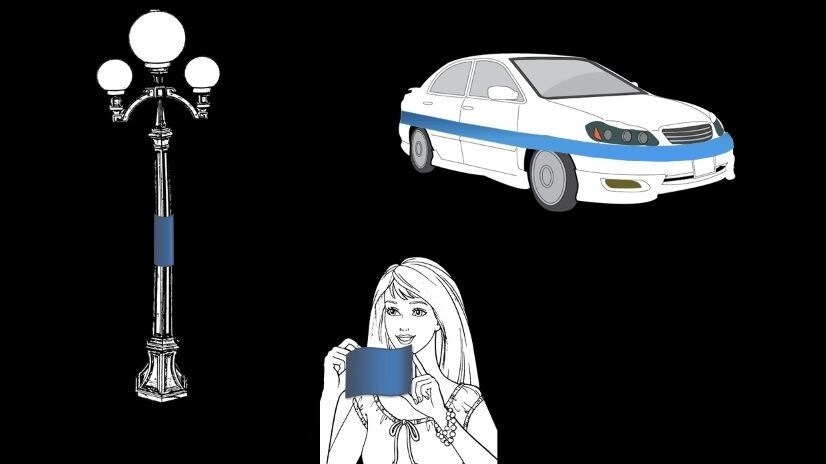
“If such cameras can be made at a low cost (ideally, like a roll of plastic sheet), they can be used to image the world in ways that would be difficult to achieve using one or more conventional cameras,” said the researchers.
The adapative lens array
As the years progress, technology continues the relentless push to make everything smaller, thinner, and lighter. To that end, in the press release, co-author Shree Nayar stated that they are “exploring ways to capture visual information in unconventional ways. If you could spread a camera out like paper or cloth, with similar material properties as fabric or paper so you could wrap it around objects [such as a] car or a pole.”
The tech was made by developing an adaptive lens array using different lenses of varying focal lengths. This prevents gaps in the image when the sheet is bent. “The adaptive lens array we have developed is an important step towards making the concept of flexible sheet cameras viable,” says Nayar.
Dr. Nayar adds that “the next step will be to develop large-format detector arrays to go with the deformable lens array….the amalgamation of the two technologies will lay the foundation for a new class of cameras that expand the range of applications that benefit from imaging.”
One field that could potentially greatly benefit from this type of imaging is medicine. Imagine how much doctors could do with a combination of thin cameras and virtual reality.