报告
已发布: 12 一月 2026

Global Cybersecurity Outlook 2026

The World Economic Forum's Global Cybersecurity Outlook 2026, written in collaboration with Accenture, examines the cybersecurity trends that will affect economies and societies in the year to come.

The report explores how accelerating AI adoption, geopolitical fragmentation and widening cyber inequity are reshaping the global risk landscape. As attacks grow faster, more complex and more unevenly distributed, organizations and governments face rising pressure to adapt amid persistent sovereignty challenges and widening capability gaps. Drawing on leaders’ perspectives, the report provides actionable insights to inform strategy, investment and policy.

The World Economic Forum's Global Cybersecurity Outlook 2026, written in collaboration with Accenture, examines the cybersecurity trends that will affect economies and societies in the year to come.

The report explores how accelerating AI adoption, geopolitical fragmentation and widening cyber inequity are reshaping the global risk landscape. As attacks grow faster, more complex and more unevenly distributed, organizations and governments face rising pressure to adapt amid persistent sovereignty challenges and widening capability gaps. Drawing on leaders’ perspectives, the report provides actionable insights to inform strategy, investment and policy.

Key insights

Cybersecurity is a frontier where collaboration remains not only possible, but powerful.

Cybersecurity in 2026 is accelerating amid growing threats, geopolitical fragmentation and a widening technological divide. Artificial intelligence (AI) is transforming cyber on both sides of the fight – strengthening defence while enabling more sophisticated attacks. Organizations are striving to balance innovation with security – embracing AI and automation at scale, even as governance frameworks and human expertise struggle to keep pace. The result is a fast-paced, metamorphic landscape where disruptions move swiftly across borders, even as technology offers new potential for resilience.

This year’s report examines the intersection of AI adoption and cyber readiness, and the emerging disparities that innovation creates. On the geopolitical front, fragmentation and sovereignty concerns are reshaping cooperation and trust among nations. Hybrid threats and escalating cyberattacks reflect the increasing volatility of the global environment. From an economic perspective, unequal access to resources and expertise continues to widen cyber inequity. Ultimately, strengthening collective cyber resilience has become both an economic and a societal imperative. Cybersecurity is a frontier where collaboration remains not only possible, but powerful – a reminder that, even amid fragmentation, economic strain and uncertainty, collective action can drive progress for all.

These are three key trends that executives will need to navigate in cybersecurity in 2026:

AI is supercharging the cyber arms race

AI is anticipated to be the most significant driver of change in cybersecurity in the year ahead, according to 94% of survey respondents (see Appendix: Methodology for more information about the survey).

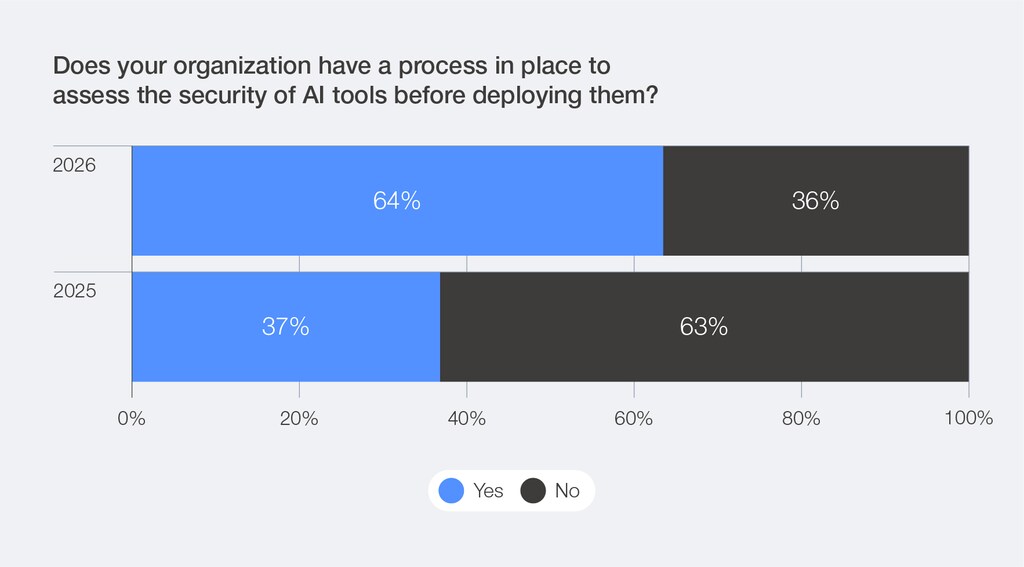
This growing recognition is translating into concrete action across organizations. The percentage of respondents assessing the security of AI tools has nearly doubled from the previous year, from 37% in 2025 to 64% in 2026.

Percentage of organizations with processes in place to assess AI security

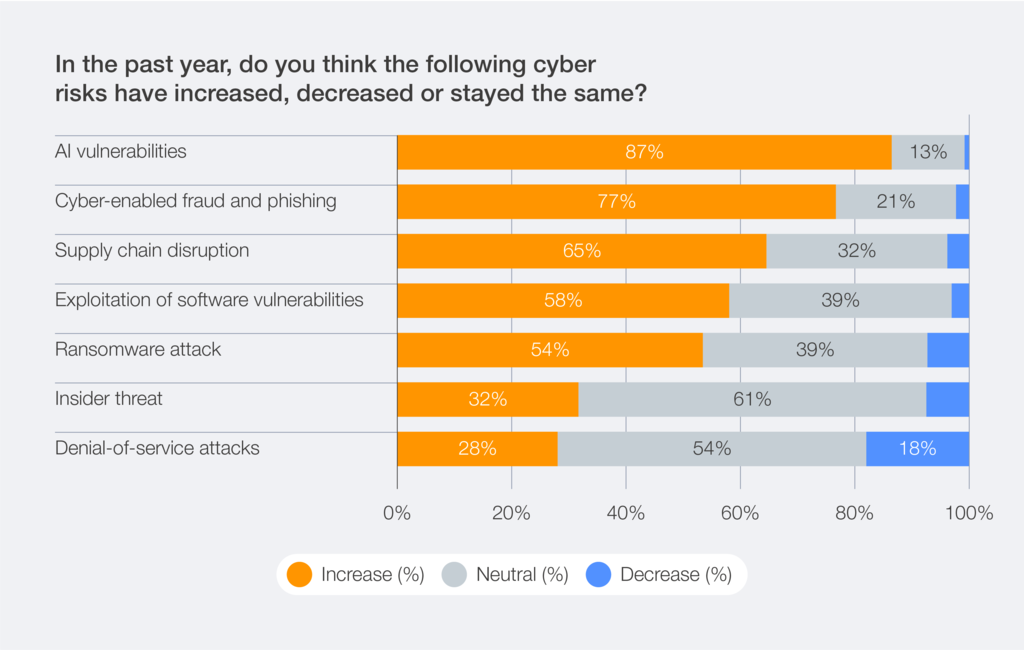
At the same time, AI vulnerabilities are accelerating at an unprecedented pace: 87% of respondents identified AI-related vulnerabilities as the fastest-growing cyber risk over the course of 2025.

Perception of increase or decrease in cyber risks over the past year

Geopolitics is a defining feature of cybersecurity

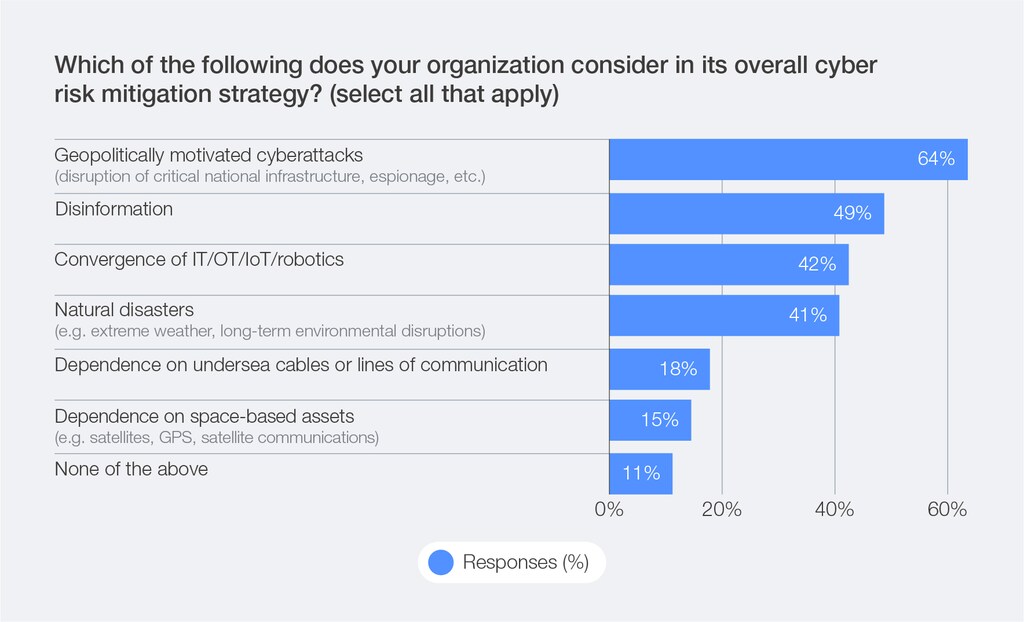
In 2026, geopolitics remains the top factor influencing overall cyber risk mitigation strategies. Some 64% of organizations are accounting for geopolitically motivated cyberattacks – such as disruption of critical infrastructure or espionage.

Top considerations for cyber risk mitigation strategies

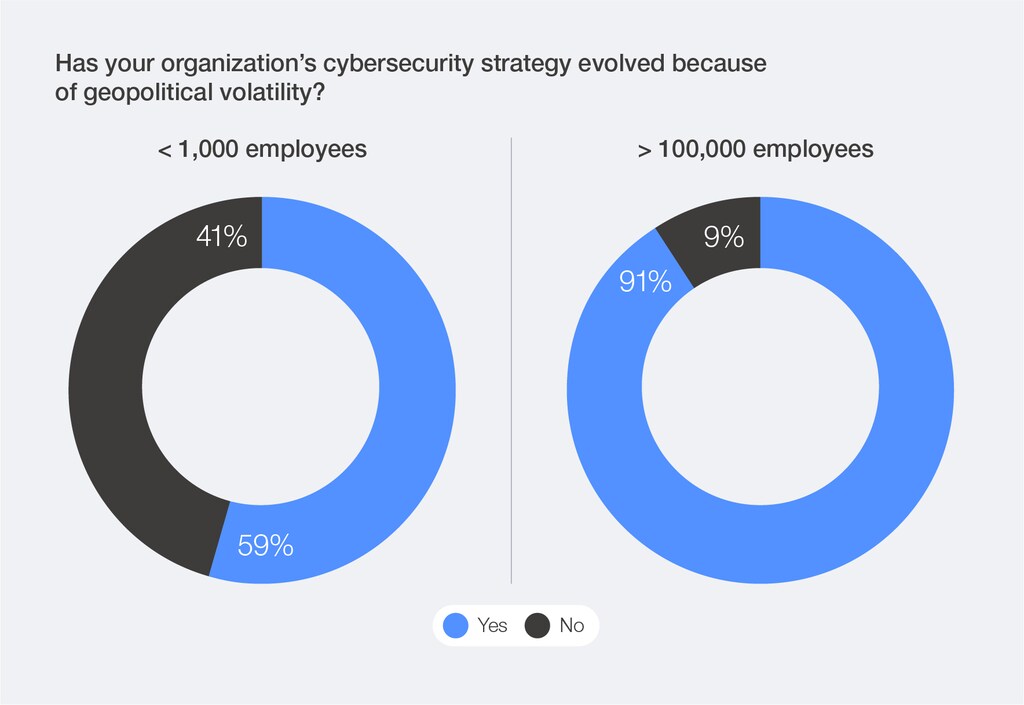
Notably, 91% of the largest organizations have changed their cybersecurity strategies due to geopolitical volatility.

How organizations have adapted cybersecurity strategies amid geopolitical volatility

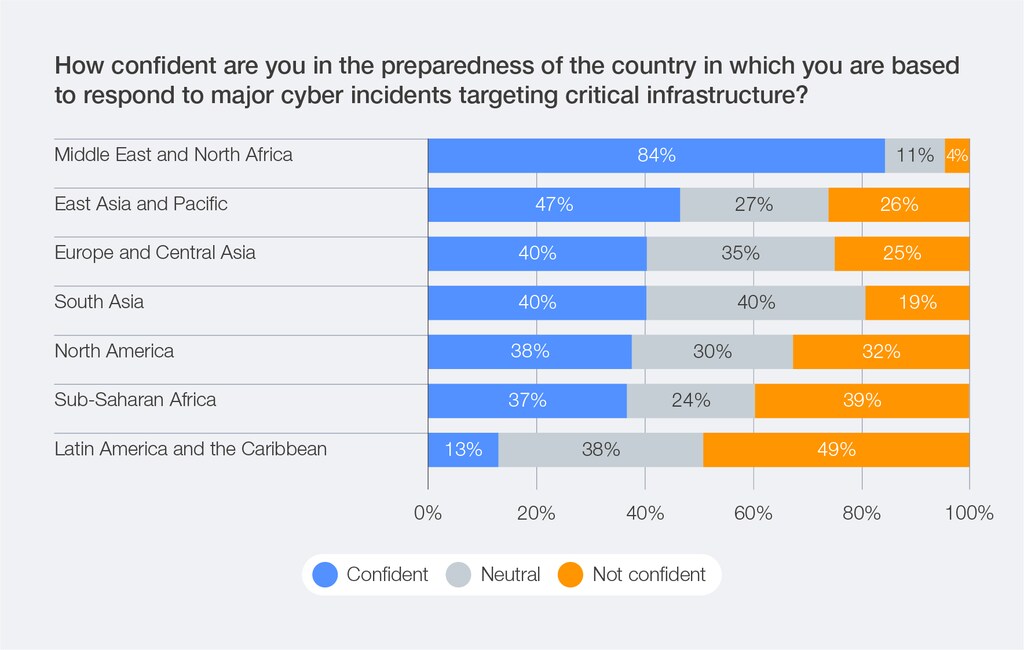
In the context of geopolitical volatility, confidence in national cyber preparedness continues to erode, with 31% of survey respondents reporting low confidence in their nation’s ability to respond to major cyber incidents, up from 26% last year. Confidence levels vary greatly across regions.

Respondents from the Middle East and North Africa express a high degree of confidence in their country’s ability to protect critical infrastructure (84%), while confidence is lower among respondents in Latin America and the Caribbean (13%).

Regional overview – confidence in national cyber response to critical infrastructure attacks

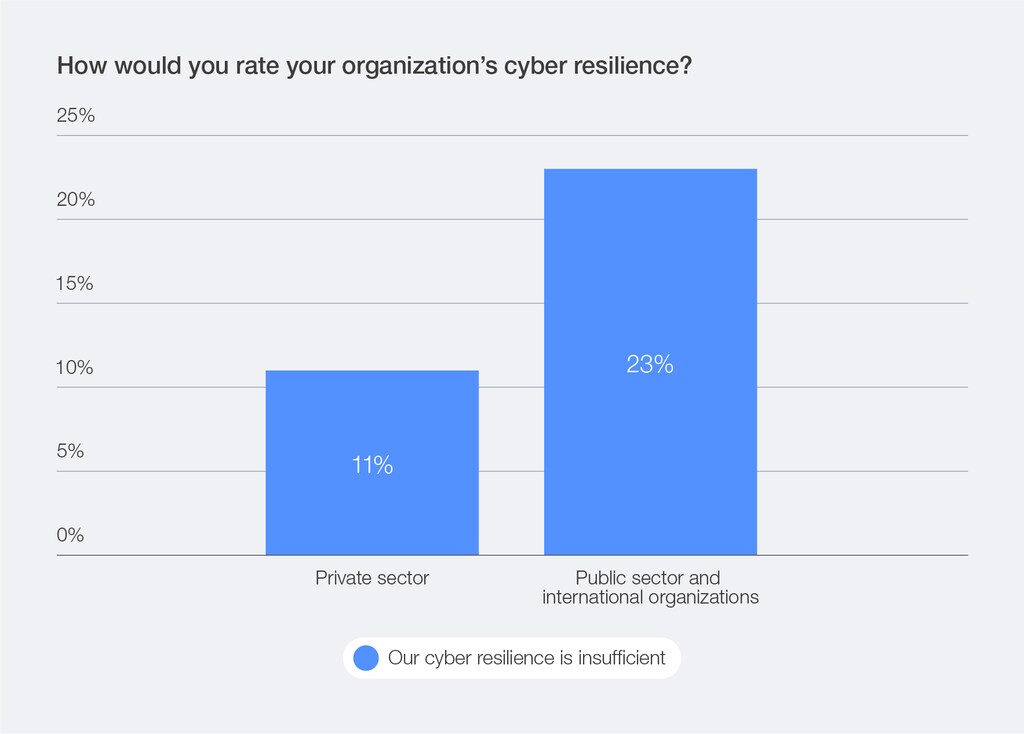
Recent incidents affecting key infrastructure, such as airports and hydroelectric facilities, continue to call attention to these concerns. Despite its central role in safeguarding critical infrastructure, the public sector reports markedly lower confidence in national preparedness. Some 23% of public-sector organizations reported having insufficient cyber resilience capabilities.

Perception of insufficient cyber resilience by sector

Cyber-enabled fraud is threatening CEOs and households alike

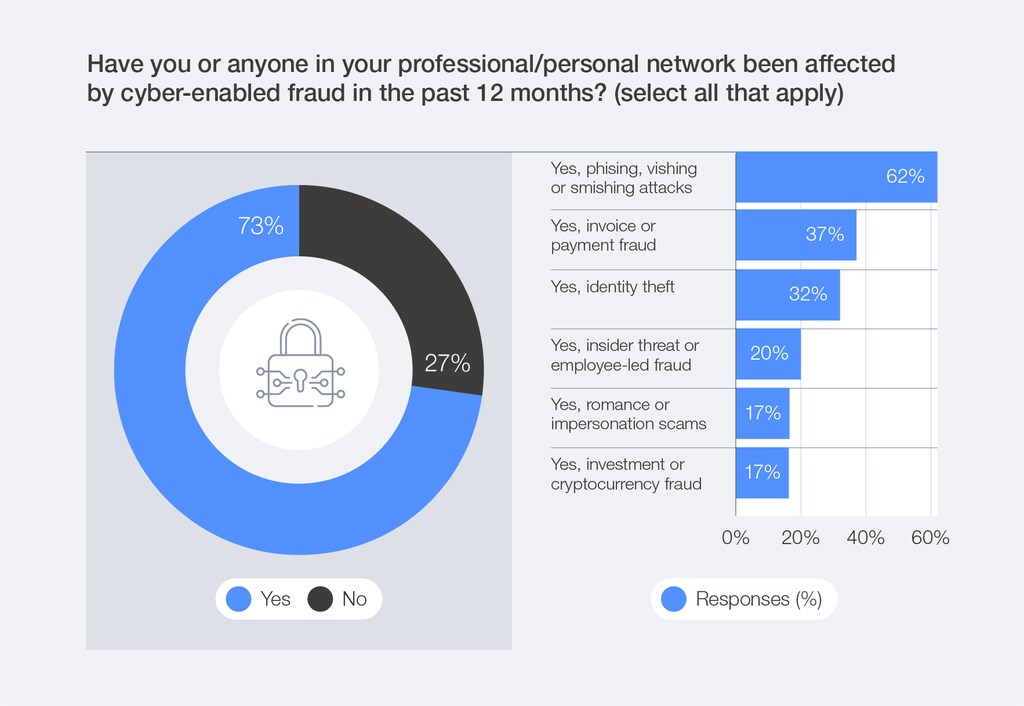
In the survey, 73% of respondents reported that they or someone in their network had been personally affected by cyber-enabled fraud over the course of 2025.

Prevalence of cyber-enabled fraud (all respondents)

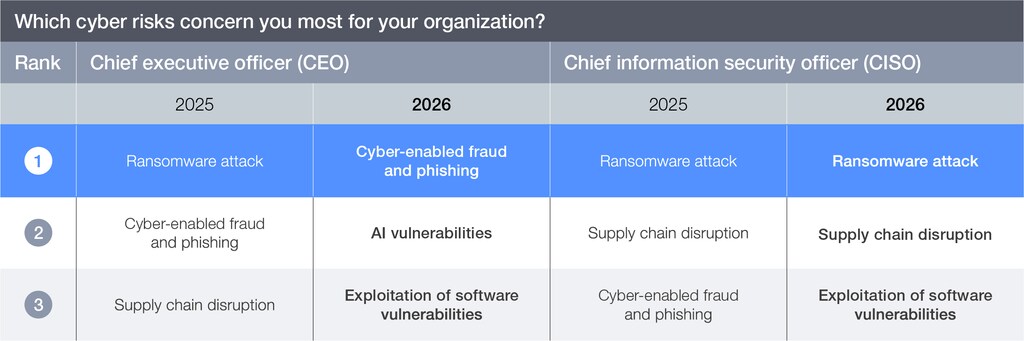
Chief executive officers (CEOs) rate cyber-enabled fraud as their top concern, shifting focus from ransomware to emerging risks such as cyber-enabled fraud and AI vulnerabilities. Chief information security officers (CISOs), by contrast, remain concerned about ransomware and supply chain resilience. This reflects how cybersecurity priorities diverge between the boardroom and the front line.

Ranking of CEOs' and CISOs' cyber risk concerns for their organizations

Securing supply chains amid opacity and concentration risks

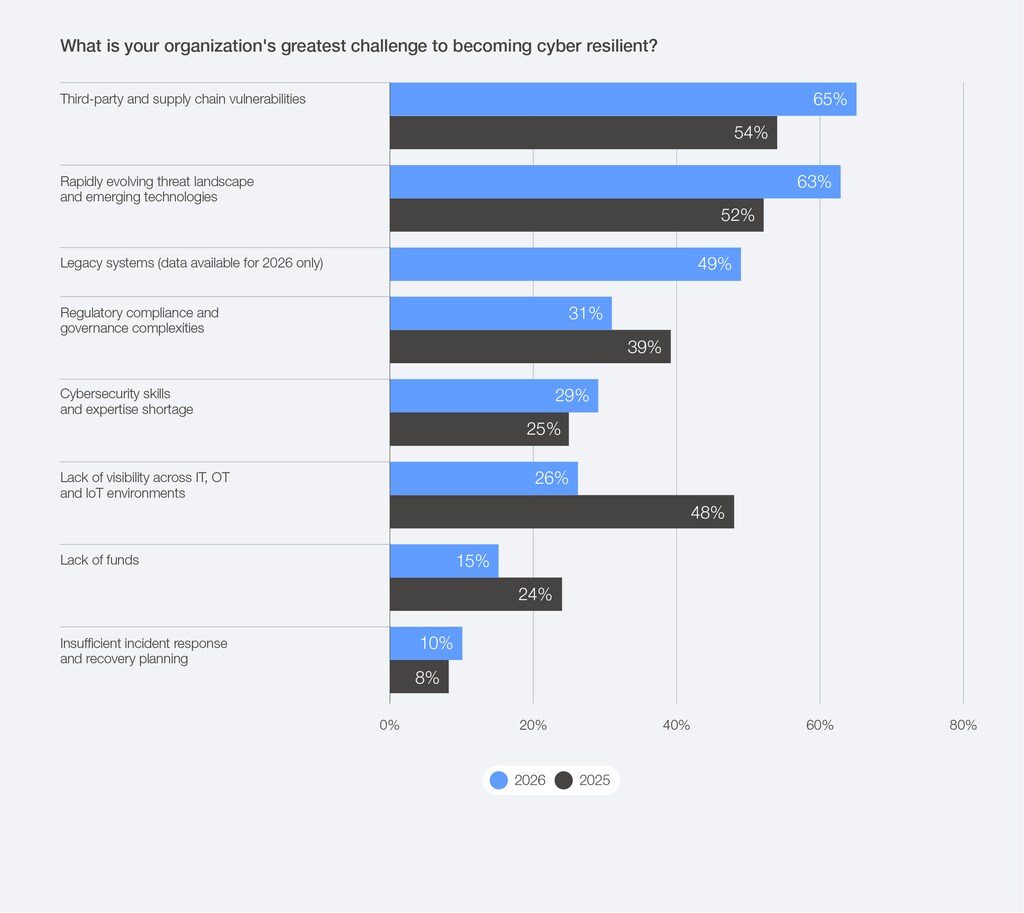
Concerns about the resilience of supply chains against cyberattacks are continuing to worry business and cyber executives. This year’s survey data shows that 65% of large companies by revenue indicate third-party and supply chain vulnerabilities are their greatest challenge, which has risen from 54% in 2025.

Large companies' greatest barriers to cyber resilience, 2025–2026

许可和重新发布

世界经济论坛 报告 可依照 知识共享 署名-非商业性-非衍生品 4.0 国际公共许可协议 ,并根据我们的 使用条款 重新发布。

关于我们

加入我们

  • 登录
  • 成为我们的合作伙伴
  • 成为我们的会员
  • 订阅我们的新闻稿
  • 联系我们

快捷链接

语言版本

隐私政策和服务条款

站点地图

© 2026 世界经济论坛