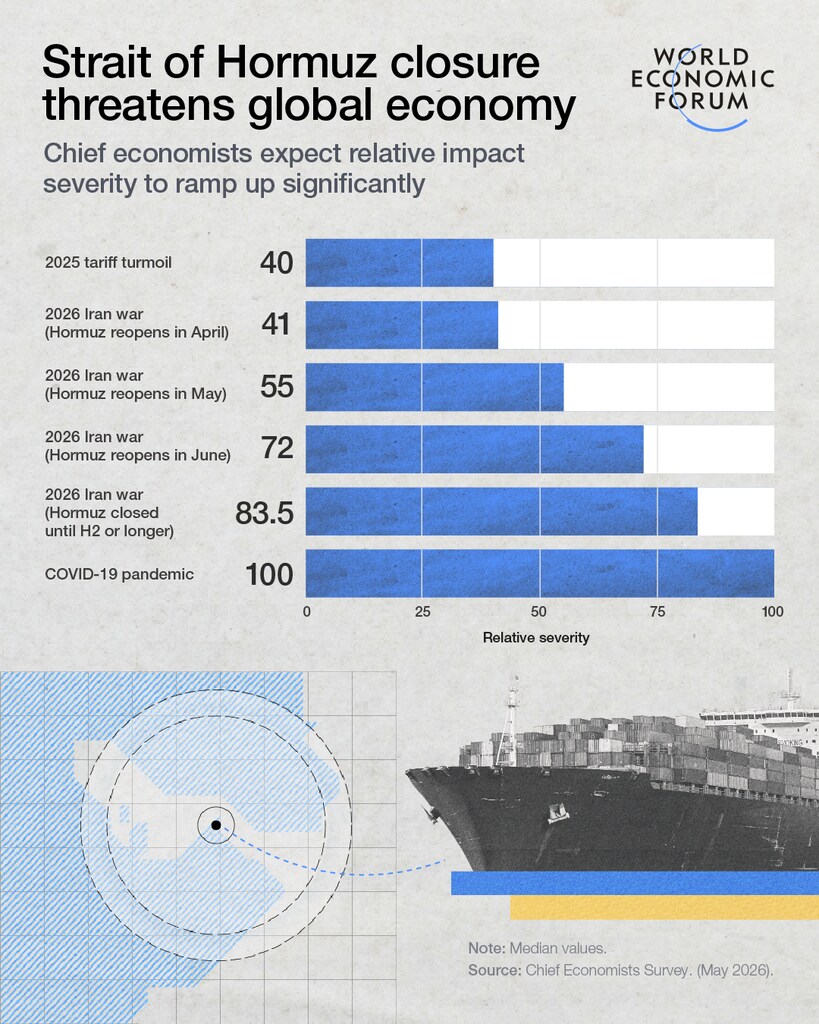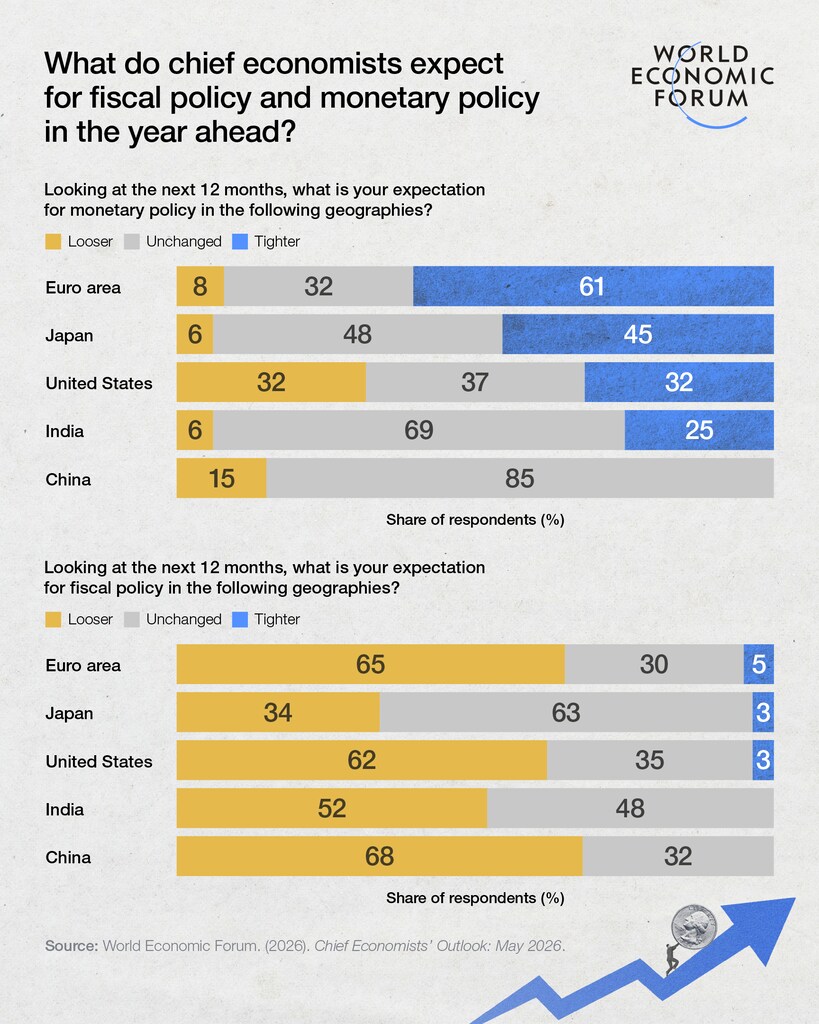
The May 2026 Chief Economists’ Outlook opens on a more pessimistic note than the January edition. Drawing on consultations and survey responses from the World Economic Forum’s Chief Economists Community, the report examines a global economy unsettled by the escalation of conflict in the Middle East and the closure of the Strait of Hormuz. Growth expectations have deteriorated markedly as supply-chain disruption, rising energy and food prices, and heightened financial volatility reinforce inflationary pressures and weaken confidence.
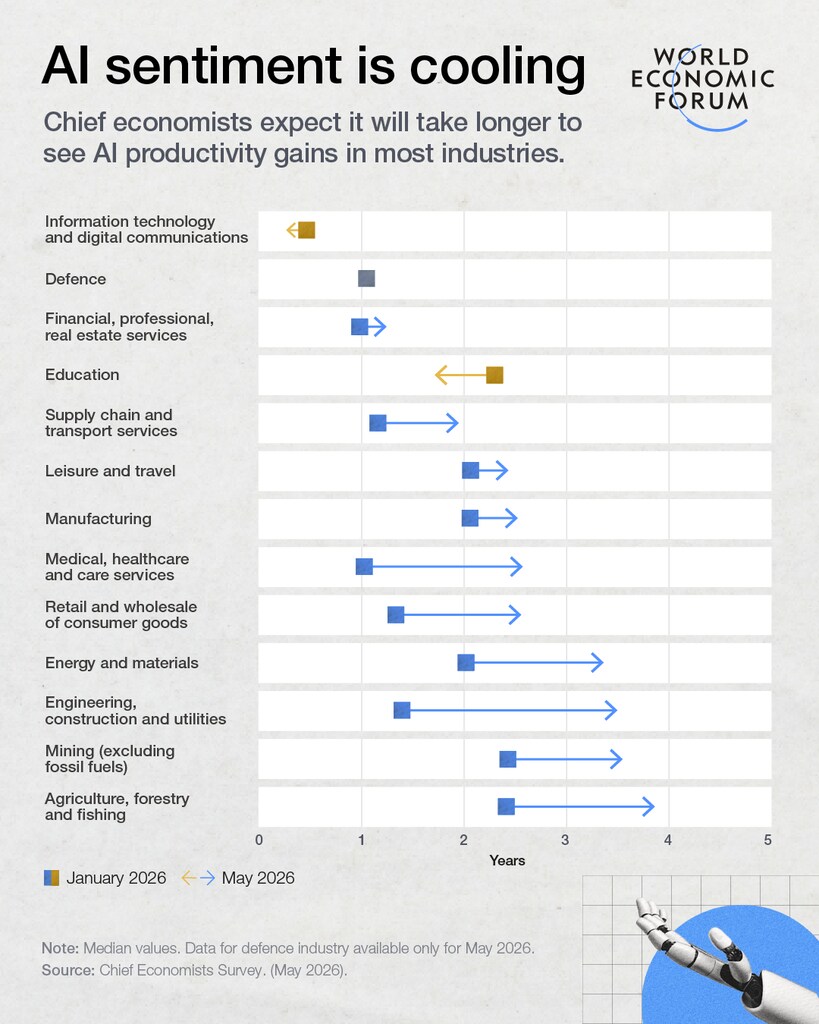
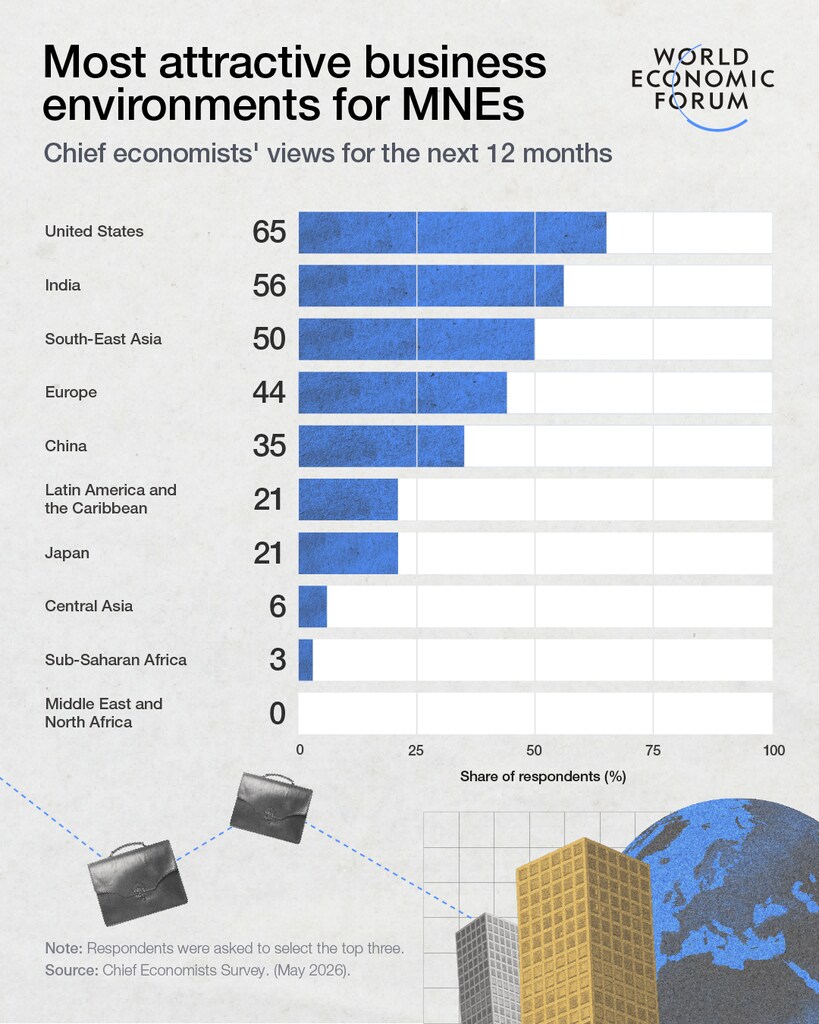
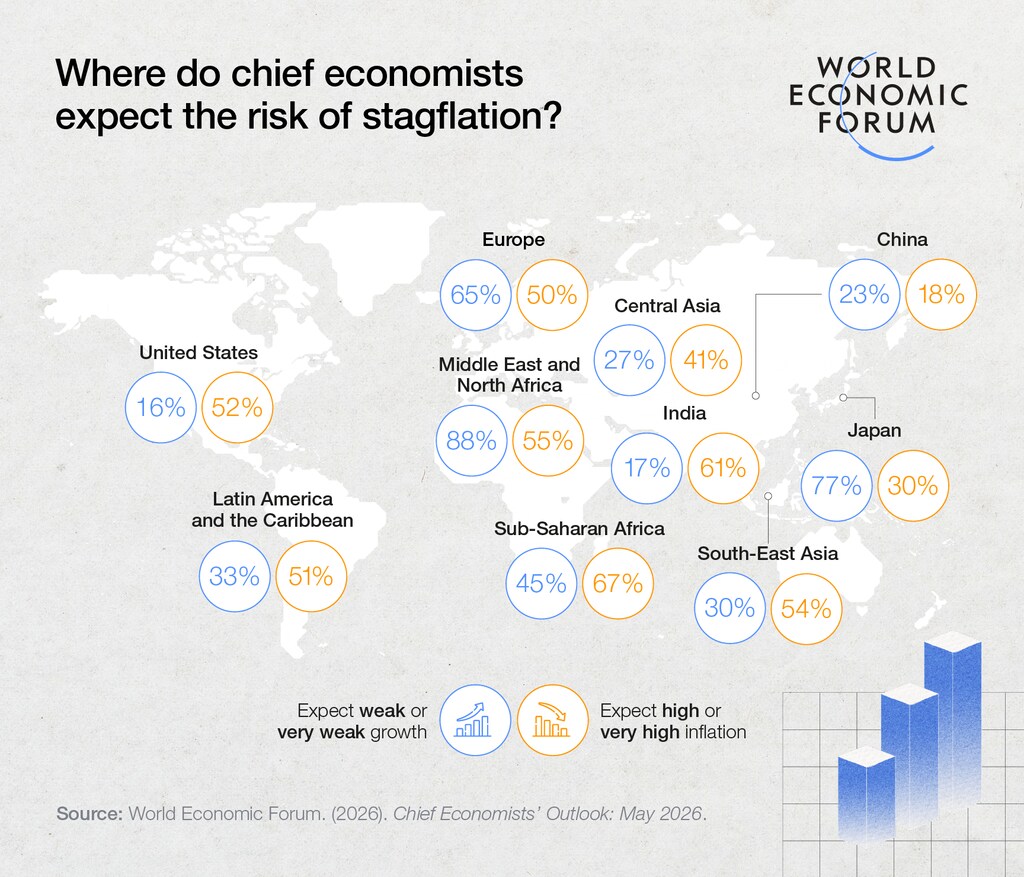
The outlook also underscores widening regional divergence. The US and India are expected to maintain moderate to strong growth, although both face renewed inflation pressures, while China’s outlook has improved modestly. Europe confronts weaker growth, energy shocks and rising stagflation risks, and South-East Asia remains comparatively resilient but vulnerable to higher energy and food import costs. This edition also examines how multinational companies are recalibrating investment and supply chains in a more fractured risk environment, with the US, India and South-East Asia seen as the most attractive business locations. Artificial intelligence remains a source of optimism even as productivity gains are now expected to arrive more slowly and unevenly than previously thought.