全部视频

Air pollution hinders pollination by masking floral scents

This video is part of: 自然与气候中心

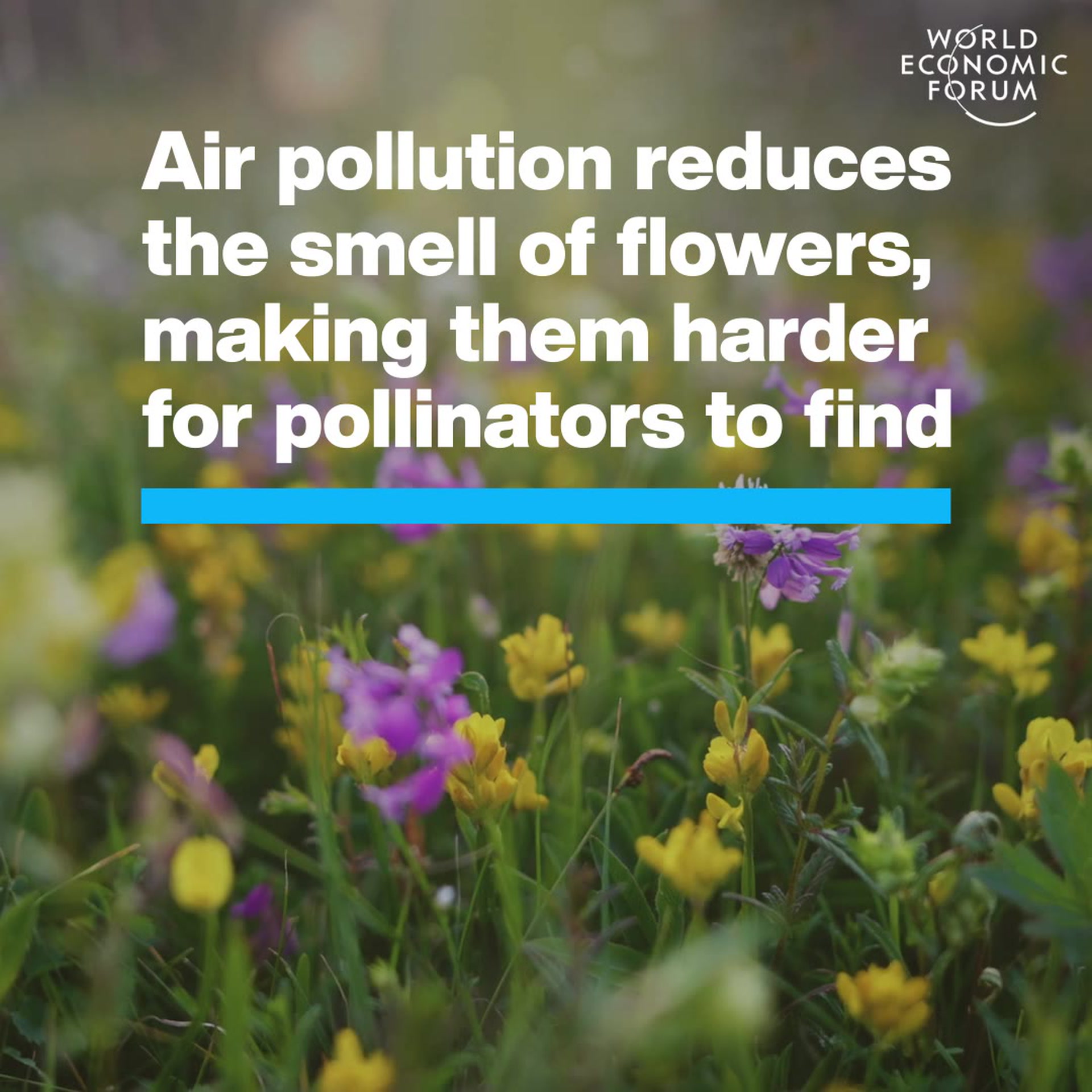
New research found that air pollution disrupts plant reproduction by masking flower scents, making them harder for pollinators like moths to find. Here's why it matters.

Air pollution disrupts plant reproduction by making it harder for pollinators to find flowers. In a lab setting, tobacco hawkmoths were 50% less successful in locating flowers under polluted conditions, while white-lined sphinx moths couldn't find them at all. Field experiments showed a similar effect, with overall moth accuracy declining by 70% due to air pollution.

The culprit: Nitrogen Oxides (NO3)

The main culprit behind this phenomenon is a class of chemicals called nitrates (NO3). These are formed during the combustion of gas, coal, and other fuels in car engines, power plants, and industrial facilities. These fumes degrade the scent cues released by wildflowers, making them undetectable by smell.

The broader consequences of pollinator decline

This disruption in pollination has significant consequences. Three-quarters of crops rely on insects for pollination, and approximately 40% of global insect pollinators are already facing endangerment due to factors like pollution, habitat loss, and climate change.

A study estimates that the decline in pollinators contributes to roughly 500,000 premature deaths per year due to reduced yields of healthy foods.

Tackling air pollution

The Global Risks Report 2024 listed air pollution as one of the top ten global threats. The Alliance for Clean Air, a partnership between the World Economic Forum and the Clean Air Fund, aims to address this challenge by bringing together business leaders to tackle air pollution and champion the benefits of clean air.

For more information on this topic, read here.

话题:
自然与生物多样性
分享:

更多关于 自然与生物多样性
查看全部

从旧金山到德班,看全球五大城市如何与自然共生

Simon Torkington and David Elliott

2025年12月12日

环境信用机制如何助力再生农业发展?

关于我们

  • 我们的任务
  • 我们的历史
  • 领导团队
  • 影响力
  • 北京代表处

加入我们

  • 登录
  • 成为我们的合作伙伴
  • 成为我们的会员
  • 订阅我们的新闻稿
  • 联系我们

快捷链接

语言版本

隐私政策和服务条款

站点地图

© 2025 世界经济论坛