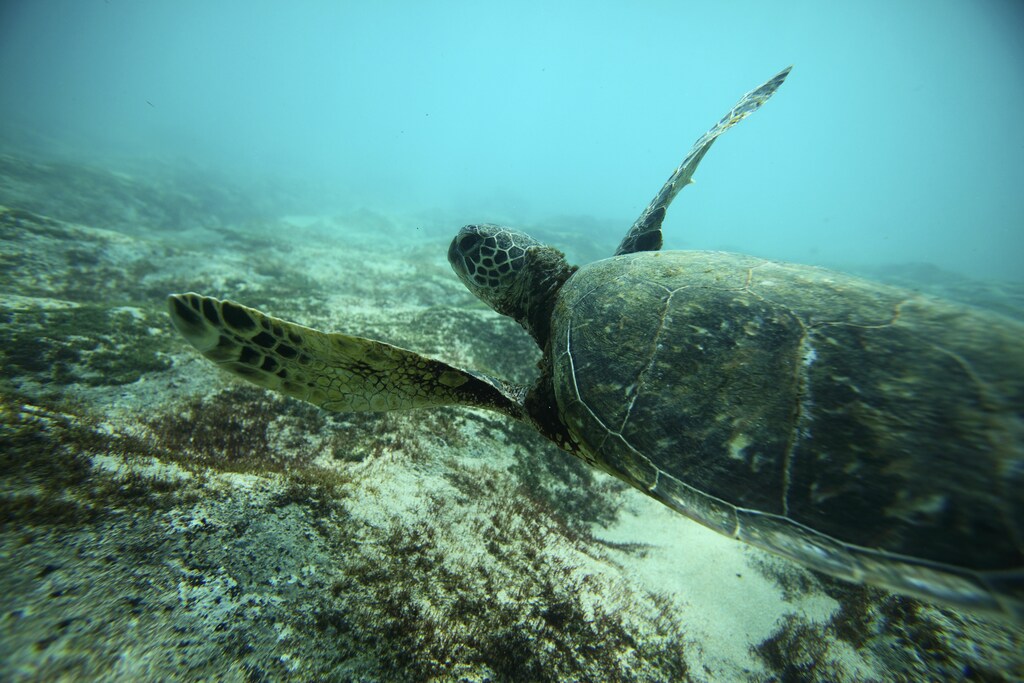
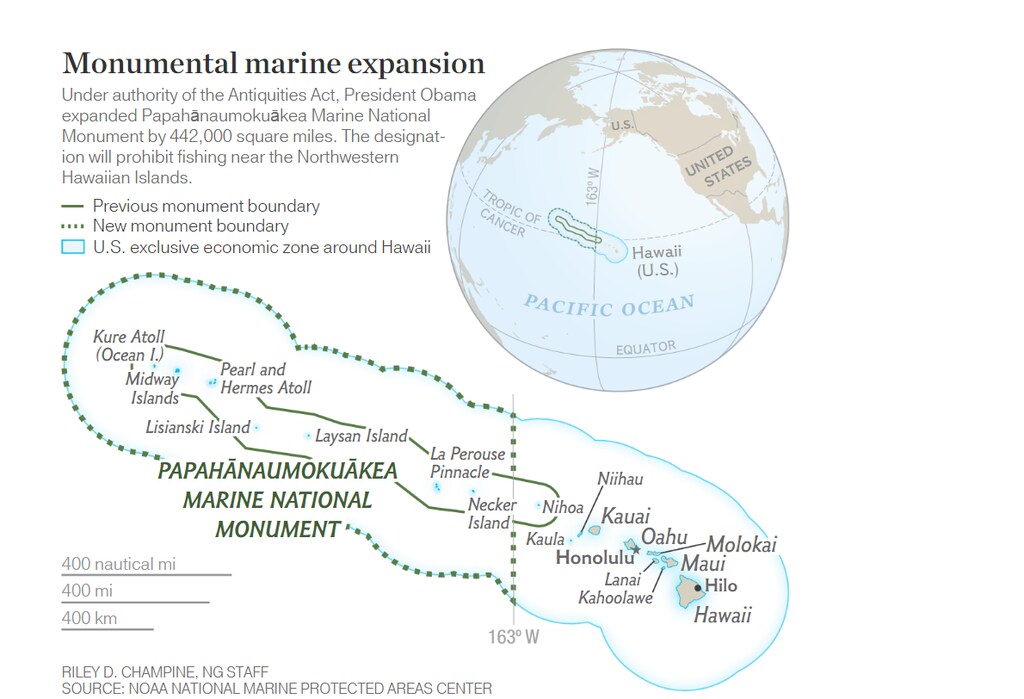
US President Barack Obama will create the largest marine reserve in the world by expanding the Papahanaumokuakea Marine National Monument off the coast of Hawaii.
The Hawaiian marine sanctuary was created in 2006 by President George W. Bush. It will now quadruple in size, to cover 1.5 million square kilometres of the Pacific Ocean. That's twice the size of Texas. Commercial fishing will also be banned.
Around the world, there are more than 6,500 protected areas of seas, oceans or large lakes. Here are the 10 biggest.
1. Papahanaumokuakea Marine National Monument
United States (Hawaii and the Midway Atoll)
1,510,000 square kilometres
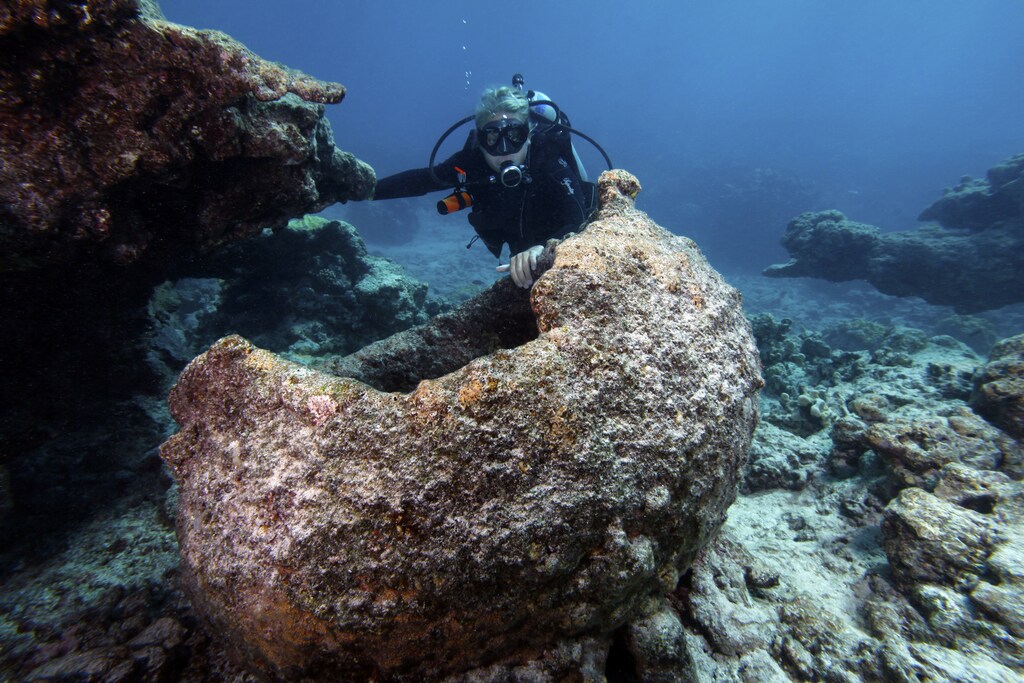
2. Natural Park of the Coral Sea
New Caledonia (France)
1,292,967 square kilometres
3. Pacific Remote Islands Marine National Monument
United States
1,271,500 square kilometres
4. South Georgia Marine Protected Area
United Kingdom
1,070,000 square kilometres
5. Coral Sea Commonwealth Marine Reserve
Australia
989,842 square kilometres
6. Chagos Marine Protected Area
British Indian Ocean Territory/Chagos Archipelago (British Overseas Territory)
640,000 square kilometres
7. Phoenix Islands Protected Area
Kiribati (Phoenix Islands)
408,250 square kilometres
8. Great Barrier Reef Marine Park
Australia
345,400 square kilometres
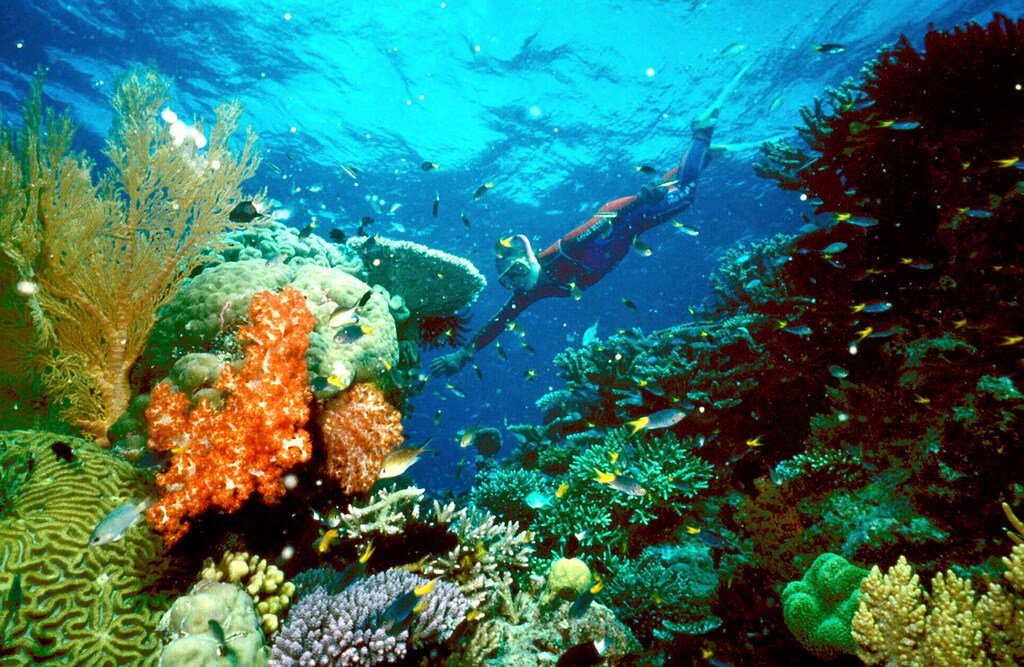
9. Marianas Trench National Monument
Mariana Islands, United States
250,000 square kilometres
10. Macquarie Island Commonwealth Marine Reserve
Australia
162,000 square kilometres
US Secretary of State John Kerry will host the Our Ocean Conference in Washington DC on 15-16 September 2016 to further commit to actions to preserve ocean life.
Have you read?
Our oceans keep us alive. Here's how we can stop killing them
This disturbing map shows just how much plastic is floating in our oceans