Procrastination can actually make us more creative, according to Professor Adam Grant.
The management professor at Wharton School of Business has highlighted the benefits of procrastination – especially for making us more creative.
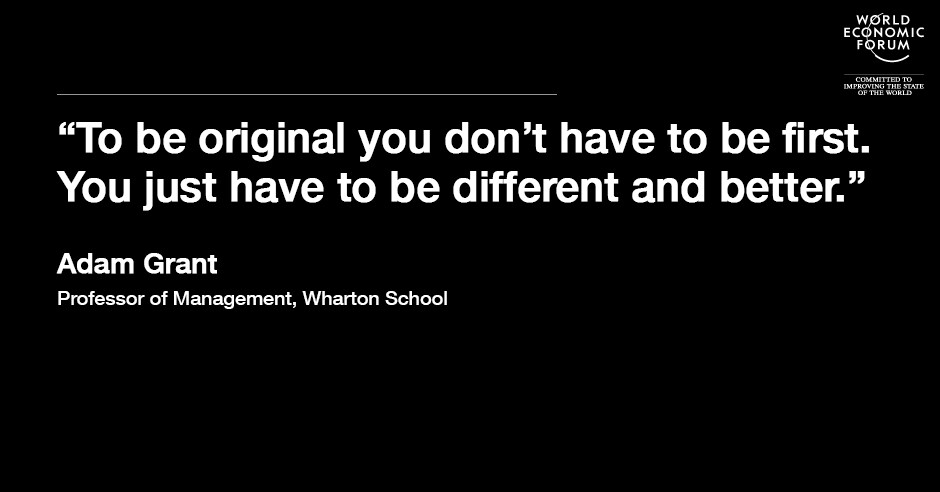
He told BBC Radio 4, “To be original you don’t have to be first. You just have to be different and better.”
The research
Grant and his team looked at the role of procrastination in improving creativity, conducting surveys within companies and carrying out experiments in their laboratory.
Within businesses, they found that people who procrastinate were more creative than those who get everything done a long time in advance.
Equally, in experiments in the lab, they found that people who delayed a task by playing a computer game, such as Minesweeper or Solitaire, were 16% more creative.
“The idea of starting early but then delaying your finish is a great way to make sure that you have time to incubate,” he explained.
It’s not just true for business
The theory doesn’t just apply to business. Grant highlights some famous examples of his theory in practice. He explains that Martin Luther King’s ‘I have a dream’ speech, and former US President Abraham Lincoln’s Gettysburg Address, were being rewritten right up until the last minute. For Grant, this offers flexibility to improvise even once you’re in front of the microphone, rather than sticking to a script.
Leonardo Da Vinci also offers an example of the creative power of procrastination. He was acutely aware of his own procrastination explains Grant, and frustrated by it. He wrote in his journal: “Tell me if anything ever was done?”
Ultimately however Grant believes diversions, such as his experiments with optics, made the Renaissance artist and inventor a better painter.
So how can you be a better procrastinator?
Professor Grant provides an example from his own life about reaping the rewards of procrastination. He says he will often abandon work, mid-sentence and not return to it for a few weeks. He admits this is “agony, but when I come back to it I have all sorts of new ideas”.
He believes we shouldn’t be afraid to start early, but equally we shouldn’t be afraid to be slow to finish.
You never know, procrastination might just improve the end result.
Have you read?
These are the world’s most creative countries
What are the psychological origins of procrastination?