什么让我们夜不能寐?两位战略家作答

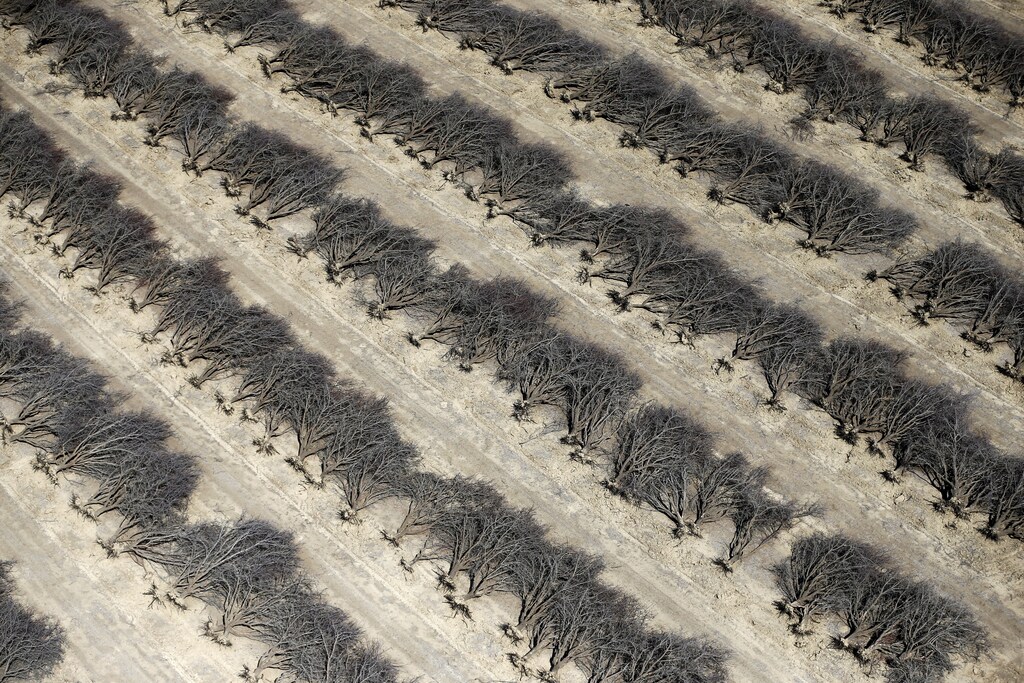
A field of dead almond trees is seen in Coalinga in the Central Valley, California, United States May 6, 2015. Almonds, a major component of farming in California, use up some 10 percent of the state's water reserves according to some estimates. California ranks as the top farm state by annual value of agricultural products, most of which are produced in the Central Valley, the vast, fertile region stretching 450 miles (720 km) north-sound from Redding to Bakersfield. California water regulators on Tuesday adopted the state's first rules for mandatory cutbacks in urban water use as the region's catastrophic drought enters its fourth year. Urban users will be hardest hit, even though they account for only 20 percent of state water consumption, while the state's massive agricultural sector, which the Public Policy Institute of California says uses 80 percent of human-related consumption, has been exempted. REUTERS/Lucy Nicholson - GF10000086660
Accelerating environmental change poses a threat to the global status quo.Image: REUTERS/Lucy Nicholson
本内容由人工智能自动翻译。

全球近300位顶尖战略高管和未来学家齐聚世界经济论坛的产业战略会议这是我们推动多利益相关方合作、应对全球一些重大挑战这一使命的一部分。我们采访了两位参会战略家,询问他们:什么让他们夜不能寐?

Karen Karniol-Tambour,桥水基金投资研究主管

作为投资行业,我们在社会中的核心职责是帮助人们储蓄,但许多国家正面临日益严重的储蓄危机。依赖个人决策的储蓄机制日益普遍:人们从年轻时起就要自行选择储蓄而非消费,还要自行决定如何投资储蓄。但我们并未相应加大投入,帮助人们应对这些艰难选择;随着这一转变,我们也失去了汇集个人风险所带来的益处。

我认为,澳大利亚和加拿大是做得很好的典范:由政府规定储蓄安排,使储蓄自动进行;由专业人士管理,且政治压力很小;并在不同人群和世代之间分摊风险。

Daria Krivonos,哥本哈根未来研究所(CIFS)首席执行官

我们生活在一个动荡的时代。世界正经历颠覆性变革,许多我们长期视为理所当然的状况和规范都面临挑战。CIFS将威胁全球现状的四大因素称为“支柱崩塌”——全球民主制度和价值观倒退、西方技术主导地位终结、西方主导的全球化,以及环境变化加速。面对市场、经济体、民族国家、机构和全球供应链等复杂系统经历快速范式转变,战略家和决策者往往严重低估其崩溃风险。世界比我们想象的更加脆弱。

授权与转载
世界经济论坛发布的文章,可依据《知识共享署名-非商业性使用-禁止演绎4.0国际公共许可协议》以及我方《使用条款》进行转载。 本文所表达的观点仅代表作者个人立场,并不代表世界经济论坛的观点。