
The people of Norway have a lot to be happy about.
The country tops the table behind a new map showing the best European countries in which to live.
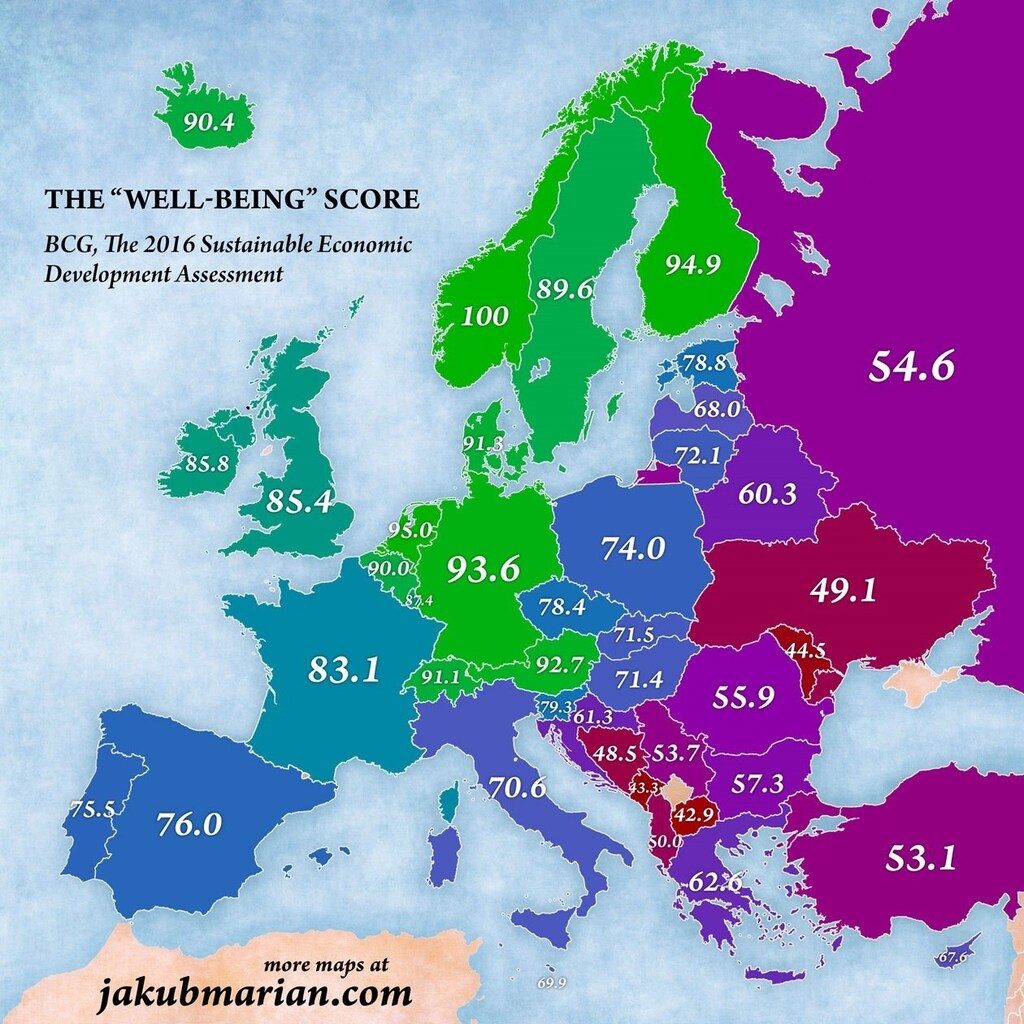
Jakub Marian’s map gives Norway top marks on a well-being scale developed by the Boston Consulting Group. This scale moves beyond rating countries on GDP alone and instead measures 44 different indicators.
The broadly content
Norwegians are content with their job prospects, the quality of housing stock and they feel safe in a country where crime is low. It helps that Norway is a beautiful country of dramatic coastal landscapes, pristine forests and clean, well-ordered cities. Norwegians rate the environment as one of the most significant factors driving their sense of well-being.
Germany, with a rating of 93.6, dominates a central bloc of nations that also sit high on the map of best European countries to live in. The populations of neighboring Austria, Switzerland, Luxembourg, Belgium and the Netherlands complete the list of most desirable European states.
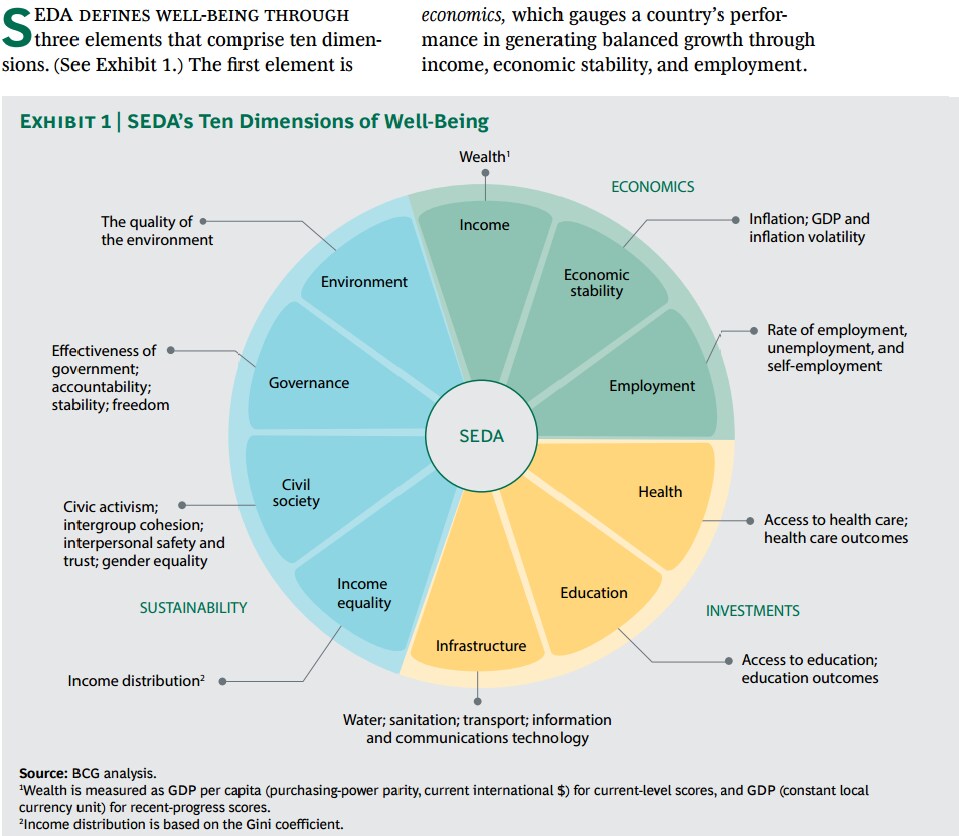
BCG’s Sustainable Economic Development Assessment (SEDA), measures well-being based on economics, investments and sustainability. These three elements are then broken down into ten dimensions that include employment prospects, healthcare and the environment.
And the less so
The data behind the map reveals the full range of 'well-being' scores. Within Europe, the bottom three are Moldova, Montenegro and, in last place, Macedonia.

Have you read?
Which country is the happiest in the world?
What one of the world’s longest studies tells us about happiness