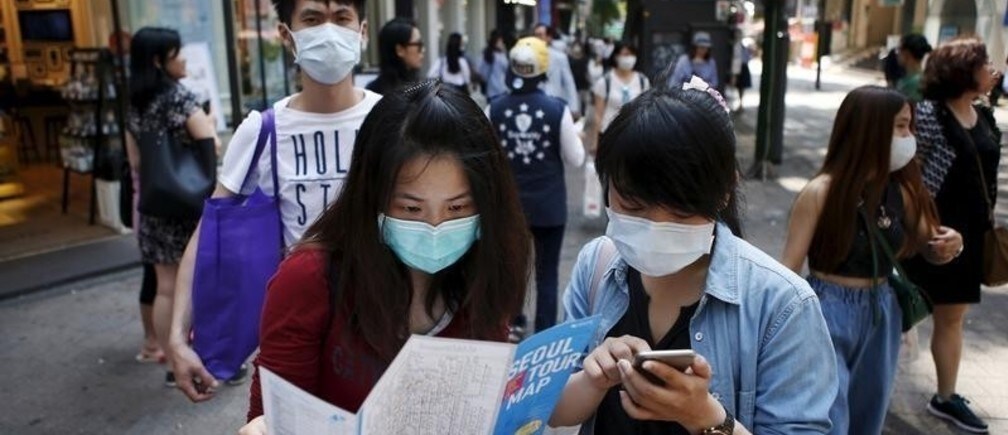
As of June 9th, the MERS (Middle East Respiratory Syndrome) virus had killed at least 449, infected over 1,200, and resulted in over 2,800 in quarantine in South Korea – the worst affected area outside of the virus’ origins in Saudi Arabia.
The director-general of the WHO, Margaret Chan, called MERS “a threat to the entire world,” but confusingly Dr Antony Fauci, the director of the National Institute of Allergy and Infectious Diseases, has said it is “not a threat to the broad population because it doesn’t spread in a easily community-related way.”
And the news that two people from Hong Kong who had recently travelled to South Korea are being tested by Hong Kong authorities won’t help to calm fears that the outbreak is being contained.
Here are 4 charts that help to provide some context to the situation.
1. The virus has killed 10 in South Korea
The South Korean outbreak started on May 20 after a South Korean man visited the Middle East and tested positive for the virus. Since then, it has killed 10 and infected dozens more, according to data as of June 11th.
As well as fears over the rising number of infected, some economists are also raising alarms about the potential impact on the country’s economy as tourists cancel trips to the nation. In response, South Korea’s central bank lowered its benchmark interest rate to 1.50% – a record low – to help stabilise the economy, which is already feeling the pinch from slowing exports.
“It has been seen that this MERS crisis is having a negative impact on consumer spending,” said Bank of Korea governor Lee Ju-yeol. “The full impact of the outbreak still remains uncertain but we thought it was desirable to act pre-emptively to curb its negative impact on… the economy.”

2. Those within hospitals are at risk
Over 80% of South Korea’s infected are medical professionals, visitors, or patients who were exposed to the country’s “index patient” while he spent time in three medical centres, according to Reuters.
Some of those patients then went on to infect others after being relocated to other clinics and hospitals.

3. The vast majority of cases have been reported in Saudi Arabia
As of June 4th, 1,016 cases had been reported in Saudi Arabia, compared to 76 in the UAE, 34 in South Korea, and 76 in the rest of the world. The vast majority of deaths have also occurred in Saudi Arabia. As that data is now one week old, those numbers will have shifted.

4. The virus targets the elderly
MERS appears to affect the elderly more severely as well as people with weakened immune systems. Those with chronic illnesses including diabetes, cancer, and chronic lung disease are also at risk. At present, about 36% of those who have been infected have died.

Image: Tourists wearing masks to prevent contracting Middle East Respiratory Syndrome (MERS) look at a tour map of Seoul at Myeongdong shopping district, in central Seoul, South Korea, June 10, 2015. REUTERS/Kim Hong-Ji
All charts from Reuters Graphics


