In less than 10 years, driverless taxis are projected to service up to a quarter of all kilometres passengers travel on shared mobility in major Chinese cities.
Tests for driverless taxis have been taking place in Beijing, Shanghai and Guangzhou.
The market for shared mobility passenger kilometres is expected to grow from 177 billion to 450 billion by 2030.
One Chinese company has pledged to build 1,000 driverless vehicles in the next three years.
Tests with driverless taxi services have been underway in China's major cities, also called tier-one cities, including Beijing and Shanghai. Still a novelty today, robotaxis are expected to experience a quick rollout in China's main metropolises. Numbers by McKinsey & Company show that less than ten years down the line, driverless taxis are projected to service between a fifth and a quarter of all kilometres passengers travel on shared mobility in those cities.
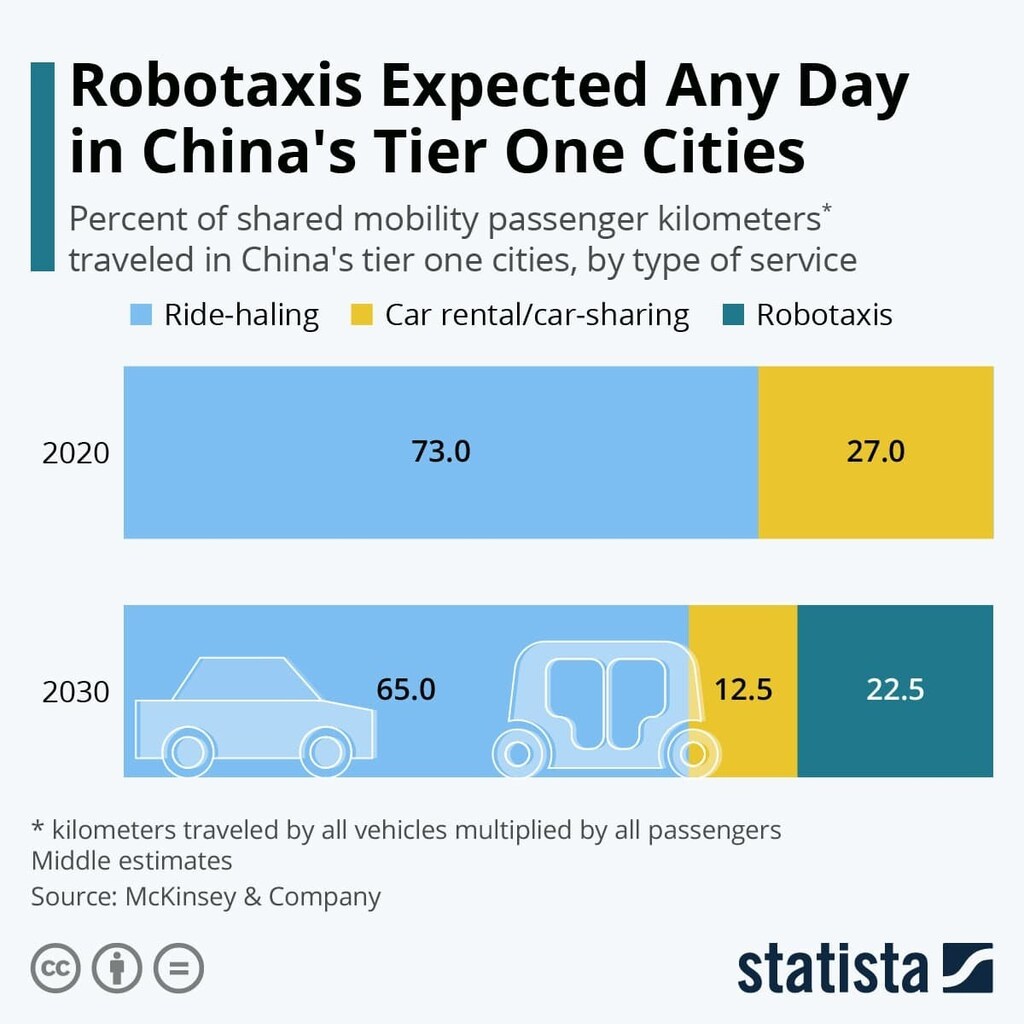
The projected expansion of robotaxis' market share will negatively affect both ride-hailing and ride-sharing/car rental. Still, in the growing Chinese market, there is plenty of room as shared mobility passenger kilometres are expected to grow from 177 billion in 2020 to approximately 450 billion by 2030.
What's the World Economic Forum doing about the future of cities?
The Centre for Urban Transformation connects city leaders, businesses and governments to make sense of the challenges and opportunities shaping urban futures.
Through peer learning and collaboration, the Centre enables cities to exchange insight and translate shared understanding into practical, resilient urban solutions.
Across all of China, robotaxis are expected to hold a market share of around 5% of shared mobility kilometres by the same time. Of course, Chinese tech giants want a piece of the new segment, with internet powerhouse Baidu squaring off against ride-hailing giant Didi. Baidu, which builds autonomous cars together with its business partners, has pledged to build 1,000 driverless vehicles in the next three years, while Didi is also rolling out its driverless taxis in a trial phase. Guangzhou, another Chinese tier-one city, meanwhile is the testing ground for the robotaxi fleets of startups WeRide, which partners with Nissan, and Pony.ai.


