A new study links climate change to the decline of bumblebee species in North America and Europe.
The study, published in the journal Science, found that bumblebee ranges are shrinking in the south and the insects are not moving north. In addition, some species are moving to higher elevations on both continents.
The study looked at data covering 67 bumblebee species over the course of 110 years, using specimens from institutional collections such as the Yale Peabody Museum of Natural History. “We’re one of the main contributors and provided large amounts of electronic data,” said co-author Lawrence Gall, a Peabody Museum entomologist.
The study found that bumblebee range losses occurred independently of changing land uses or pesticide applications. The data suggested a clear connection to changing climate, the researchers said. “This also highlights the important role that specimens preserved in museums play in current scientific inquiry,” Gall noted.
Lead author Jeremy Kerr of the University of Ottawa said range losses for bumblebees in southern Europe and North America total about 300 km. “The scale and pace of these losses are unprecedented,” Kerr said. “We need new strategies to help these species cope with the effects of human-caused climate change, perhaps assisting them to shift into northern areas.”
This article is published in collaboration with Yale. Publication does not imply endorsement of views by the World Economic Forum.
To keep up with the Agenda subscribe to our weekly newsletter.
Author: Jim Shelton is the Senior Communications Officer for Science & Medicine at Yale University.
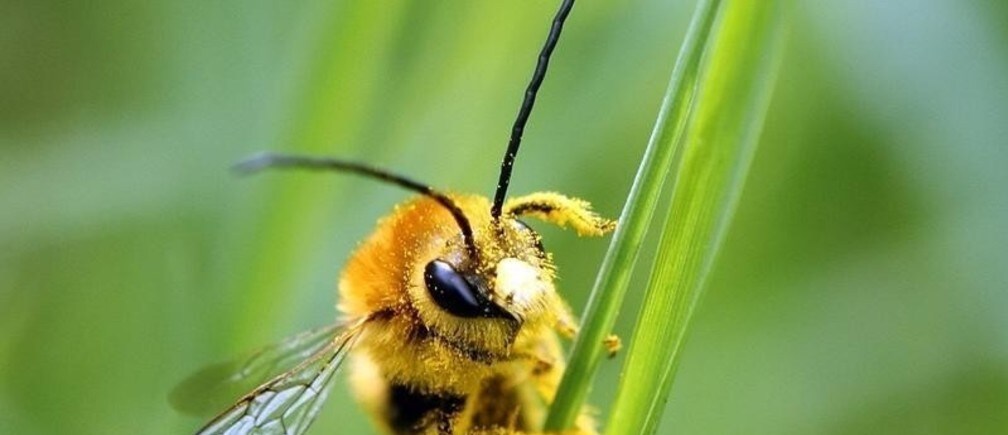
Image: A bee is covered with pollen as it sits on a blade of grass on a lawn in Klosterneuburg April 29, 2013. REUTERS/Heinz-Peter Bader