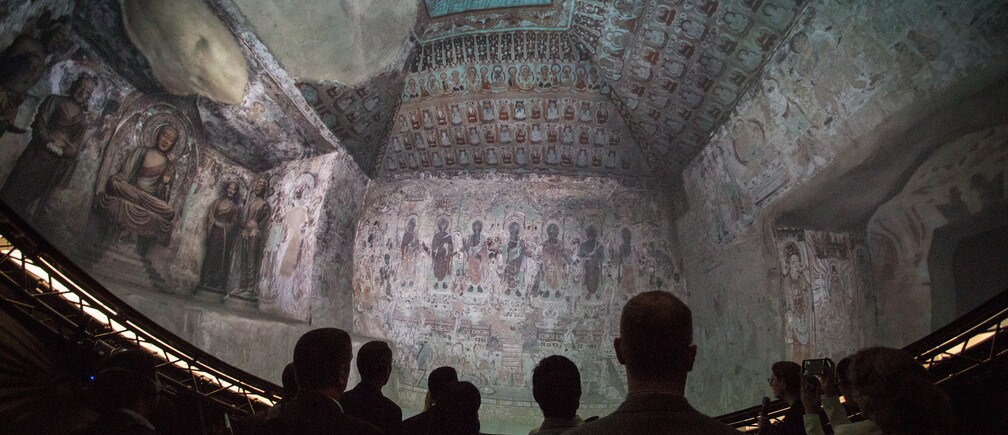
For decades tourists have flocked to the Mogao Grottoes, a UNESCO World Heritage site on the ancient Silk Road in Dunhuang, to admire the murals, sculptures and scrolls hidden within. But the visitors to this cultural gem – also known as the Caves of the Thousand Buddhas – have left their mark. High levels of carbon dioxide and humidity have severely undermined efforts to conserve the 1,500-year-old cultural artefacts inside.
The solution may lie in digital technology. Thanks to an immersive 3D projection dome created by artists Sarah Kenderdine and Jeffrey Shaw, heritage hounds can now explore the caves without setting foot inside.
At the Annual Meeting of the New Champions 2015, visitors to the installation were guided through a unique digital experience of the art inside one of the caves, known as Cave 220. Standing beneath the Cave Dome’s sloping ceiling, they were transported to the desert caves of north-western China and invited to browse through the collection of ancient objects, all represented in larger-than-life 3D imaging.
Author: Anna Bruce-Lockhart is an editor at the World Economic Forum
Image: Participants at the Annual Meeting of the New Champions in Dalian. Faruk Pinjo