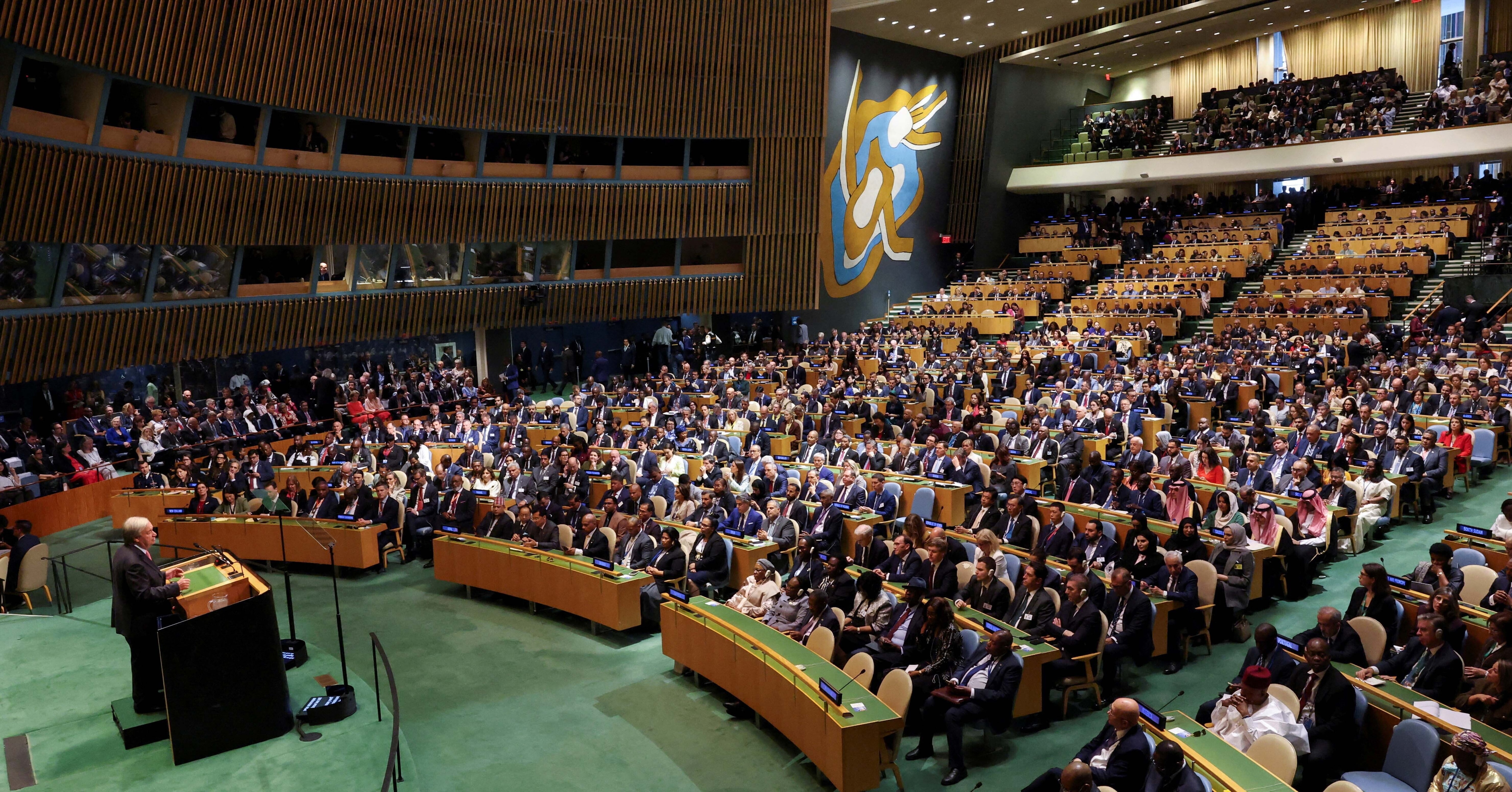
With developed and developing countries still tussling over climate finance, even after the COP21 talks in Paris have drawn to a close, you may well wonder which rich nations are doing the most to help the world’s poor.
Look no further than Denmark. The Nordic nation has been named the country with the most positive influence on people living in poorer nations. This is the finding of the Center for Global Development’s Commitment to Development Index, which brings together senior researchers and experts to assess the influence of the world’s richer nations on people in the developing world.
The index ranks 27 of the world’s most affluent economies across seven criteria – aid, finance, technology, environment and trade, security and migration.
It also reduces scores for countries that impose import barriers, carry out activities that damage resources, and prevent the sharing of technology.
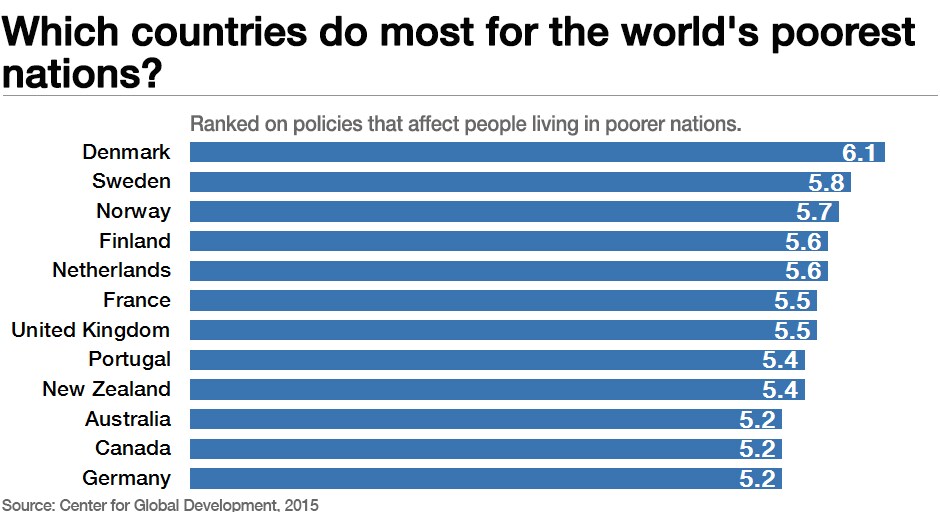
Denmark comes top with strong scores for aid and technology. The Danes are apparently not only generous, but also provide highly effective aid. Two other Scandinavian nations complete the top three – Sweden in second place and Norway third. Norway scored well for finance because of strong fiscal transparency, while both countries scored well on migration.
Australia, Canada and New Zealand are the only non-European countries to feature on the list.
The authors of the index highlight that all the nations perform poorly on at least one indicator, which, they say, is a sign of “how much more all could do to spread prosperity” and tackle challenges across the developing world.
Have you read?
How much has global poverty fallen over the past 25 years?
How can we eradicate poverty by 2030?
Does capitalism cause poverty?
To keep up with the Agenda subscribe to our weekly newsletter.
Author: Joe Myers is a Digital Content Producer at Formative Content.
Image: People hold up inflatable world globes. REUTERS/Daniel Munoz