First, about 1.7 million people in the Schengen area earn their salary in a different country to where they live. These people would be directly affected by the reintroduction of border controls. Waiting times on the border would make their commute more difficult and increase economic costs.
Depending on assumptions, these costs could reach 3-4 billion euro per year. For the Schengen area as a whole, this is not a dramatic figure. However some countries like Slovakia and Luxemburg would be harder hit. On top of that would come the extra cost for the many personal and business trips in Europe. According to Eurostat, about 200 million trips to another EU country take place per year. The costs could even double.
More relevant may be the costs in freight. Countless lorries and trucks are in circulation in Europe. More than 18 million trucks enter Germany every year via toll roads. The introduction of controls on the German border would have significant consequences for cross border trade and production processes. However it is difficult to estimate the costs, as it depends on how long waiting times on the borders would be.
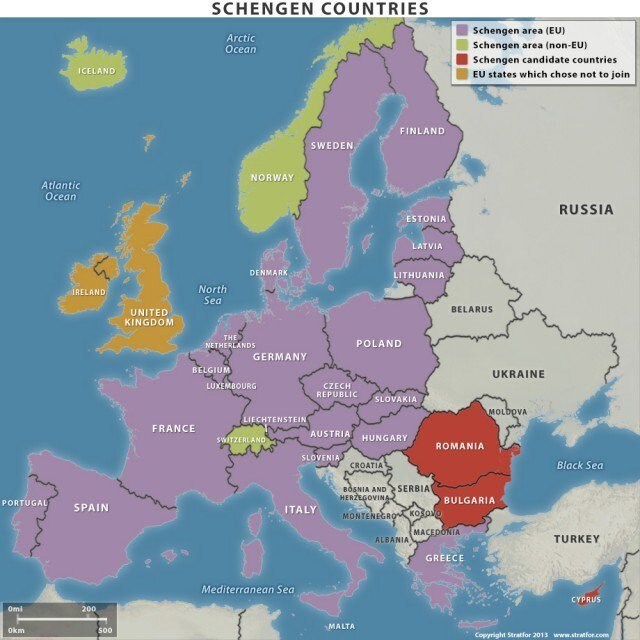
Still, it would be wrong to think that the euro couldn’t function without Schengen. Ireland and Cyprus are outside Schengen. Both countries may have economic problems, but this has nothing to do with border controls. It is true however that the euro-area economy is now finally gaining momentum. New jobs are being created and unemployment is falling. The introduction of strict border controls, combined with another shock, perhaps from China, could put an end to the upswing.
Jean-Claude Juncker, Angela Merkel and Wolfgang Schäuble are therefore right. Europe needs a European solution to the refugee crisis. Refugees must be registered more effectively at the external borders of the EU and data must be shared between European countries. The decision to share refugees across the EU must be put into practice.
In the medium term the Schengen area will need some kind of harmonised asylum system, where support given to refugees is aligned across Europe and perhaps even centrally funded.
Without a European solution, political pressure will rise and Schengen will be in danger. That does not mean the end of the euro – but it would be costly. The resulting political climate might be even more worrying. Could the fall of Schengen be the first step towards renationalisation in other political areas?
Have you read?