The India-China relationship has attracted global attention in recent years, not least because they are Asia's demographically dominant, major developing economies, grappling with common issues of poverty alleviation and development. The two economies have adopted different growth models - China, which commenced its reform journey ahead of India, has recorded impressive growth rates for more than three decades, and India too is rapidly catching up.
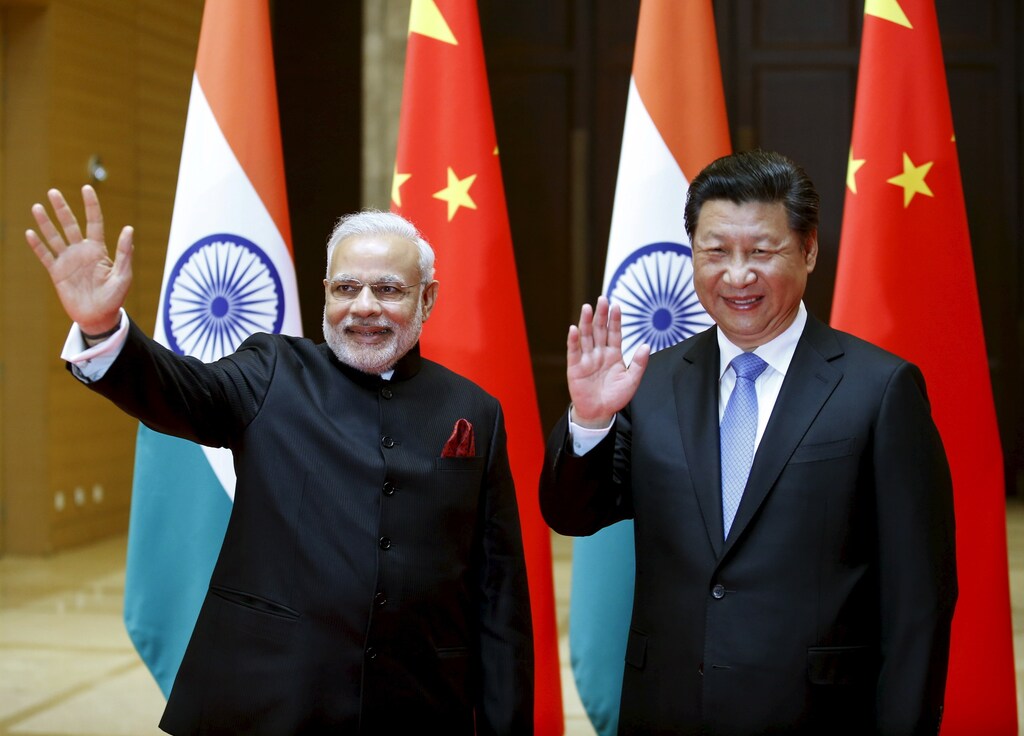
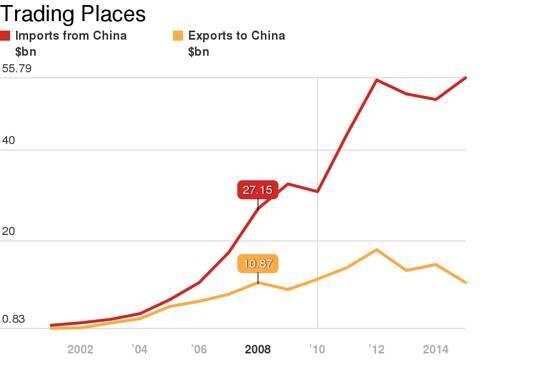
Inevitably, the economic relationship of the two giant nations has gathered momentum over the last decade. From just about $3 billion in trade at the turn of the century, the countries are now eyeing $100 billion worth of merchandise trade. However, the imbalanced nature of this engagement raises issues of sustainability. In this context, the summit-level engagements over the last year or so evoked hopes of a more sustainable trade trajectory. It is noteworthy that Prime Minister Narendra Modi and President Xi Jinping have met as many as five times in this period.
Prime Minister Modi’s visit to China in May 2015 was a seminal opportunity to discuss economic engagement, and many new initiatives were decided upon by the two governments. Interestingly, the PM’s closed-door interaction with top Chinese companies is said to have been very encouraging, and we are seeing this translated on the ground as these large enterprises begin to develop their India strategies. In addition, in Shanghai, the PM addressed business communities of both sides, for which the Chamber if Indian Industry had organized a high-level delegation. Businesses from the two countries exchanged 26 agreements totaling $22 billion on this platform, including trade, investments and financing.
Breaking down the barriers to trade and investment
A key outcome of the visit was the establishment of a task force that would address market access issues faced by Indian companies in their sectors of interest. Several policy matters have been pending with the Chinese government for protracted periods. For example, approvals for pharmaceutical ventures in China take a long time, raising costs for Indian investors, including for products that are already acceptable to the USFDA. In the IT sector, preferences for Chinese state-owned companies discourage Indian companies from applying for contracts.
Encouraging signs of cooperation are visible in the agreements inked for railway cooperation, smart cities, and skill development. The Chinese government expressed a desire to engage in India’s high-speed rail project and has already begun training for railway personnel. It will also be involved in modernizing railway stations in India. For skill development, a university is proposed in India with Chinese expertise.
Indian films in China, and other arenas for cooperation
The agreement regarding co-production of films was a major step forward. India’s media and entertainment sector enjoys vast viewership across the world, but is impacted in China due to restrictive policies for foreign films. The co-production agreement has already resulted in several film ventures being signed, and this would hopefully open up the market for more Indian films and television programs.
Indian companies are challenged by the size and diversity of the Chinese market as well as language and regulatory issues. However, they would need to be much more active in China if the trade balance is to be redressed. With their successes in other markets, Indian companies can be confident about their operations in China as well.
As the Chinese economy slows down and the Indian economy opens up, the two countries can embark on new economic cooperation paths. We look forward to a robust and well-rounded economic engagement with China in years to come.