This year’s Gates Annual Letter focussed on energy and time. Bill Gates argued that cheap, clean sources of energy are fundamental to the future of human development, and Melinda Gates shone a light on how women spend their time, and how it’s spent and compensated differently than men’s. The letter is an excellent example of communicating complex issues clearly and in an engaging manner and we encourage everyone to read it.
While the topic is on people’s minds, we wanted to take the opportunity to clarify one of the charts they included based on “Labor force participation rates” data from ourGender Statistics Database. What the data show is that worldwide, in 2014, 55% of women participated in the labor force vs 82% of men. In every geographic region, the share of women in the labor force is lower. As the Gates letter notes, this can be attributed to cultural norms - responsibilities for cooking, cleaning and childcare disproportionately fall on women and keep them out of the labor force.The labor force participation rate includes the unemployed and people working without payYou can think of a “labor force” as the total pool of working-age people able to work in an economy. The labour force participation rate measures the proportion of a country’s working-age population that’s either working or looking for work. What’s interesting about this statistic is that it includes unemployed people, and people who are working in both paid and unpaid jobs.
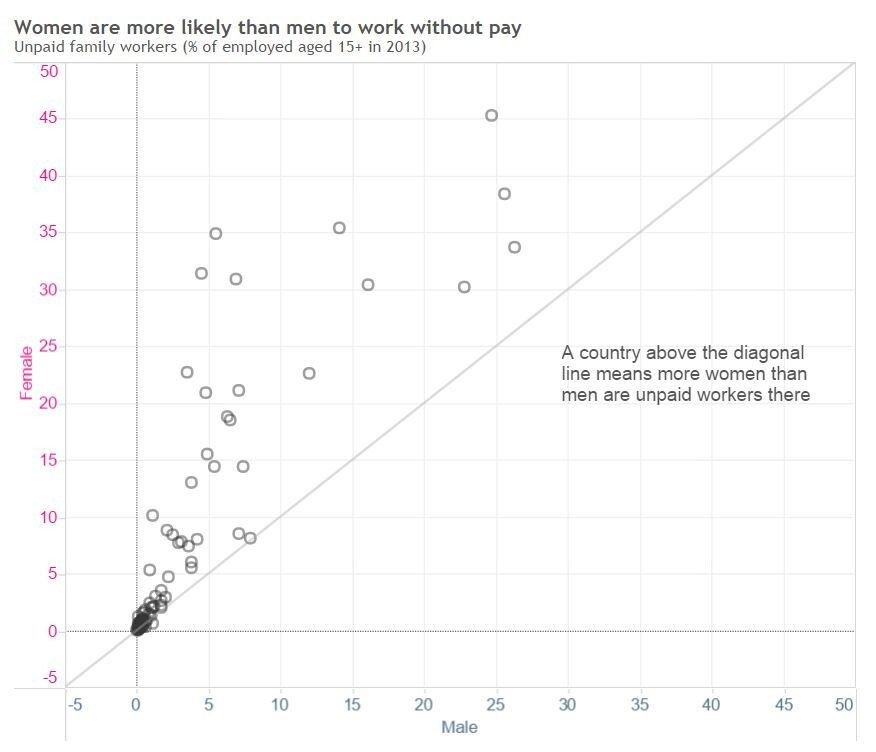
But what exactly is an unpaid job? Things like internships or volunteering come to mind, but more often it’s people working in a family-run business without pay. And in most of the countries where have data, women are more likely than men to be working without pay in these roles:
You can read more about the gender gaps we still need to close, and access more gender-related data via the Gender Data Portal or in our Data Catalog.