Women account for nearly half of the developing world's farmers, yet they own far less land than men despite growing evidence that increasing female land ownership can boost food production, education levels and child nutrition.
Women's land ownership can be as low as 10 percent, a survey of 34 developing nations by the United Nations Food and Agriculture Organization (FAO) found.
"When women are empowered and can claim their rights and access to land, leadership, opportunities and choices, economies grow, food security is enhanced and prospects are improved for current and future generations," said Chilean President Michelle Bachelet, who is former head of UN Women.
World Bank officials and other experts are meeting in Washington to discuss ways to improve female land ownership rates.
Here are some facts about women's land ownership:
* Female land ownership rates vary from 11 percent in Senegal to 54 percent in Rwanda and Burundi. Comparable statistics for men's land ownership are 28 percent in Senegal, 55 percent in Rwanda and 64 percent in Burundi.
* Female farmers lack equal rights to own land in more than 90 countries, making it more difficult for them feed themselves and build a secure future.
* Widows in 35 countries do not have equal land inheritance rights.
* In India, about 11 percent of farms are controlled by women.
* More than 29 percent of farms in Botswana, Chile, Georgia Malawi, Panama and Poland are controlled by women, a higher rate than most developing countries.
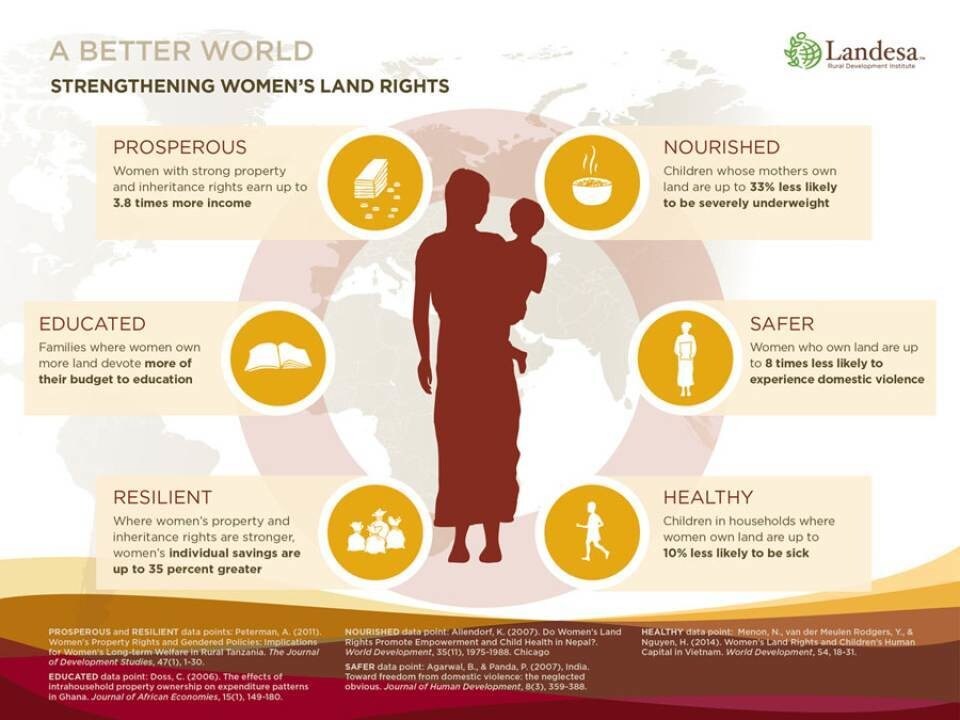
* Children whose mothers own land are more than 30 percent less likely to be severely underweight than children of women who do not own land.
* Women who own land are up to eight times less likely to experience domestic violence.
* About 60 percent of farmers in sub-Saharan Africa and 70 percent in South Asia are women. Sources: Landesa, Oxfam, U.N. Food and Agriculture Organization