Conventional wisdom says hard work, brains and leadership ability are what you need to get to the top of the corporate ladder. And perhaps a stroke of luck – being in the right place at the right time when a promotion comes up.
But new research suggests that other factors might help you along the road to the C-suite.
LinkedIn looked at the career paths of around 459,000 members globally who had worked at top management consultancy firms between 1990 and 2010. Of these, about 64,000 – roughly 14% – became partners of big companies, VPs, or C-level executives.
The data unearthed some interesting findings about career progression.
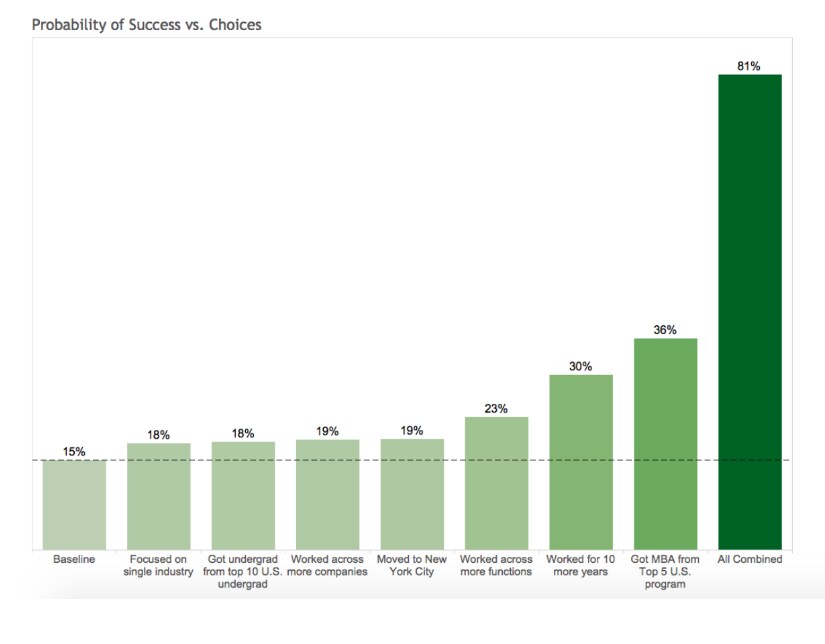
Here are the highlights:
Experience in different areas of the business. A management consultant who spends time working in, for example, marketing or finance, or both, or other business functions, improves their chances of securing a senior executive role.
Time spent in each extra job function provided career progress equivalent to around three years of work experience.
“Working across job functions, like marketing or finance, provides the well-rounded understanding of business operations that are needed to become an executive,” writes Guy Berger, an economist at LinkedIn and co-author of the study.
Changing companies within an industry offered a small boost, but switching industries had a negative impact, which may be an indication of the value of building up experience and relationships.
___________________________________________________________________
Have you read?
5 career tips from a CEO to his millennial children
5 insights to help you become a better leader
Why are there so many female managers, but so few female CEOs?
__________________________________________________________________
MBAs count, some more than others. In this sample of management consultants, having an MBA from a top five business school in the US News rankings turbo-charged careers – equivalent to 13 years of experience. An MBA from a lower-ranked school provided a boost of five years.
Other post-graduate degrees, such as a PhD or master’s, helped with becoming a high-level executive but didn’t provide the same advancement as an MBA.
Location, location, location. In the US, working in New York City increased the likelihood of the consultants getting to the top of the career ladder. By contrast, being located in Houston and Washington DC decreased their chances.
Overseas, Mumbai and Singapore were the cities offering the biggest boost, while Sao Paulo and Madrid had the most negative effects.
“This could be due in part to the nature of the industries that are prevalent in these cities (for example, the financial services industry tends to be more hierarchical than the high-tech industry), as well as the higher concentration of company headquarters in those regions,” writes Berger.
Gender matters. While all the factors have an equal impact on both men’s and women’s careers, a woman needs an average of three and a half more years of work experience to have the same probability of becoming an executive.
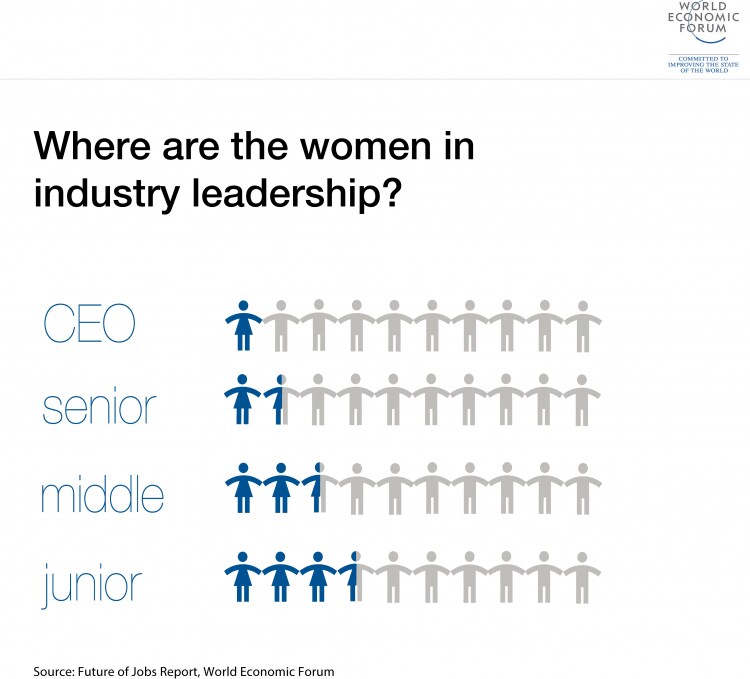
This graphic from the World Economic Forum’s Future of Jobs Report 2016 highlights women’s under-representation in management roles, particularly at senior and CEO level.