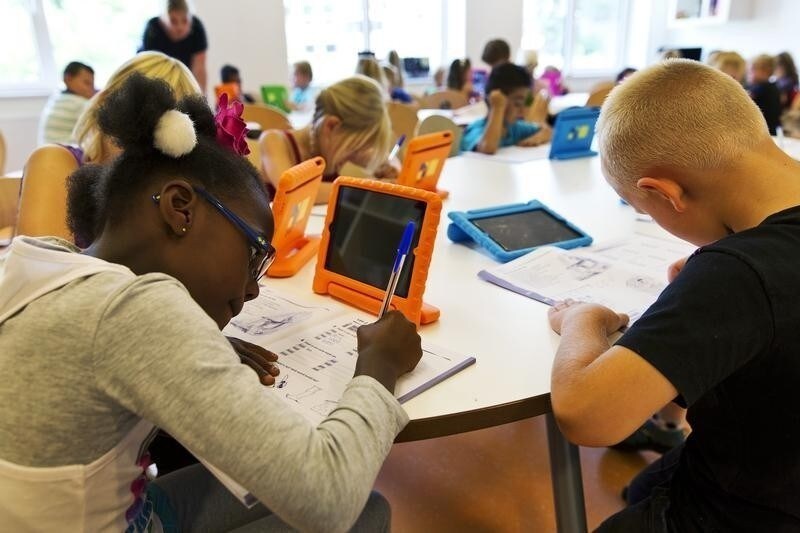
Many young people spend a large proportion of their time using technology, both at home and at school. Now, thanks to new data, parents can get a better idea of whether all this screen time is helping or hindering their child’s education.
A 2015 report from the OECD looks at the most recent data from PISA (Programme for International Student Assessment) provided in 2012. It evaluates how the use of technology in education has changed in recent years, and how this has affected learning.
In 2012, 96% of 15-year-old students in OECD countries had a computer at home, while 72% reported access to a desktop computer, laptop or tablet at school.
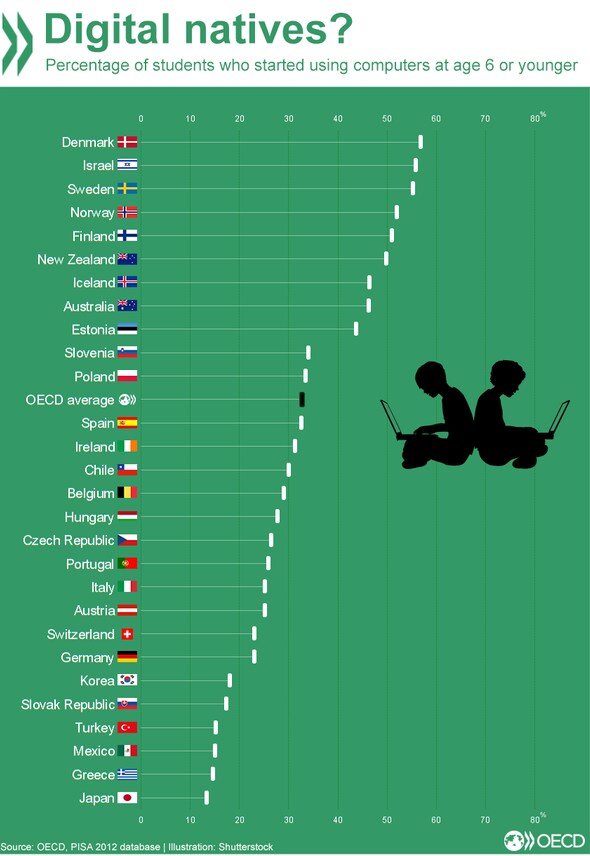
When it comes to computers, children start young: more than half of students in Denmark, Israel, Sweden, Norway and Finland began using computers aged six or under (in OECD countries it's closer to a third).
Do computers improve pupils’ grades?
Students who use computers moderately during school tend to perform better than those who rarely use computers, the report found.
However, the use of computers in schools does not necessarily always improve results. Pupils who were frequent computer users at school did worse than their peers, even after accounting for social background and student demographics.
PISA tested students’ digital reading performance in more than 30 OECD countries and economies, and found that the children who scored well were also good performers in print reading tests.
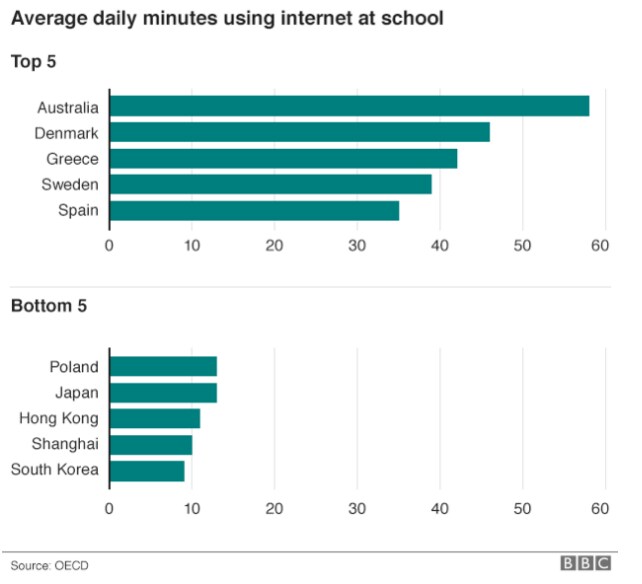
Singapore, Korea, Hong Kong, Japan and Canada all scored highly in the digital reading tests, a result that was in line with their performance in print reading tests. Surprisingly, children in many of these high scoring places spent the least amount of time online during school hours.
Andreas Schleicher, OECD Director for Education and Skills, said: “If you look at the best-performing education systems, such as those in East Asia, they’ve been very cautious about using technology in their classrooms.”
Overall, the study found that countries that have invested heavily in ICT (information communication technologies) for schools have seen “no noticeable improvement in their performance in PISA results for reading, mathematics or science”.
However, technology does have its place in schools, and the OECD notes that the real benefits of ICT in education have yet to be fully realized and exploited. It says that computers must remain a key part of school life, in conjunction with traditional teaching methods.
“As long as computers and the internet have a central role in our personal and professional lives, students who have not acquired basic skills in reading, writing and navigating through a digital landscape will find themselves dangerously disconnected from the economic, social and cultural life around them,” the report authors say.
Have you read?
How digital technology is transforming global education
Has technology been good for education?
What children need to know about tech