
A list of some of the week’s most interesting stories on economic growth and social inclusion.
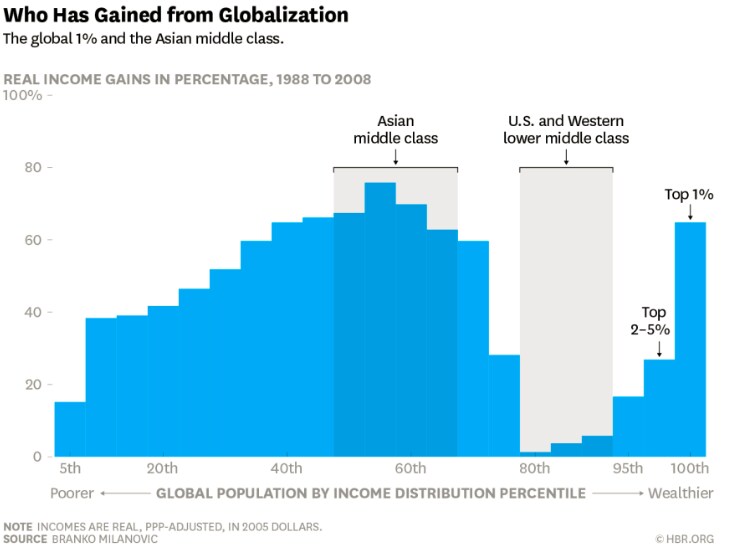
1. Facts and figures. The global 1% and the Asian middle class have gained the most from globalization. Are these gains linked to the losses of the Western lower middle classes? (Harvard Business Review)
2. Why is digitization failing to raise productivity growth rates? (MIT Sloan Management Review)
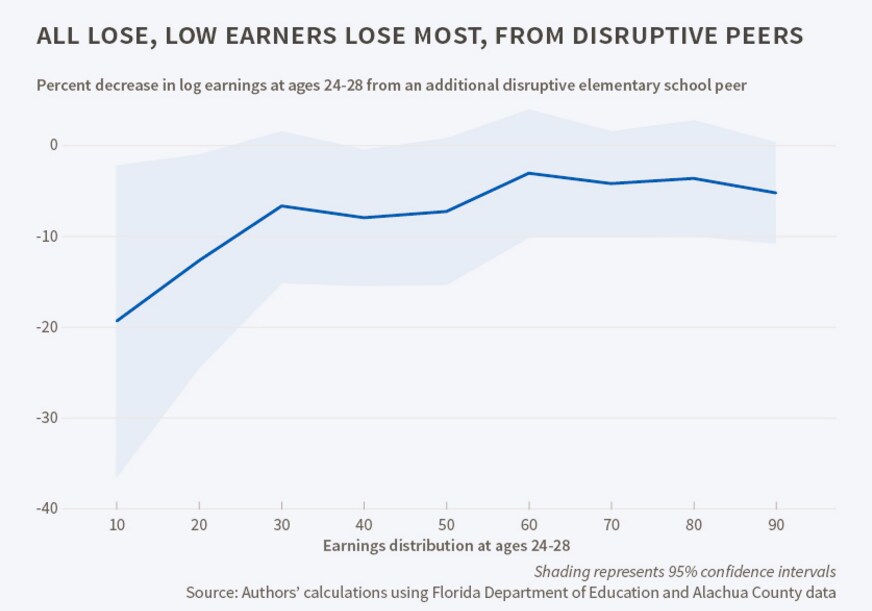
3. Disruptive students have been found to harm the long-term college, career, and income prospects of other pupils – with particular negative effects noted for pupils from low-income families. (National Bureau of Economic Research)
4. China provides more development finance than the world’s six major multilateral financial institutions combined. (Financial Times)
5. Recent research suggests that current top earners in Florence were also top of the city's socio-economic ladder in the 16th Century. If that is true, intergenerational mobility is more persistent than is often assumed. (VoxEU.org)
6. Brazil’s new government is facing five immediate economic challenges. (Peterson Institute for International Economics)
7. Joseph Stiglitz argues that today’s markets are largely monopolistic. If that is true, mitigating inequality requires addressing these power structures. (World Economic Forum)
8. Is the financial system serving the real economy? No, says a new book. (Institute for New Economic Thinking)
9. We are not truly measuring work in our national income statistics. For example, unpaid labour by women is in the trillions globally according to one estimate. (Quartz)
10. Many U.S. employers are “nudging” ineffectively. Here is how they can improve their incentive schemes. (Knowledge@Wharton)