
Welcome to your weekly curated list of some of this week’s most interesting stories on economic growth and social inclusion.
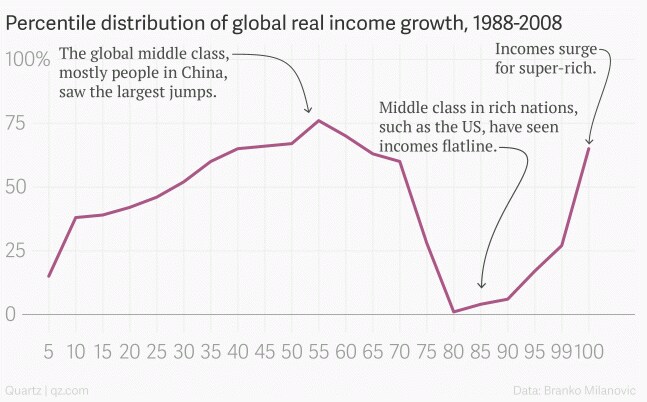
1. Facts and figures. Income growth since the late 1980s has largely bypassed the middle class in advanced economies, according to this chart. (Quartz)
2. Canada could become a shining example of how governments can address rising inequality. Yet this fight is not without constraints and practical difficulties, as this article nicely draws out. (Bloomberg View)
3. Economic growth does not necessarily translate into rising living standards across society. So what can the U.S. government do to address the economic discontent of American workers? (The New York Times)
4. What are India’s growth priorities and prospects? (Knowledge@Wharton)
5. Are we approaching yet another global crisis? Kenneth Rogoff assesses the state of global markets. (Project Syndicate)
6. Read here a tale of two Mexicos. (The Economist)
7. Here is a take on the ECB’s decision to extend its QE programme along with further interest rate cuts. (Antonio Fatas)
8. Investors are keeping a close watch on Indonesia. Why? (World Economic Forum)
9. There is a lot that companies can do to contribute to create business and societal value. Last week I referred to our report on this topic. This week, an article points out how U.S. companies contributed to the “politics of anger”. (Harvard Business Review)
10. In case you missed it. This time last year, Thomas Piketty, Paul Krugman and Joseph Stiglitz discussed inequality, economic growth and the genius of economics. (MSNBC/Youtube)