
A list of some of the week’s most interesting stories on economic growth and social inclusion.
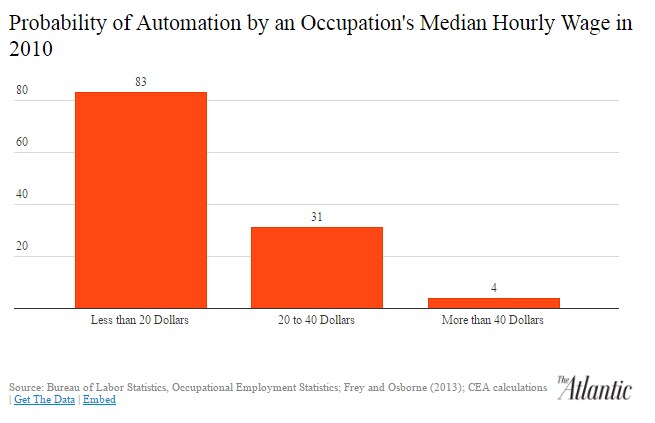
1. Facts and figures. Lower paying jobs are at much greater risk of coming under pressure from automation than higher paying jobs. This does not mean that inequality and unemployment have to rise – if the right steps are taken now. (The Atlantic)
2. The Euro area has experienced a lost decade of rising economic prosperity. A paper published this week sees doom and gloom for the area unless fundamental reforms are undertaken. (Bertelsmann Stiftung/Jacques Delors Institute)
3. Venezuela has been in the spotlight for its economic demise. How could it turn the tide? (Knowledge@Wharton)
4. Digital finance holds a promise for growth in emerging markets. A study released this week documents that promise. (McKinsey Global Institute)
5. Break-through science is a source of economic growth. But what if scientific research is done increasingly by the privileged few? A special feature in the science magazine Nature looks into this question. (Nature)
6. On the occasion of the OECD’s publication of the Interim OECD Economic Outlook, the organisation’s Chief Economist explains why the trade slow-down is troubling and how policymakers should respond. (OECD)
7. Paul Krugman writes that the US Census Bureau’s update suggests a positive economic legacy of the Obama administration. (The New York Times)
8. Six sectors in Africa with high growth, high profitability and low consolidation. (Harvard Business Review)
9. This special report gives an in-depth update on Argentina’s economic landscape and the reforms begun under Mauricio Macri. (Financial Times)
10. Here are some news from the Bank of Japan, which is expanding its monetary policy experiments. Is this good or bad news? (Bloomberg View)