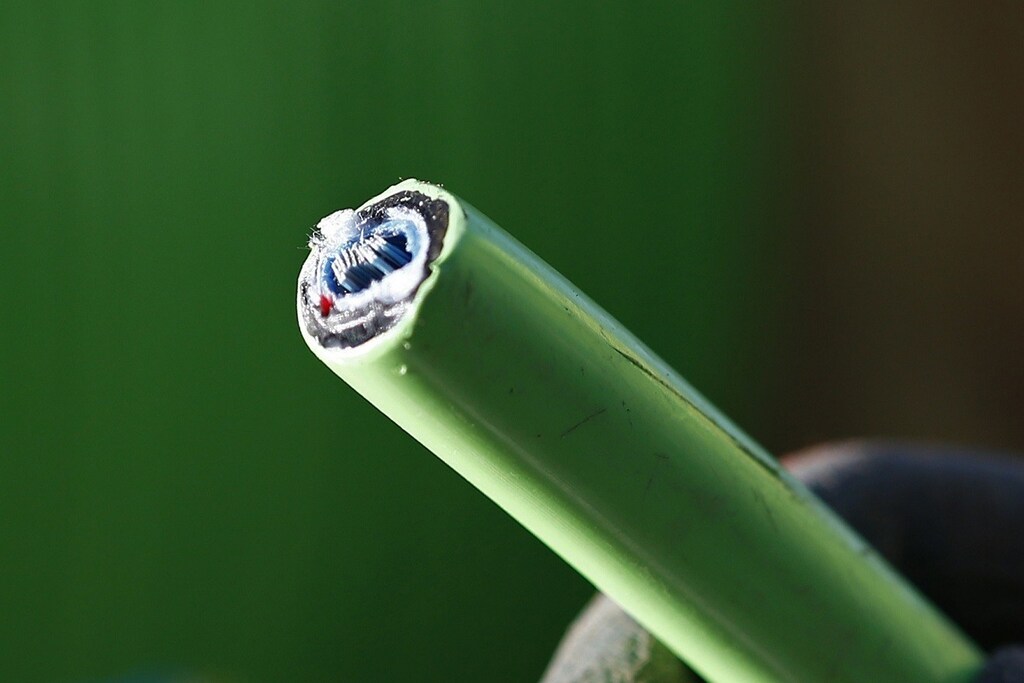
Most of what you see on the internet, including possibly this article, travels to you from underwater. In fact, 99% of all international data is transferred through a labyrinth of cables stretching across the floor of the world's oceans.
There are 229 of them, each no thicker than a soda can.
It's a method that goes back more than a century. In 1886, the ship SS Great Eastern was the first to lay a continually successful transatlantic cable. Cables are still the technology of choice today, even over satellites, primarily because of their stability and reliability, despite the odd shark bite.
Ever wondered what that might look like on a map? The Oxford Internet Institute has charted the world's fibre-optic connections, imagined as a metro system.

Though simplified (it doesn't show all of the cable networks under the Gulf of Mexico or South and East China Sea, for example), the map shows a number of interesting connection hubs. The United States is the most connected country on Earth, with cables that link it to most other continents. The United Kingdom, Senegal and Nigeria also boast large connection hubs.
In another map, made by Telegeography, you can see the 278 in-service cables, along with 21 planned routes. You can also see an interactive version here.

Still want to know more? Vox has created a short video that explains the submarine world of cyberspace.
Have you read?
What if the internet went down for a day?
How the internet of things will change your life
Tim Berners-Lee: 'What's the dollar value of the web?'
Author: Donald Armbrecht is a freelance writer and social media producer.
Image: An NBN worker holds a fibre-optic cable used in the National Broadband Network in west Sydney. REUTERS/Daniel Munoz