This article is published in collaboration with Thomson Reuters Foundation trust.org.
Three Balkan nations – hard hit by severe flooding – were among the six countries most affected by extreme weather events in 2014, researchers said.
Serbia came top and Bosnia and Herzegovina in third place. The two Southeast European countries suffered the heaviest rainfall and worst flooding since records began 120 years ago, according to the annual Global Climate Risk Index.
The floods in mid-May caused losses and damage of over $2 billion in Serbia, while flooding and landslides displaced over 90,000 people in Bosnia and Herzegovina, think tank Germanwatch said in a report released with the index at U.N. climate talks in Paris.
Bulgaria, in sixth place, was hit by floods and a severe hailstorm, badly affecting agriculture and tourism, and recording a death toll of 31 in 2014.
“Patterns of extreme precipitation is what people and countries will likely face in a warming climate,” said Sonke Kreft, author of the study and international climate policy lead at Germanwatch.
The European countries received relief funds from the European Union’s solidarity fund, pointing to the kind of help that could be made available through a new global deal to curb climate change due to be sealed in Paris next week, he added.
Due to the extreme weather in Southeast Europe, and landslides that hit Afghanistan, the disaster-prone Philippines dropped to fourth place in the index from top in 2013.
Nonetheless, millions of people were affected there in 2014 by typhoons, floods and landslides, the report said.
Raymund E. Liboro, a senior Philippines climate change official, told journalists in Paris that three of the most destructive typhoons ever to hit his country had occurred in the last four years.
But the government is making progress in reducing the risks to people and property through early warning systems, legislation and a risk management council, he said.
“While we consider ourselves as vulnerable, we don’t consider ourselves as helpless,” he said, adding the country has now started to count disasters “that did not happen”.
The report also looked at the 20 years from 1995 to 2014, finding the hardest-hit countries were Honduras, Myanmar and Haiti.
“Climate-related impacts are unfair,” said Kreft.
He noted that nine of the 10 most affected countries in the two-decade period were low or lower-middle income countries, while the European nations hit hard in 2014 were also among the continent’s poorest.
Kreft said the index – calculated on the basis of deaths and economic losses – was a reminder that the Paris climate summit needed to achieve “the climate ambition and global solidarity required to safeguard vulnerable populations worldwide”.
Publication does not imply endorsement of views by the World Economic Forum.
To keep up with the Agenda subscribe to our weekly newsletter.
Author: Megan Rowling is a journalist for the Thomson Reuters Foundation, covering the latest developments in humanitarian crises, aid, climate change, governance and women’s rights.
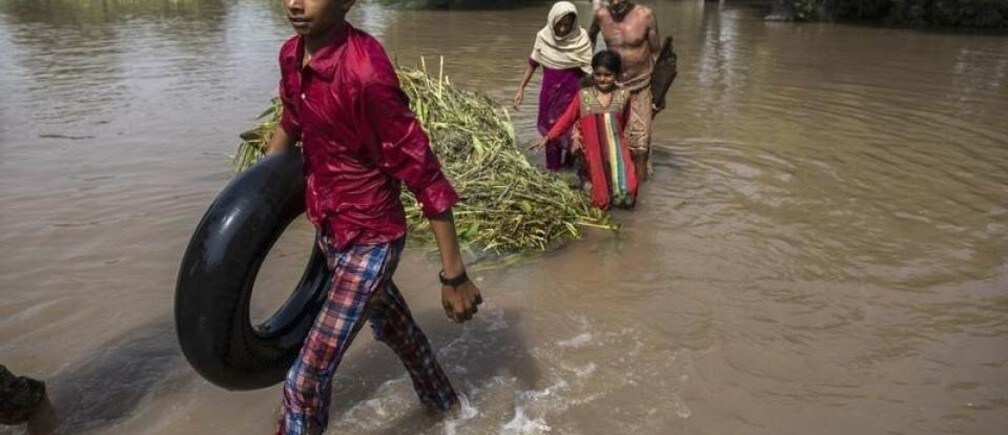
Image: A flood victim carries a rubber ring as he arrives on dry land. REUTERS/Zohra Bensemra.