Do you pride yourself on being a good decision-maker? Well, chances are you aren’t one, and don’t even know it. Like everyone else, you’re subject to cognitive bias, a limitation in your thinking brought about by errors of memory, miscalculation or social attribution.
Not all biases are negative, however. The placebo effect, for example, is important in the search for new medicines. This cognitive bias can be so powerful that by simply telling a patient a new drug will make them better, they begin to believe it.
What you know is not much more reliable than what you remember, either. In a recent Forum session titled What If Your Mind Can Be Read, Duke University professor Nita Farahany described how researchers were able to create false memories through persuasion. This isn’t as sinister as it sounds: the drug propranolol has shown promise in reducing anxiety and trauma; it could even be offered to victims of traumatic accidents or violent crime, disconnecting their emotions from their troubling memories and alleviating suffering.
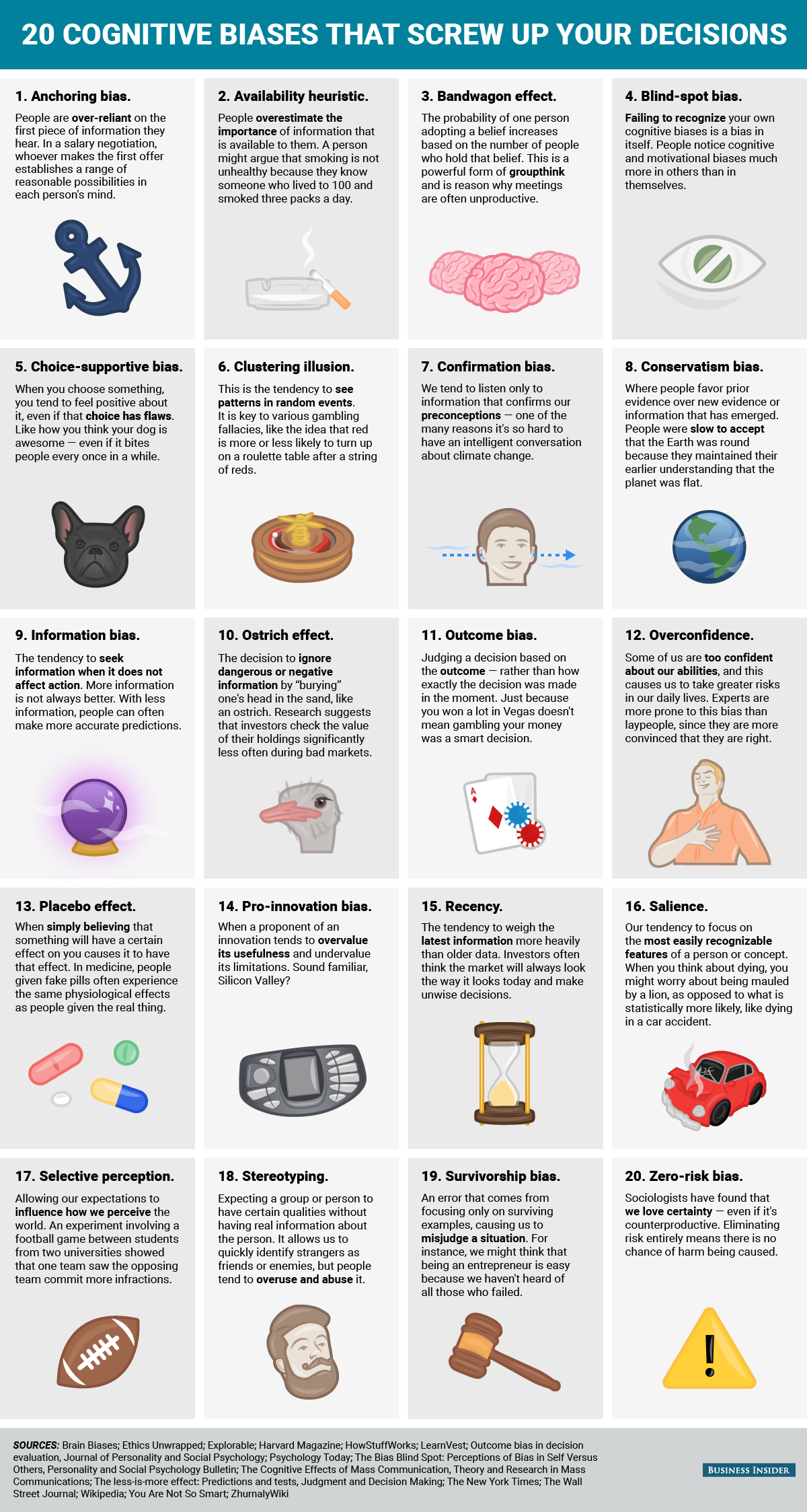
This chart, compiled by Business Insider, shows 20 common cognitive biases that trip us up in our decision-making.
Have you read?
What if your mind can be read?
Video: How to make better decisions
Can a computer tell what you’re thinking?
Author: Donald Armbrecht is a freelance writer and social media producer.
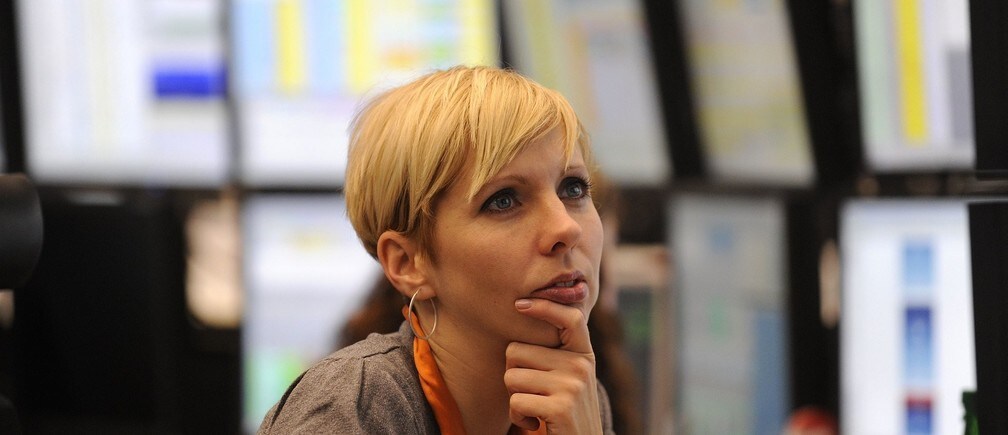
Image: A share trader checks share prices at the German stock exchange in Frankfurt. REUTERS/Kai Pfaffenbach