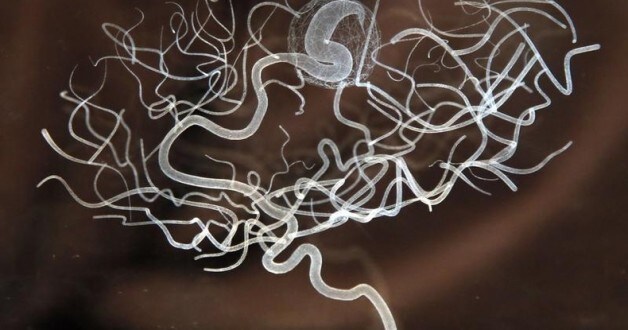
IL-33 protein
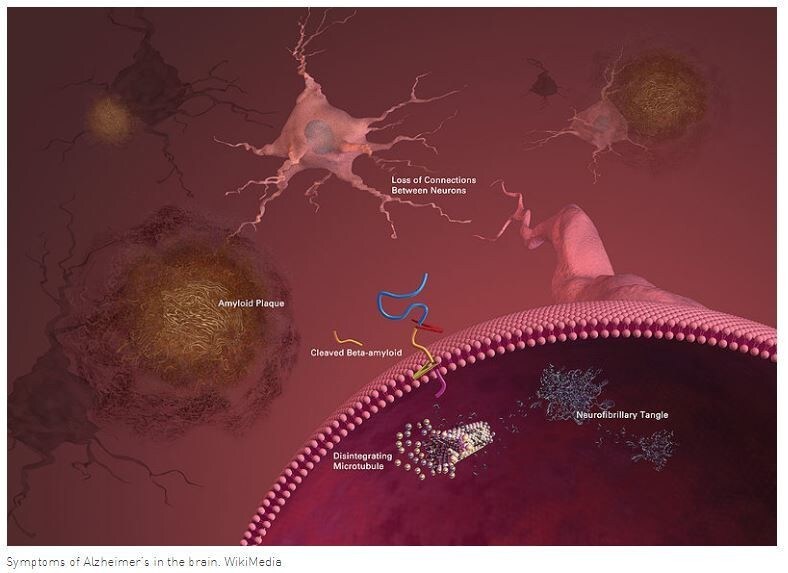
Alzheimer’s disease currently has no known cure, and unfortunately, another 65 million people are expected to develop it by the year 2030. The disease usually develops due to a build-up of either amyloid plaques or neurofibrillary tangles.
It is unclear why some people have a predisposition to develop these lesions and why some do not, but scientists are working hard to figure out what the difference is.
With this in mind, researchers recently administered injections containing a protein called IL-33 on a daily basis to mice bred to develop a progressive disease like Alzheimer’s as they aged. They found that, not only did it clear out the toxic amyloid plaques, it prevented more from forming.
In the end, it reversed the disease’s symptoms and restored memory and cognitive function to that of a healthy mouse…in one week.
“IL-33 is a protein produced by various cell types in the body and is particularly abundant in the central nervous system (brain and spinal cord),” University of Glasgow lead researcher Eddy Liew says. “We found that injection of IL-33 into aged APP/PS1 mice rapidly improved their memory and cognitive function to that of the age-matched normal mice within a week.”
However, that said, it is not clear how this will work in humans with Alzheimer’s, but it is a starting point.
But no cure yet
Notably, only one study was able to successfully translate positive results in mice to humans, and only at a rate of eight percent (8%). But Liew believes that this report brings “encouraging hints” of possibly translating into human patients.
He adds that, despite several failed attempts at curing the disease throughout the years, this is a development worth looking at.
“The relevance of this finding to human Alzheimer’s is at present unclear. But there are encouraging hints. For example, previous genetic studies have shown an association between IL-33 mutations and Alzheimer’s disease in European and Chinese populations. Furthermore, the brain of patients with Alzheimer’s disease contains less IL-33 than the brain from non-Alzheimer’s patients,” Liew says.