
Biometric security—using characteristics of our bodies to verify who we are—is becoming commonplace. Most of us are comfortable scanning our fingerprints to unlock our phones or gain access to an office, and companies like Facebook and MasterCard are scanning our faces for security. What’s next?
Apparently, our ears.
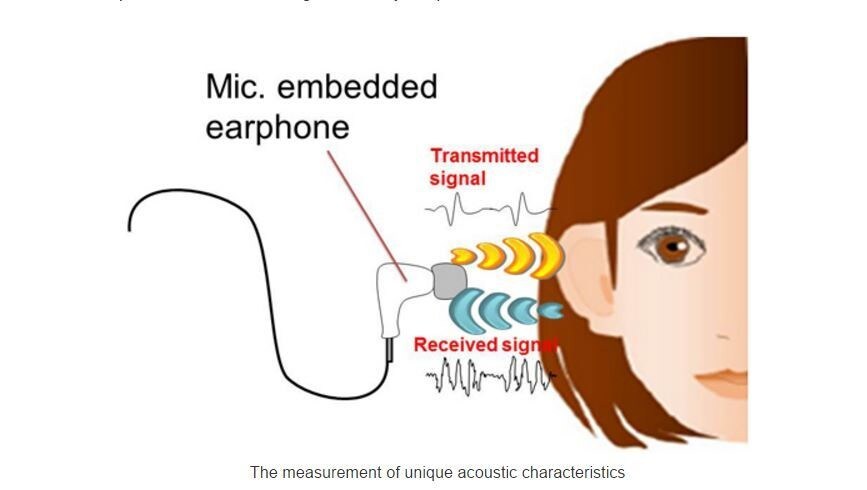
Japanese company NEC has developed technology that measures the reflection of sound waves when they bounce off the tympanic membrane. Since everyone’s ear cavity is unique, like a fingerprint, how the waves bounce will also be unique. The process—which only takes a second—has an accuracy rate “greater than 99%,” according to anannouncement from NEC earlier this month.
The technology requires special headphones with microphones built into the earpiece, since it needs to both transmit and receive sound. NEC, which expects to commercialize the technology in 2018, plans to use it to combat identity fraud, secure phone calls and messaging, and bolster voice detection services.
(NEC)
Ear scanning biometrics solves a key authentication problem—it lets someone verify who you are continuously, instead of at a specific moment. It can also work while you’re moving, unlike other biometric readers.
So, if you hate the idea of someone listening to your earbuds without your permission, this technology could be for you.