Internet companies have been criticized for not doing enough to block extremist rhetoric on their sites. And though several have stepped up efforts to remove violent and hateful content, ISIS propaganda continues to proliferate on social media.
Now, Google's parent company Alphabet, with the help of Facebook and Twitter, is experimenting with another approach to combating radicalization online, whether it's ISIS supporters or white supremacists.
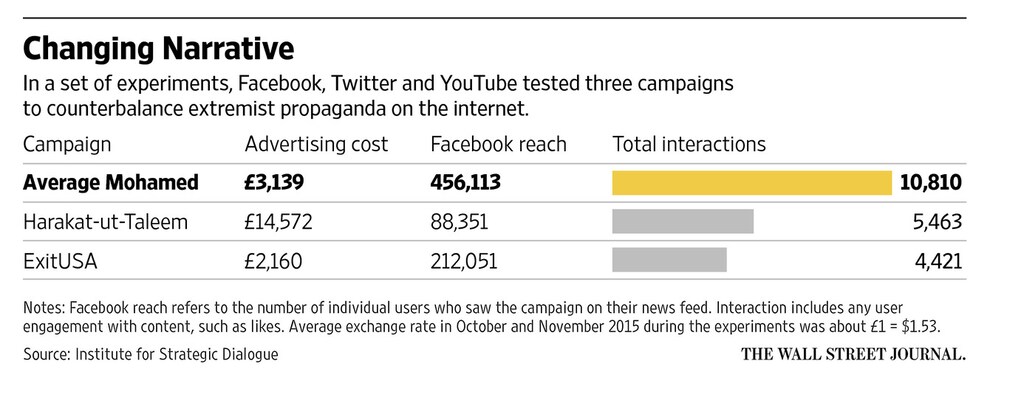
Last October, three video campaigns – Average Mohamed, ExitUSA and Harakat – targeted users of Facebook, YouTube and Twitter in the United States, United Kingdom and Pakistan.
More than half a million teenagers and young adults who had posted content containing words such as “sharia” and “mujahideen” saw the videos appear on their Facebook news feeds, according to the Wall Street Journal.
In one video, cartoon figures with guns stand beneath an Islamic State flag. “Do not be confused by what extremists say, that you must reject the new world,” the narrator says.
“You don’t need to pick, you can find your path so you can live by the best of both worlds and make us all richer for it.
“Remember, peace up. Extremist thinking out.”
The results, published in a study by the Institute for Strategic Dialogue (ISD), a UK-based think tank, indicate that this kind of campaign could reach people who are vulnerable to being radicalized, and help spark dialogue. However, it’s unclear whether they could actually prevent people from becoming involved in violent extremism.
The ISD report found that Average Mohamed’s videos inspired young Muslims to debate the role of gender in Islam as well as the struggle with identity.

ExitUSA’s videos, meanwhile, which targeted white supremacists, led to “constructive and antagonistic exchanges with users who clearly held neo-Nazi views”. In response to the campaign, eight people reached out to ask for help “getting away from hate”.
In Pakistan, Harakat’s videos performed better in Urdu than they did with English sub-titles in the UK. The report's authors say this demonstrates that counter-narratives coordinated in the UK could have a wider global impact.
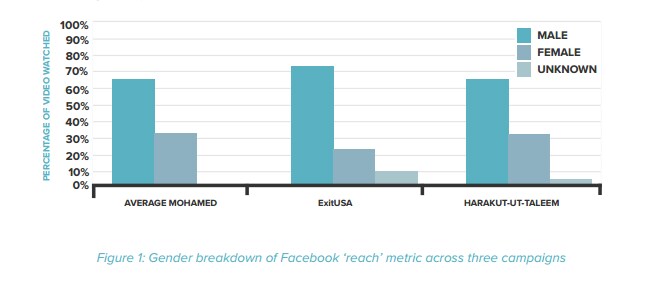
By the end of the experiments, each of which lasted about three weeks, the campaigns had received more than 378,000 video views and more than 20,000 engagements, including likes, shares, replies, retweets and comments. Around 480 internet users commented on the content.
Zahed Amanullah, head of counter-narrative projects at ISD, said it was difficult to know whether video views, likes and retweets lead to a lower risk of radicalization. “The classic question is: How many people have you prevented from becoming terrorists? Which you can’t answer,” he said.
Have you read?
4 ways to counter spreading extremism
Terrorism is on the rise, but there’s a bigger threat
Sheryl Sandberg: Social media can beat ISIS