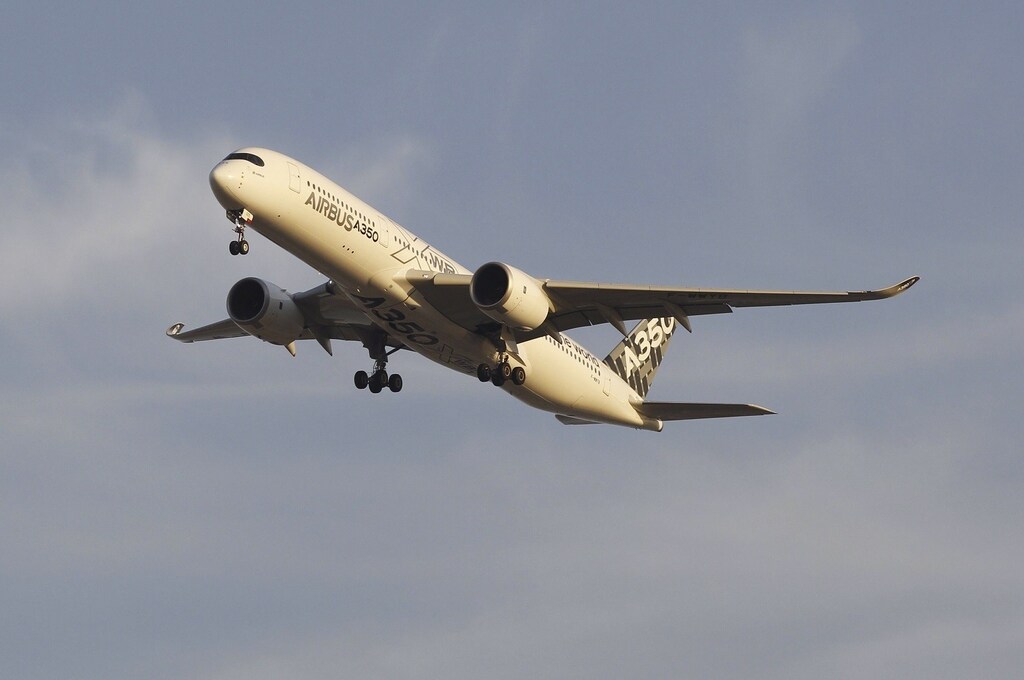
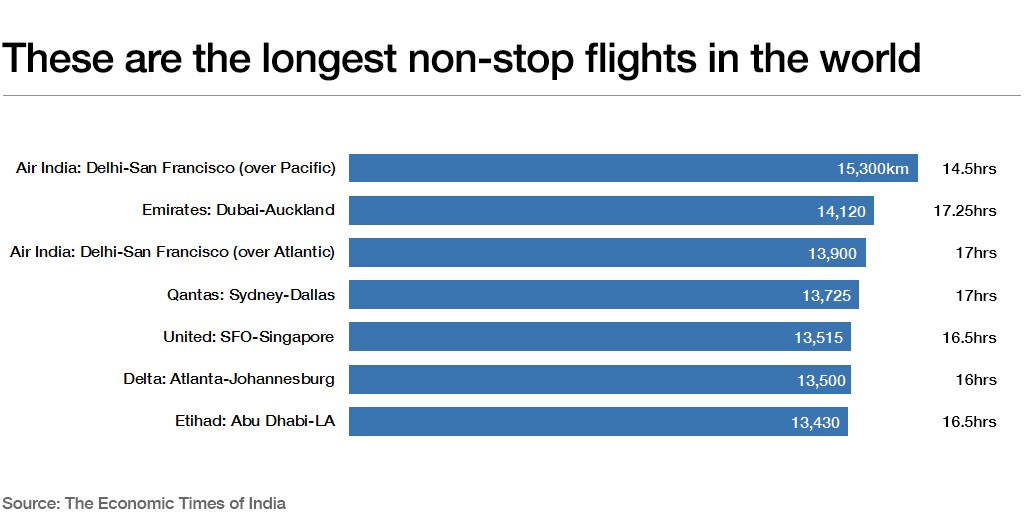
An Air India jet has flown from Delhi to San Francisco in a single journey, making it the world's longest non-stop flight. The route covered 15,300 kilometres in 14.5 hours.
The airline already flew to San Francisco but it has swapped its route from one that flies over the Atlantic to one that goes the other way around the world, crossing the Pacific.
The Pacific route is almost 1,400 km longer but took almost two hours less thanks to tailwinds – the winds that blow in the same direction as the plane, making it go faster.
“While taking the (western) Atlantic route to SFO, we usually face headwinds of 24 kmph. This means that if our aircraft is doing 800 kmph, its actual ground speed is 776 kmph. Taking the (eastern) Pacific route will mean getting tailwinds of 138 kmph, which makes the aircraft have an actual ground speed of 938 kmph,” a senior Air India official told the Economic Times of India.
The world’s fastest non-stop flights
Before the Air India flight, the world’s longest flight was Dubai to Auckland at 14,120 km in 17.25 hours, which is an average speed of 819 km per hour.
In third place is Qantas’ route from Sydney to Dallas, at 13,725 km in 17 hours, with an average speed of 807 km per hour.
In fourth place is United Airlines flight from San Francisco to Singapore, which travels 13,515 km in 16.5 hours, at an average speed of 819 km per hour.
The fifth longest flight is Delta Airlines route from Atlanta to Johannesburg, which covers 13,500 km in 16 hours, an average of 843 km per hour.
Air India’s record may soon be beaten, however. Singapore Airlines plans to launch a Singapore to New York flight that will cover a distance of 16,500 km in 19 hours, which is an average speed of 868 km per hour.
There are also environmental advantages
Not only do tailwinds cut the amount of time travelled, they reduce the plane’s consumption of fuel as well. This is good news, since aviation is the most emissions-intensive form of transport, and also the fastest-growing source of emissions in the transport sector.
The aeroplane used by Air India on this route used an average of 9,600 litres of fuel for each hour of flying. By getting their two hours faster, the aeroplane used almost 20,000 fewer litres of fuel.
It’s not the first time that pilots have used the tailwinds to help them fly further faster. In January 2015 a BA flight reached London from New York in just over five hours, a route which typically takes around seven hours, thanks to favourable tailwinds.
However, tailwinds make taking off and landing more difficult, so pilots will often make sure they are facing a headwind for these parts of the journey.