
Stroke, heart and lung diseases, diabetes and cancer are non-communicable – yet they are spreading rapidly across Africa, Asia and Latin America.
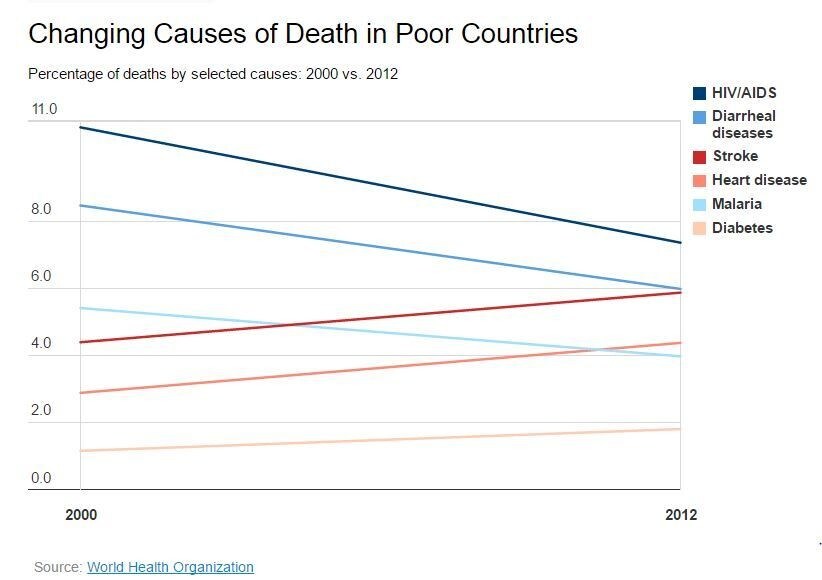
The good news is that the tide is turning against communicable diseases such as AIDS, malaria and tuberculosis, although much work remains to be done before these battles are won.
Deaths from malaria have nearly halved since 2000, AIDS deaths have dropped 42% worldwide since their peak in 2004 and the tuberculosis death rate has declined by 47% since 1990.
Today, many more people in poor countries die from heart disease and stroke than malaria. And non-communicable diseases (NCDs) are collectively responsible for almost 70% of all deaths worldwide – three quarters of which occur in low- and middle-income countries.
So why are diseases traditionally thought of as rich world problems increasingly killing people in poor countries?
According to the World Health Organization (WHO), the answer lies in four major risk factors: smoking, physical inactivity, drinking too much alcohol and an unhealthy diet.
Tariq Khokhar, the World Bank’s Global Data Editor, explains that rapid urbanization, particularly in the developing world, is causing changes to traditional diets and lifestyles and contributing to the onset of diabetes – the focus of this year’s World Health Day. The ageing of populations is another major contributing factor.
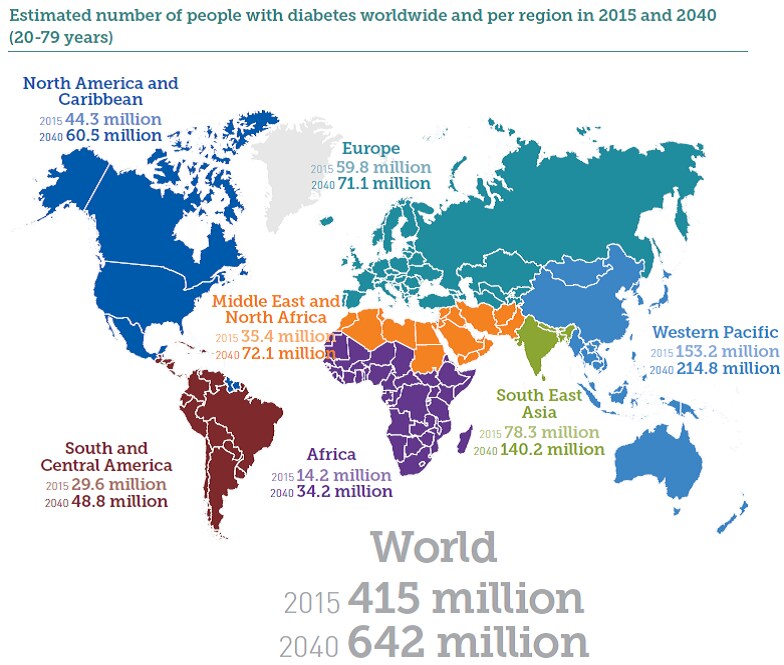
“China exemplifies both of these phenomena,” he writes in an article for the World Bank’s Data Blogs. “While rising incomes, an improved food supply, and a variety of food products have contributed to significant reduction in malnutrition and improved health status in China over the past 20 years, decreased physical activity in cities and skyrocketing consumption of processed foods, fast food, and sugar-rich soft drinks, have led to a significant increase in prevalence of overweight and obesity, particularly among adolescents.
“As a result, the prevalence of diabetes increased from less than 1% recent in the 1980s, to about 10% in the late 2000s.
“Now China has the greatest number of diabetics in the world – 96.3 million –followed by India’s 66.8 million, and the US, with 25.8 million.”
Can we stop the rise of NCDs?
More than 80% of people who die from NCDs in developing countries are aged under 70, and the WHO says many of these premature deaths could be avoided.
Of the 38 million lives lost to NCDs worldwide in 2012, just over 40% were premature and preventable.
Tackling the risk factors with better medical care, including education campaigns and simple interventions, would not only save lives, it would also provide a huge boost for the economic development of countries, the WHO says.
And it warns that if the world doesn’t get to grips this “epidemic” quickly, the impact of NCDs will be potentially “devastating” to societies and economies, as well as our health.
Have you read?
How much do you know about diabetes?
How 5 cities are working to wipe out diabetes
5 reasons why tackling diabetes will boost economic growth