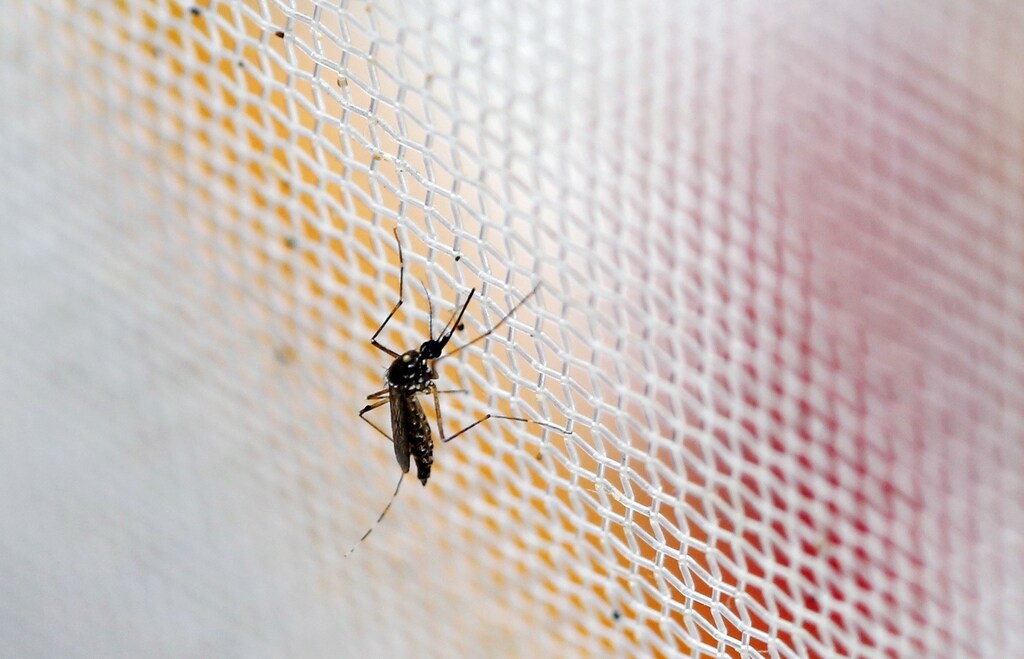
Professor Jeffrey Powell began working on the mosquito that transmits the Zika virus when he was an undergraduate student 49 years ago. He has a life-long fascination with Aedes aegypti, which he refers to as “a truly elegant creature.”
His latest research program is based in Brazil where he works on a National Institutes of Health-sponsored collaboration that focuses on Aedes aegypti’s involvement with transmitting the virus that causes dengue fever, a devastating disease in Brazil and much of Latin America. With the sudden rise in interest in the Zika virus, in particular in Brazil, his research program is poised to take on this added challenge to understand this mosquito’s role in the Zika outbreak.
Powell’s expertise is in genetics, and his work in Brazil focuses on the genetic variation in the mosquito that controls its ability to transmit viruses. “Mosquitoes vary considerably in their ability to replicate and pass on viruses, and much of this variation has a genetic cause,” said Powell. “Ultimately, we hope to identify the genes that control the transmission of viruses like Zika. Once this is done, it should be possible to increase the frequencies of genes that inhibit the ability of these mosquitos to transmit viruses, making them less dangerous for humans.”
This kind of genetic manipulation of mosquito populations has long been a goal of mosquito biologists, Powell added.
“In recent years, genetically modified mosquitoes have been developed and are being released in different parts of the world, including Brazil,” he said. “However, there remain drawbacks to using GM mosquitoes — not least of which are political and ethical issues.”
Powell’s goal is to use the genetic variation naturally present in mosquito populations and simply increase the frequency of genes already present. “This circumvents all the issues involved with genetically modified organisms, and avoids use of insecticides. It could eventually be a long-term solution requiring minimal maintenance.”