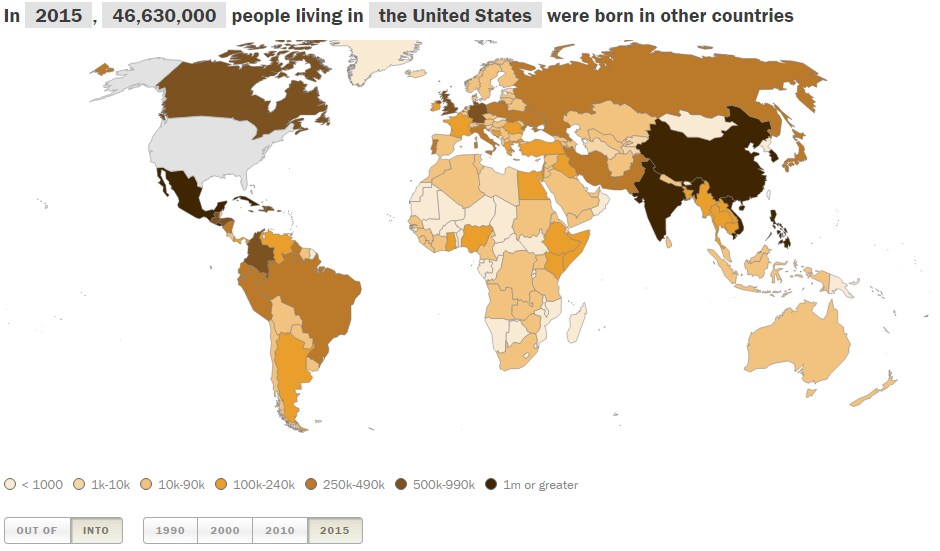
The US is the country with the most international migrants in the world, at 46 million people, while as a region, Europe is top of the table with 76 million people living there who have crossed borders.
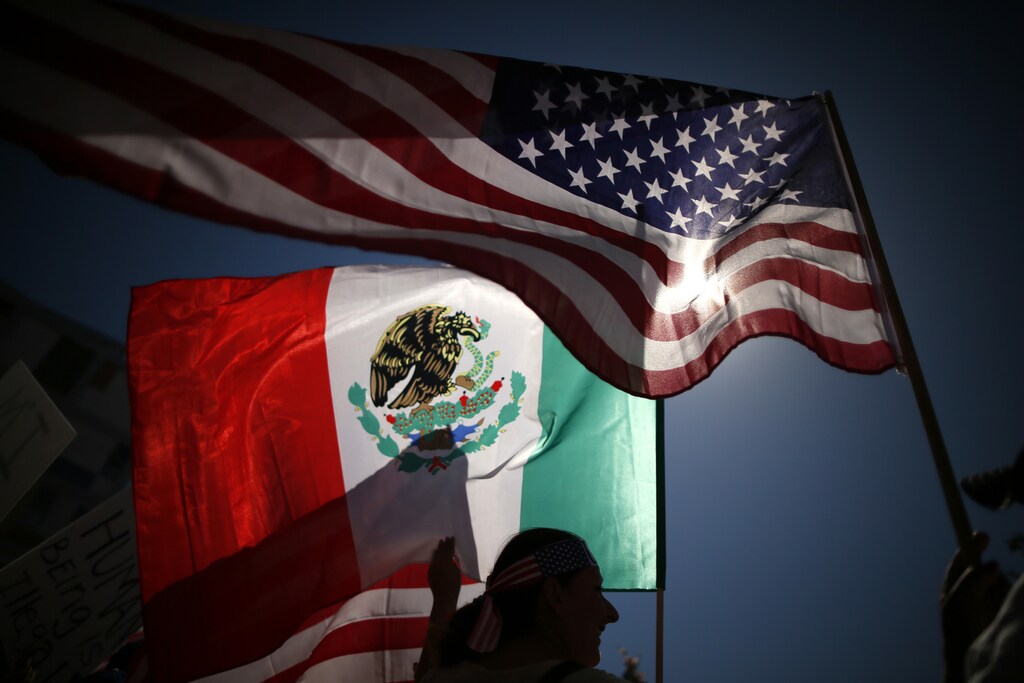
The majority of migrants in the US – over 12 million people – come from Mexico, while the country is also home to more than 2 million Chinese migrants, and 1.9 million Indian-born migrants.
This interactive map from Pew, available here, shows both the origin and destination of the world’s migrants, according to UN data.
People born in Puerto Rico, a US territory, are considered US citizens. However the UN data counts the 1.7 million Puerto Ricans living in the US as international migrants.
The UN considers an international migrant to be someone who has been living for one year or more in a country other than the one in which they were born.
The data also includes estimates of the number of unauthorized immigrants, as well as refugees and in some cases their descendants, for example those born in refugee camps.
Globally, more than 243 million people are living in a country they were not born in.
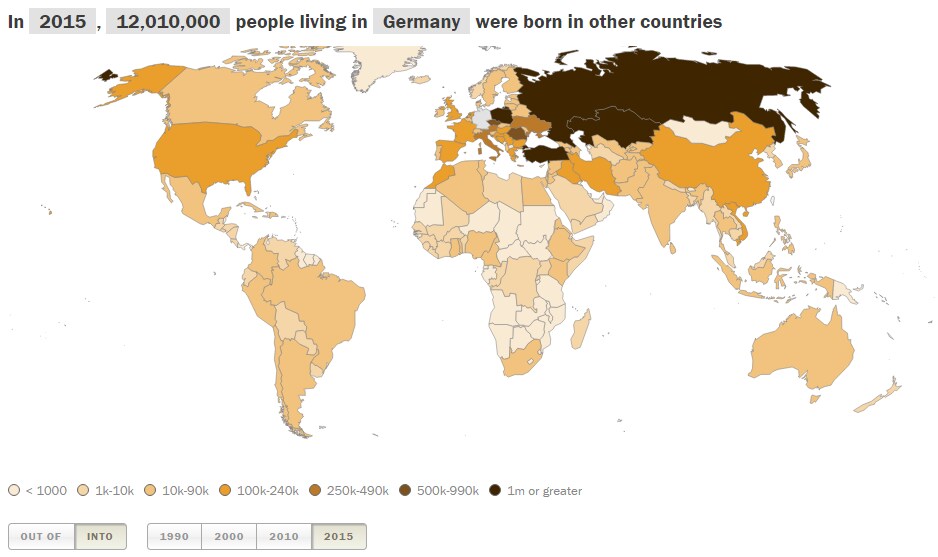
Germany is the European country with the most international migrants, at 12 million. Among these, Polish nationals make up the largest proportion, followed by 1.6 million people from Turkey, and around a million Russians.
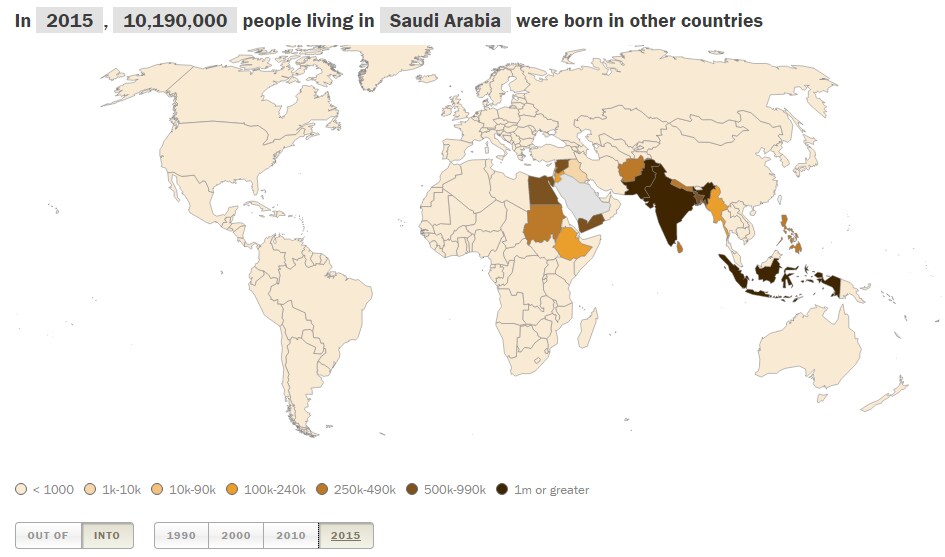
Asia is close behind Europe, with 75 million international migrants. Saudi Arabia, which is categorized by the UN as Western Asia, has 10 million migrants – the highest number in the region, with people from India, Indonesia and Pakistan choosing to make the country their home.
More and more people are deciding to move away from the country they were born in. In 1990, around 150 million people across the world were classed as international migrants; 25 years later that number has increased by almost 100 million.
Migration has increased in both the developed and developing world, with most regions seeing a steady growth. Migrants, as of 2015, amounted to 3.3% of the world’s population.
The United Nations Population Fund notes: “The majority of migrants cross borders in search of economic and social opportunities.”
But it adds that many others are fleeing crises, and the mass movement of refugees is leading to a tightening of borders and a rise of xenophobia in some countries.
Have you read?
Global Agenda Council on Migration