“All men are born equal.” There is no doubt that this ideal should include women. However, since time immemorial, women from all walks of life have been subjected to patriarchal attitudes. Throughout history, women have persistently been treated as inferior, and as a result, there has been a need to put in place special measures to try and achieve gender parity. In my opinion, none of these measures to bring about gender equality have borne fruit, and instead they leave women exposed to a permanent stigma.
Significant steps that have been taken nationally and internationally include the emancipation and economic empowerment of women, gender-based budgeting, reserved quotas for women in representative institutions, affirmative action quotas in services, and financial incentives for girls attending school, to name a few. Despite all these efforts, women still continue to be either excluded or included only nominally in decision-making, particularly at higher and significant levels. This is true of the public sector as well as for the private sector.
Democracy should mean representation. Various elected institutions in many countries ensure representation of disadvantaged groups, technocrats and women, yet all such groups continue to be a negligible and ineffective minority in such institutions. To ensure the political participation of women, various countries have reserved quotas in national and provincial assemblies – the range varies from 5% to 30% across the globe. Some people have said that this is mostly meaningless because these female representatives are discriminated against in the elected bodies that they represent. A real representative is one who has the backing of the majority of voters in a specific constituency. In all cases where women are indirectly elected, they are also dependent on the political party nominating them.
My proposal is that women be given representation that is proportionate to the population they constitute. We should set aside a certain number of seats for women, based on and proportionate to the percentage of women in the population of the country in question. Such a rule would force political parties to award seats to women. I am not suggesting that women should only vote for other women, but I do believe the number of women representatives should proportionally reflect the number of women in any given population. This statistical enhancement alone would bring about a radical change in the political participation of women and empower them in a real sense.
Author: Anoosha Shaigan is a lawyer and a member of the Youth Parliament of Pakistan; she is a Global Shaper in the Lahore Hub. The World Economic Forum’s Global Gender Gap Report 2014 will be released on 28 October.
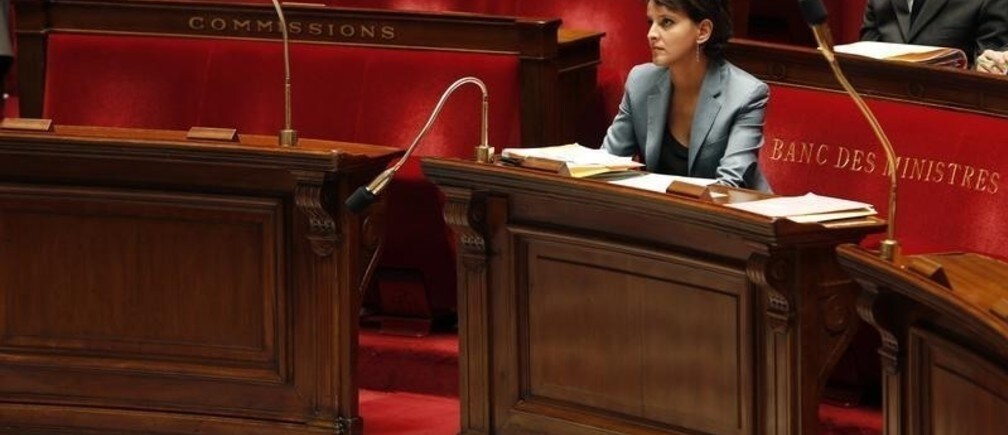
Image: French Minister of Women’s Rights and Spokesperson of the Government Najat Vallaud-Belkacem attends a vote on the prostitution law at the National Assembly in Paris December 4, 2013. REUTERS/Charles Platiau