Google has finally revealed a commercial use for DeepMind — a British artificial intelligence company it acquired for over $600 million in 2014.
DeepMind made headlines for beating the best human in the world at the notoriously complex board game Go and it's recently started working with hospitals in the UK on a number of healthcare projects but the startup is yet to make any money for Google, until now.
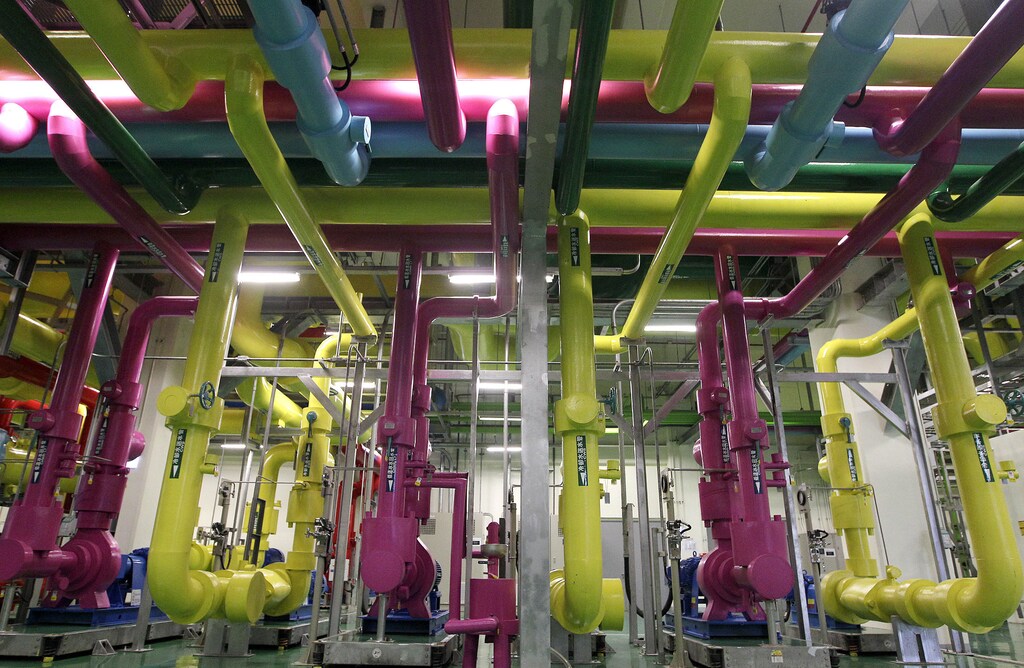
Google announced on Wednesday that it has been using a DeepMind-built AI system to control certain parts of its power-hungry data centres over the last few months as it looks to make its vast server farms more environmentally friendly.
Last year, a Greenpeace report predicted that the electricity consumption of data centres is set to account for 12% of global electricity consumption by 2017 and companies like Google,Amazon, Facebook and Apple have some of the biggest data centres in the world.
Google said it has been able to reduce the energy consumption of its data centre cooling units — used to stop Google's self-built servers from overheating — by as much as 40% with the help of a DeepMind AI system.
Google DeepMind research engineer Rich Evans and Google data centre engineer Jim Gao hailed the breakthrough as "a phenomenal step forward" in a blog post they cowrote announcing the news.
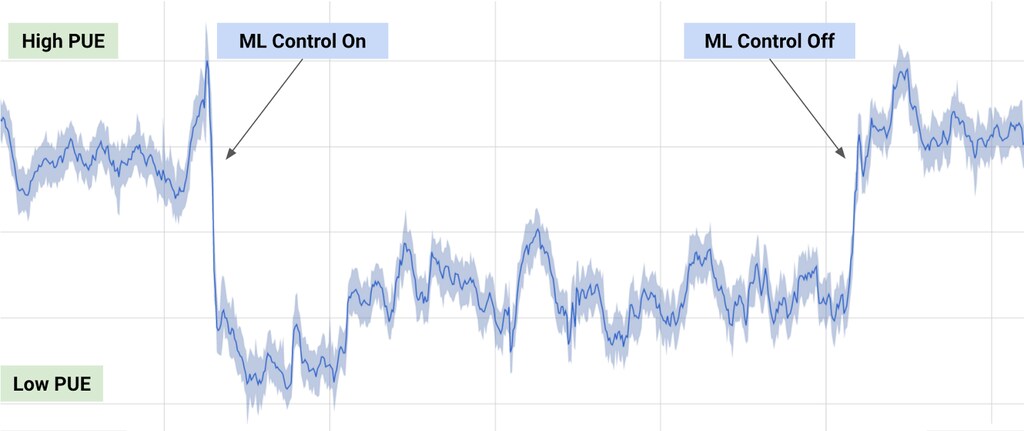
The 40% energy saving on cooling helped one of Google's data centres to achieve a 15% reduction in power usage efficiency, or PUE. PUE is defined as the ratio of the total building energy usage (pumps, chillers, cooling towers) to the IT energy usage (Google's servers). The lower the PUE, the better.
Evans and Gao said Google achieved the energy reduction by training DeepMind's self-learning algorithms to predict how hot data centres were going to get within the next hour. That insight was then used to ensure the data centre didn't provide any more cooling than was necessary.
"Using a system of neural networks trained on different operating scenarios and parameters within our data centres, we created a more efficient and adaptive framework to understand data centre dynamics and optimise efficiency," the pair wrote.
Google's data centres can be found across the world and they contain tens of thousands of servers powering Google services like Search, Gmail, YouTube.
DeepMind CEO and cofounder Demis Hassabis told Bloomberg at an AI conference in New York that DeepMind could provide Google with "huge saving in terms of cost" adding that a reduction in energy consumption is "great for the environment."
The Mountain View-headquartered company didn't say exactly how much money the DeepMind energy savings equate to but it's possible that the figure would run into tens, or even hundreds, of millions of dollars if the saving was achieved across its entire data centre network.
"The implications are significant for Google’s data centres, given its potential to greatly improve energy efficiency and reduce emissions overall," wrote Evans and Gao. "This will also help other companies who run on Google’s cloud to improve their own energy efficiency."
Google said it also plans to use DeepMind's AI across other parts of its data centre infrastructure, not just cooling.
Read more:
This new Google cloud feature is saving its customers a ton of cash