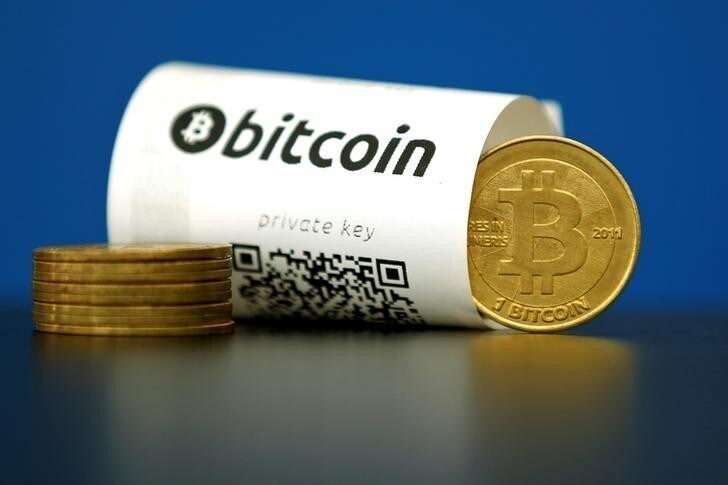
Many people know it as the technology behind Bitcoin, but blockchain’s potential uses extend far beyond digital currencies.
Its admirers include Bill Gates and Richard Branson, and banks and insurers are falling over one another to be the first to work out how to use it.
So what exactly is blockchain, and why are Wall Street and Silicon Valley so excited about it?
What is blockchain?
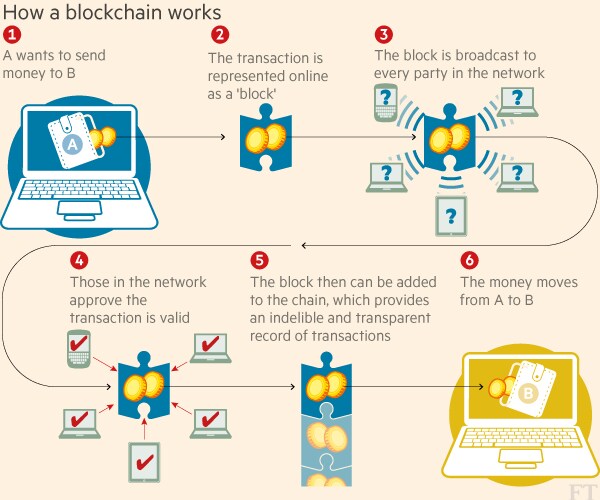
Currently, most people use a trusted middleman such as a bank to make a transaction. But blockchain allows consumers and suppliers to connect directly, removing the need for a third party.
Using cryptography to keep exchanges secure, blockchain provides a decentralized database, or “digital ledger”, of transactions that everyone on the network can see. This network is essentially a chain of computers that must all approve an exchange before it can be verified and recorded.
How does it work in practice?
In the case of Bitcoin, blockchain stores the details of every transaction of the digital currency, and the technology stops the same Bitcoin being spent more than once.
Why is it so revolutionary?
The technology can work for almost every type of transaction involving value, including money, goods and property. Its potential uses are almost limitless: from collecting taxes to enabling migrants to send money back to family in countries where banking is difficult.
Blockchain could also help to reduce fraud because every transaction would be recorded and distributed on a public ledger for anyone to see.
Who is using it?
In theory, if blockchain goes mainstream, anyone with access to the internet would be able to use it to make transactions.
Currently only a very small proportion of global GDP (around 0.025%, or $20 billion) is held in the blockchain, according to a survey by the World Economic Forum’s Global Agenda Council.
But the Forum’s research suggests this will increase significantly in the next decade, as banks, insurers and tech firms see the technology as a way to speed up settlements and cut costs.
Companies racing to adapt blockchain include UBS, Microsoft, IBM and PwC. The Bank of Canada is also experimenting with the technology.
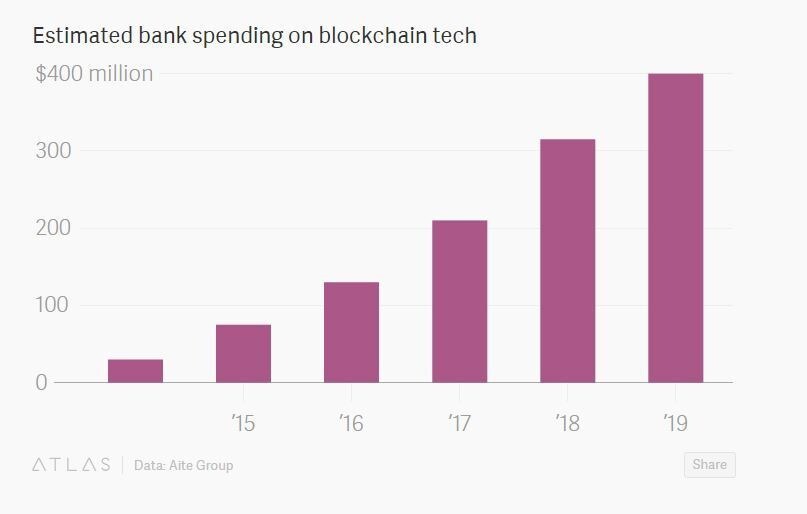
A report from financial technology consultant Aite estimated that banks spent $75 million last year on blockchain. And Silicon Valley venture capitalists are also queuing up to back it.
Have you read?
This is how blockchain will change your life
Will blockchain change the world?
What’s the future of blockchain?