Computers that can feel emotions and think for themselves have been a staple of science fiction for decades. Now scientists are trying to teach machines to imagine. The aim is to speed up the development of artificial intelligence.
Dr Tai Sing Lee from Carnegie Mellon University told the World Economic Forum in Davos that the learning power of his own young children is inspiring his work teaching computers to imagine.
“When my little daughter saw this Picasso painting, she screamed ‘face’ right away, even though she has never seen such a distorted face before. How is that possible?”
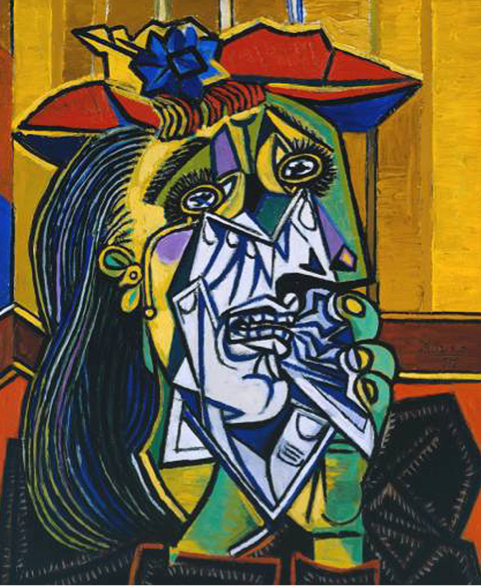
He went on to explain how the human mind can "imagine" a more predictable image while computers are unable to do so.
“Computers cannot do that because they don’t even know who and what to look for.
“We can train computers to learn, to recognize objects by giving them millions of examples with the correct answers.
“A human baby on the other hand learns to recognize many concepts and objects all by themselves, simply by interacting with a few examples in the real world.”
The key to this is that the human brain is capable of filling in gaps in visual information to form a fuller version of the image the brain "expects" to see.
This is the basis for many optical illusions where different people see different images based on their life experiences and personal expectations.
Delving into the brain
Dr Lee’s research at Carnegie Mellon delves deep inside the brain to observe this process at the level of individual cells and neural circuits.
Based on this research his team wrote a computer program that replicates the way in which the human brain fills in the blanks to form a complete picture. “Given an image, the program has to interpret (partial) 3D structures. For each interpretation it can imagine what it expects to see. And if the imagined image matches the input image, or explains the input image, the program knows it got the right answer.”
A new generation of machines
Dr Lee believes we are on the cusp of developing a new generation of computers and machines that can think and learn in the same way humans do. He says his research will also give us a much deeper understanding of the human mind.
And as he teaches machines to imagine, he wants us all to ask what machines could do if they had the power of imagination.