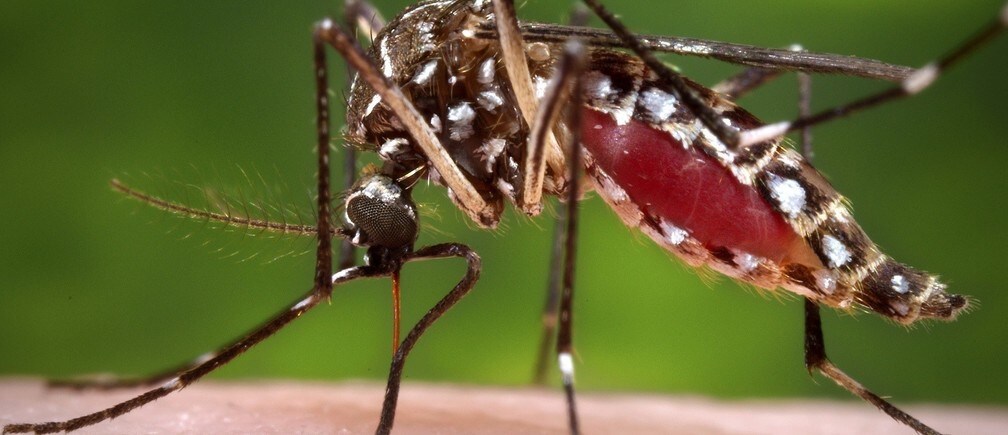
The mosquito is the deadliest animal in the world. Now, in addition to malaria, dengue, and other ills, mosquitoes are probably responsible for spreading a new disease.
Recently, in malaria-heavy regions, there has been an increase in the number of people suffering from a “fever of unknown origin.” According to new research published in the Proceedings of the National Academy of Sciences, mosquitoes are probably the cause behind this mysterious fever.
Researchers previously found that the fever was caused by a bacteria called Rickettsia felis. This bacteria, related to the other types of rickettsiae bacteria that cause various spotted fevers and typhus, is known to be carried by ticks and fleas. But now an experimental study shows that R. felis can also be carried and transmitted by the same mosquitoes that transmit malaria. This would explain the disease’s geographic overlap with malaria.
R. felis infections are poorly understood, says Philippe Parola, one of the study’s co-authors, especially compared to malaria. According toprevious research, the list of symptoms, which includes fever, headache, myalgia, and rash, is not yet well-defined; only laboratory diagnosis can confirm the presence of R. felis bacteria. Since the symptoms are so easily confused with those of other diseases, it’s likely under-diagnosed in humans.
This study only showed the transmission of R. felis between mosquitoes and mice. Simply knowing that the bacteria can be spread by a certain type of mosquito—Anopheles gambiae—is a significant breakthrough, however.
More research will be necessary before epidemiologists can say with certainty that mosquitoes are responsible for growing instances of R. felis in malaria-prone areas around the world. However, according to Parola, early implications are that “physicians treating returned travelers as well as those working in malaria-endemic areas need to screen their patients for rickettsial infections.”
This article is published in collaboration with Quartz Africa. Publication does not imply endorsement of views by the World Economic Forum.
To keep up with the Agenda subscribe to our weekly newsletter.
Author: Svati Narula is a reporter for Quartz in New York. She was previously at The Atlantic, covering environmental economics, sports, and the sea.
Image: A female Aedes aegypti mosquito is shown. REUTERS/James Gathany/CDC/Handout via Reuters.