Businesses that boycott media. Standing up against racism and sexism.
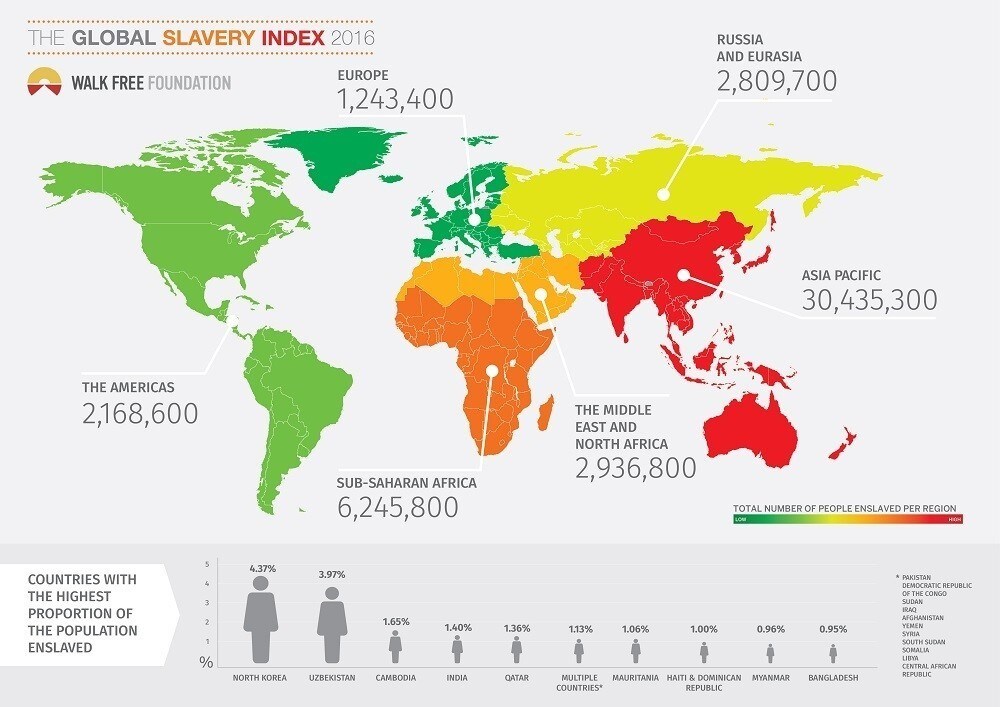
46 million slaves in the world today. The numbers behind the horror.
Worth $1.2 trillion and just elected a president. Religion’s power in the US.
A cure for Alzheimer’s and addiction? Digital technologies and brain health.
Portuguese is more powerful than Hindi. An index of languages’ influence.
When driverless cars crash, who’s responsible? Preparing for the risks of new technologies.
Your light bulb will be a computer. A technology dean offers predictions.
How democracies fall. New populist governments may lead to autocracy.
Why companies avoid the stock market. How impatient capital arose and how to tame it.
Fake news from the Middle Ages. Manipulating information has a history.
Lost knowledge and intelligent machines. Search engines’ radical reinvention.
Don’t blame the barbarians. Climate change and the Roman Empire’s end.
The Fourth Industrial Revolution might make life worse for women. Cites Future of Jobs report. (Guardian)
How the social sector can attract young talent. The New Vision for Education report shows the skills gap. (Harvard Business Review)
What driverless cars need to go mainstream. A Forum project lead on mitigating risks explains. (Fortune)
Will Amazon put cashiers out of work? Quotes Forum director of supply chain and transport industries. (PBS NewsHour)