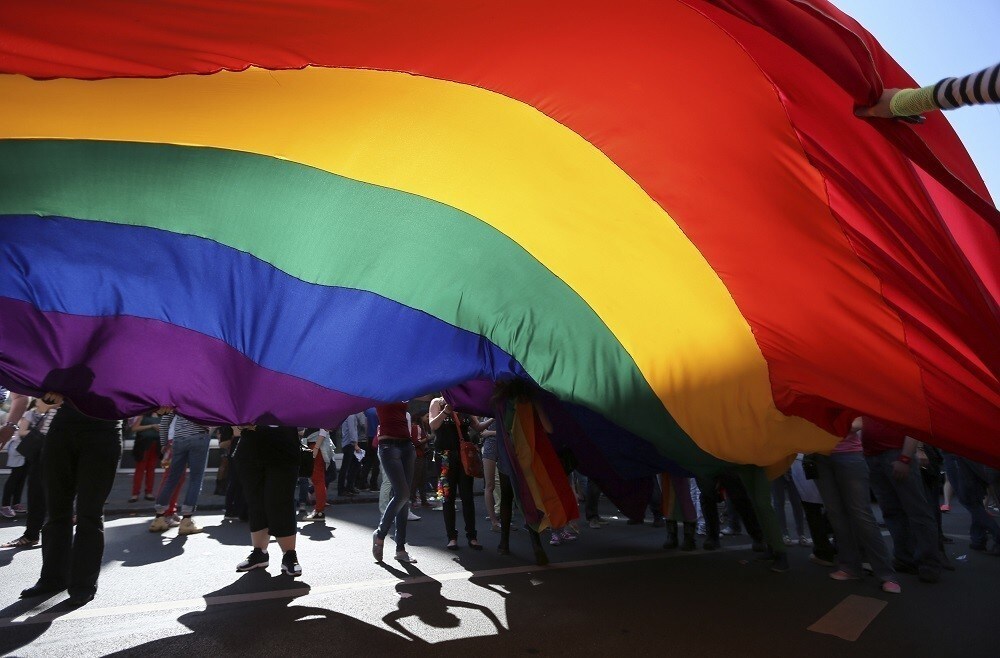
Across the world, 1 billion people can now benefit from marriage equality, meaning they live in a place where same-sex marriage has been legalized.
The Netherlands led the change in 2001, becoming the first country to allow same-sex marriage; 20 other nations, mostly in North and South America and Europe, have followed that lead.
Tony Pitman, an LGBT activist, conducted an analysis on marriage equality. He notes that we are “witnessing a historic shift on a truly global scale”.
The landmark number of 1 billion was reached in July 2016, when nine Mexican states and Mexico City followed the lead of other Latin American nations Argentina, Brazil, Colombia and Uruguay to legalize same-sex marriage.
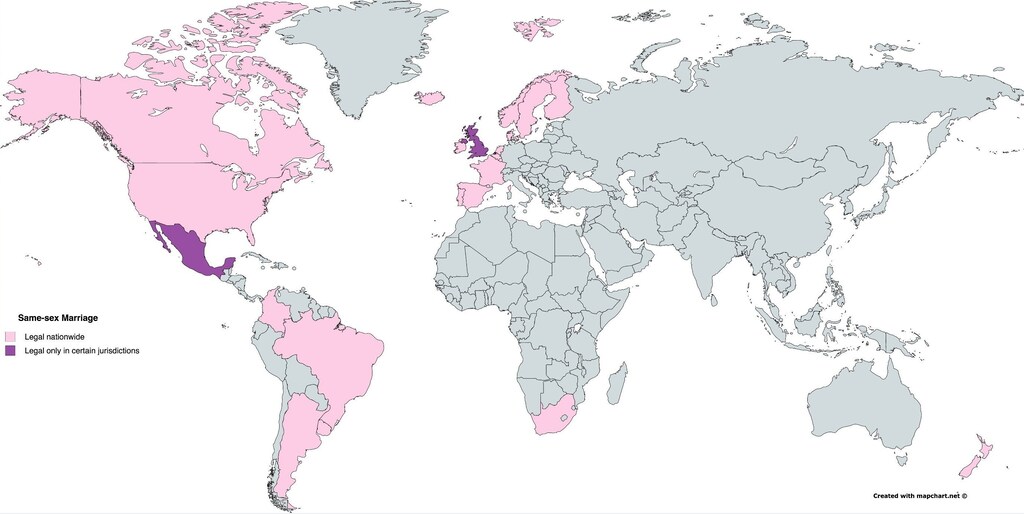
In some cases, the issue has divided nations. In Mexico many states have resisted same-sex marriage, while within the UK, Northern Ireland still does not allow it.
The ruling by the United States Supreme Court in 2015 guaranteed same-sex marriage throughout the whole country, bringing marriage equality to over 320 million people.
Brazil offers over 200 million people this right, followed by France with 67 million.
__________________________________________
Explainer: the state of LGBT rights today
These are the 10 most gay-friendly countries
Who leads Europe for LGBT rights?
___________________________________________
However, although 1 billion people now have marriage equality, this only represents around 14% of the world’s population.
Europe has been rated the most “gay-friendly” continent. A survey ranked the top 10 places to live for LGBT people, and eight of them were in Europe.
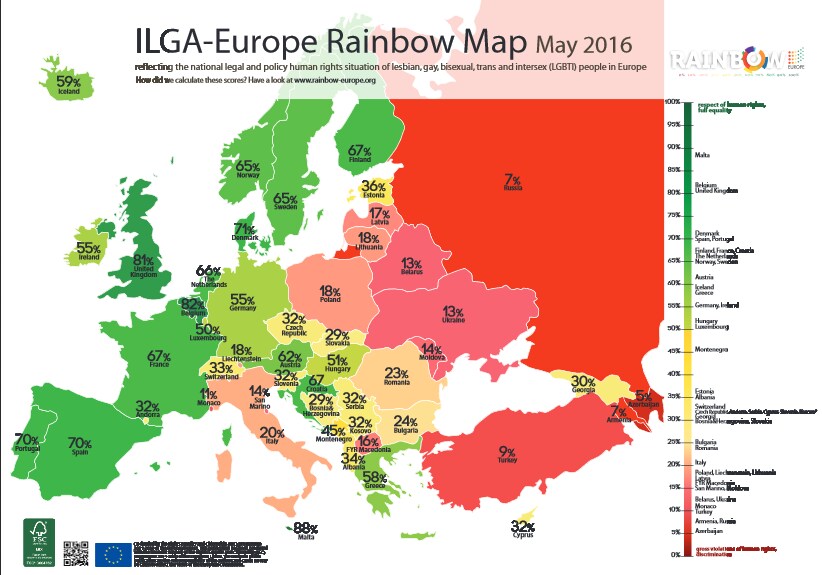
Despite this, Europe still has a long way to go before the entire continent can be described as “gay friendly”.
As the ILGA’s (International Lesbian, Gay, Bisexual, Trans and Intersex Association) Rainbow Map 2016 shows, some countries, particularly in Eastern Europe, have low levels of equality.
Pitman notes that LGBT rights, including same-sex marriage, are progressing in many countries with an overall shift towards a world that is more accepting of LGBT people.
However, same sex-relationships are still illegal in more than 70 countries and punishable by death in as many as 10.