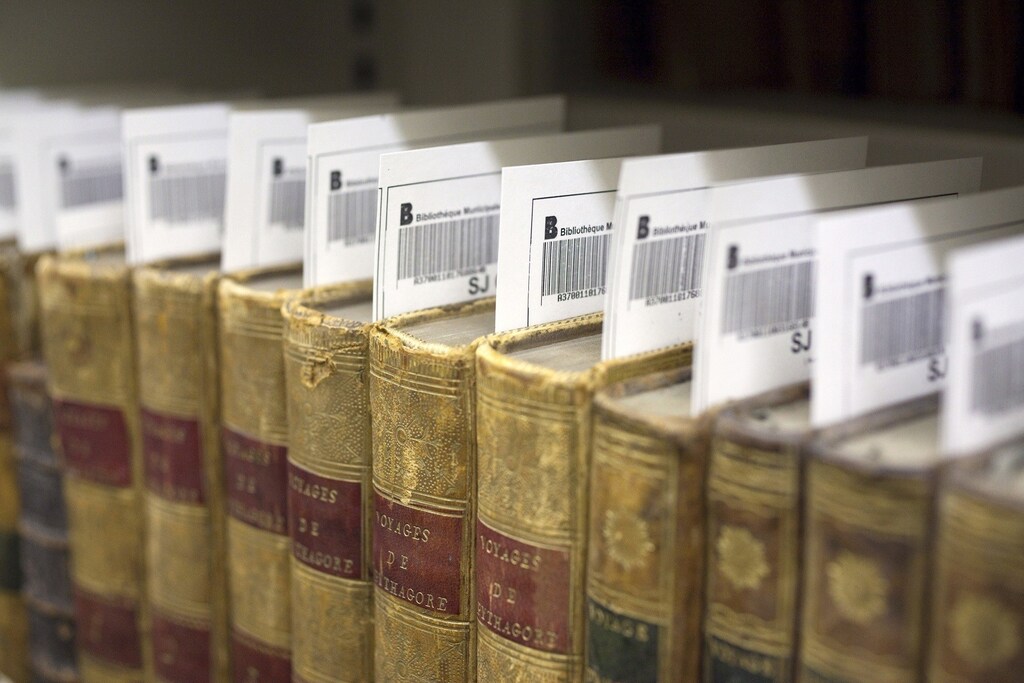
Books that are centuries old are often too delicate for museums to open, read, or explore without causing damage.
But a new camera developed by a team of MIT researchers can read these books without ever touching them.
"I wanted to know how deeply you could read a closed book, because no one has ever tried that," researcher Barmark Heshmat said in a video published by the MIT Media Lab.
A paper about the new camera was published in "Nature Communication" and notes that it uses terahertz radiation, which falls between the microwave and infrared spectrums.
When the radiation passes through the pages of a given book, it causes a pulse to bounce back towards the device at a certain frequency. Terahertz radiation reacts differently when it confronts different chemicals, so the camera uses a complicated algorithm to measure, interpret and translate those frequencies to distinguish the words.
The camera is so sensitive that it can also measure how long it takes the radiation to reach the various gaps between pages, thereby determining which content falls on certain pages.
The research team included Barmak Heshmat, Ramesh Raskar, and Albert Redo Sanchez from MIT, and Justin Romberg and Alireza Aghasi from Georgia Tech. The camera's prototype can currently tell the difference between 20 pages and read the content on the first nine of those pages.
The researchers plan to refine the camera so that it can eventually read an entire book without ever flipping open the cover.