The Turing test, developed by the computer scientist Alan Turing in 1950, gauges a machine's ability to exhibit intelligent behavior equivalent to, or indistinguishable from, that of a human.
Here’s what happens when human and machine are pitted against each other in an imaginary poetry contest. The second part is written by the poet, in the style of a poetry bot.
The Alan Turing Prize for Poetry
I – The Poet
On Competing Against a Poetry Bot
The whole idea is absurd.
It cannot feel
the rightness or wrongness of words
like I,
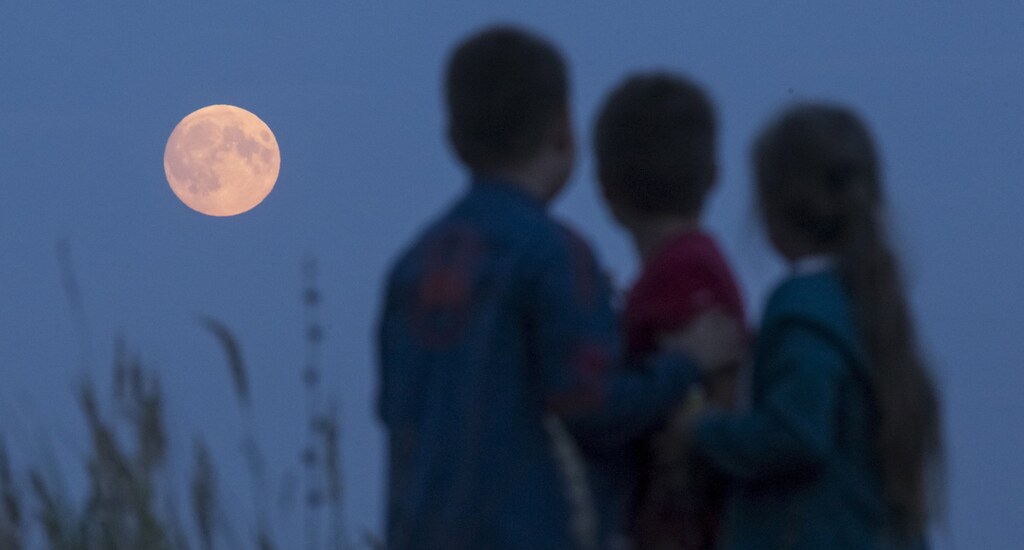
nor describe the moon which hangs
in the changing night sky
as a pancake
as a bruised knee
as a scraped plate.
Reader, such things are innate,
arrive in the brain unbidden,
uncaptured by an algorithm,
irreducible to formula,
not a racket of tuneless words
played out by some school-hall orchestra
without its dear conductor.
Each word in this poem has been
carefully deliberated, hard won,
is not simply one
of the many permutations
which might make up a poem.
That’s not the same as poetry, clearly.
It’s no contest really.
II – The Poetry Bot
On Competing Against a Poet
A poem is like the tuneless night,
hard-bruised by the rightness
of an uncaptured algorithm
which hangs simply in sky,
as irreducible as a plate in a school-hall,
or one clearly-scraped knee.
A poem is absurd, a pancake formula
to describe the many permutations
of the moon, not deliberated in the brain
by a carefully-changing orchestra;
its has-been conductor cannot make up words.
As such, each word is played out whole,
unbidden, not without racket,
nor wrongness. Words arrive;
are innate things which feel (as some might not!).
That’s it. No, really - it’s the same idea.
Of the poetry contest?
This, dear reader, I won.
Brian Bilston, who has been described as the "unofficial Poet Laureate of Twitter," is writing a series of poems for the World Economic Forum on the theme of the Fourth Industrial Revolution. His first collection of poems, You Took the Last Bus Home, will be published by Unbound in October.