Around 3,700 years ago one of the earliest recorded works of literature was being carved into clay tablets in what is today southern Iraq. The Babylonian Epic of Gilgamesh is a narrative poem which tells the story of a king’s search for immortality.
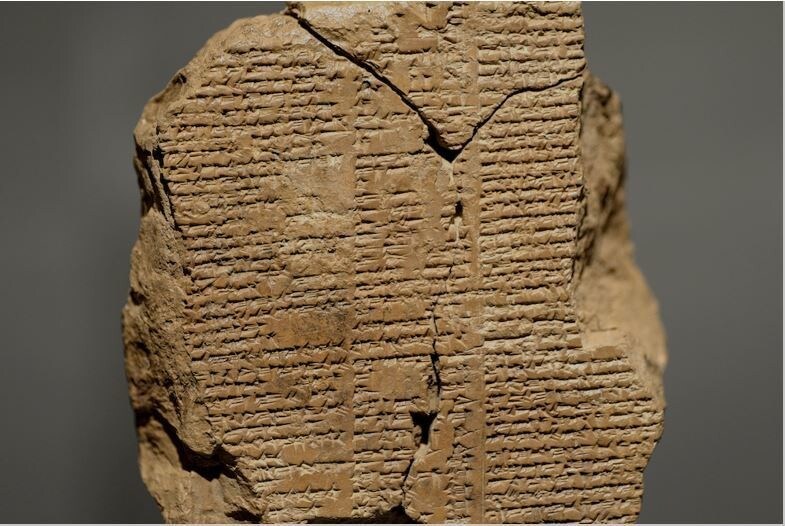
Researchers at the British Museum, which houses some of the tablets, say it’s likely that only the Babylonian elite could read the poem. Almost 4,000 years later, the unknown author might expect a much wider audience.
The Age of Literacy
UNESCO researchers say that globally, 91% of people aged between 15 and 24 are literate. Fifty years after the first World Literacy Day it seems there’s plenty to celebrate. Much of the progress can be put down to compulsory education and access to schools in developing nations. But despite that progress there’s still work to be done.
UNESCO figures show there are still 758 million adults who are illiterate. Two thirds of them are female. In sub-Saharan Africa, just 65% of young women can read. Breaking the link between poverty and illiteracy is still a major challenge.
The world’s most literate countries
A new ranking system devised by researchers at the Central Connecticut State University has identified what are said to be the world’s most literate nations. Countries are graded on the quality of education but also on ‘literary behaviours’ which include computer ownership, the provision and use of libraries and whether people read newspapers.
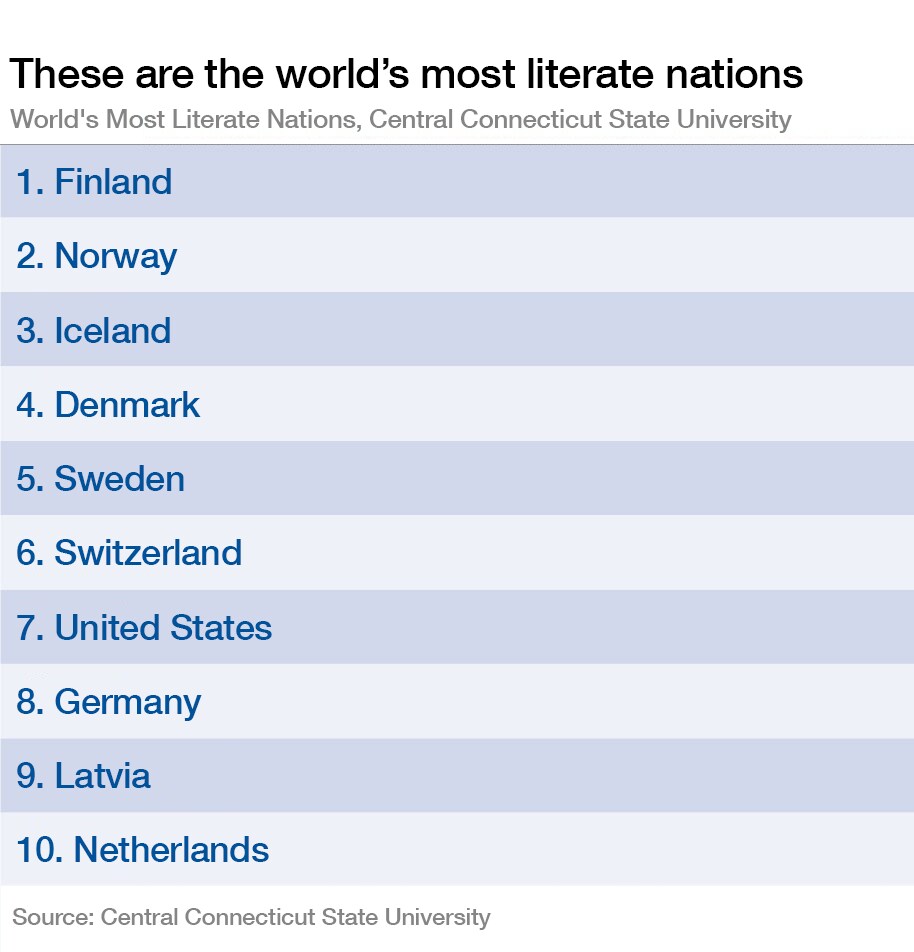
Finland tops the rankings followed by Norway, Iceland, Denmark and Sweden. The Nordic states all score well on educational performance, newspaper readership and computer ownership.
The United States is ranked in seventh place. Educational provision and delivery is strong but the USA does less well with its library service which is outranked by the tiny Mediterranean island of Malta.
At the bottom of the rankings of 61 countries is Botswana in southern Africa. Despite beating 20 other countries on the education scores its ‘literacy behaviours’ are dragged down by very low computer ownership and the number of people reading newspapers.
On the 50th anniversary of the first World Literacy Day, Irina Bokova, UNESCO’s director general is renewing the commitment made five decades ago.
"The world has changed since 1966, but our determination to provide every woman and man with the skills, capacities and opportunities to become everything they wish, in dignity and respect, remains as firm as ever. Literacy is a foundation to build a more sustainable future for all," she said.
Have you read?
Which countries have the best literacy and numeracy rates?
Youth literacy has improved most in these countries
Could digital tools foster literacy?


