参照《世界发展报告》(2012),我们从三类角度讨论可以改变上学成本的政策:(i)直接成本;(ii)间接成本;(iii)机会成本。
在撒哈拉以南非洲各地推出的“普及(免费)初等教育”倡议使入学人数大幅跃升,女孩在小学阶段的入学差距因此得以缩小。例如,冈比亚针对中学开展的大规模学费减免计划提高了入学与学习机会,且男女生同样受益(Blimpo, Gajigo, and Pugatch 2014)。取消公立部门学费,可能会在更大的教育部门中引发连锁调整:一方面增加贫困家庭的入学机会,另一方面促使较富裕家庭的子女转入私立学校;而私立学校即便属于低成本类型,其表现通常也优于公立学校(Bold et al. 2011; Lucas & Mbiti 2012; Bold, Kimenyi, and Sandefur 2013; and Adelman & Holland 2015)。这些证据引出一个问题:若目标是降低优质教育的成本,政府应当取消公立学校的学费,还是补贴所有获得认证的学校?通过补贴学习用品降低上学的直接成本同样可以奏效:例如,肯尼亚一项低成本计划为六年级学生提供校服,减少了辍学现象,并提高了男女生的受教育程度(Duflo, Dupas, and Kremer 201X。然而,同样在肯尼亚,提供教科书并未带来学业上的任何改善,唯一的例外是基线时最优秀的学生(Glewwe, Moulin, and Kremer 2009)。
近期证据还表明,降低上学的间接成本可以显著缩小入学和考试成绩方面的性别差距。所谓“女生友好型学校”的建设是提高入学机会的一种高效手段,其途径包括:在村庄内建校,尤其是在少数群体或边缘化群体聚居地区(Burde & Linden 2013; Jacoby & Mansuri 2011; and Kazianga et al. 2013);兴建女子中学(Andrabi, Das, and Khwaja 2013);建设配备女生友好设施的学校(Kazianga et al. 2013);或为女生提供安全的交通,例如提供自行车(Muralidharan & Prakash, 2014)。
最后,减少女生上学的机会成本,同样有助于提高入学机会。在发展中国家,女孩的时间面临多种相互竞争的用途,因此无论是绝对意义上,还是相对于男孩而言,她们上学的机会成本都更高。例如,在许多国家,取水常常是青春期女孩的工作;有估计表明,在多个不同国家,缩短取水距离或提供管道供水,将显著缩小男女生之间的入学差距(World Bank 2011)。同样,照顾年幼的兄弟姐妹也与上学时间相冲突:开设社区日间托儿中心可以提高10至15岁儿童的出勤率(Martinez, Naudeau, and Pereira 2012)。在许多国家,尤其是拉丁美洲和南亚,童工是上学的主要替代选择。劳动力市场工资上涨会增加童工现象,且其影响通常对男孩比对女孩更大;然而,禁止童工可能适得其反,实际上会降低儿童工资并增加童工的普遍程度(Bharadwaj, Lakdawala, and Li 2013)。另一方面,有一些初步证据表明,在孟加拉国,服装产业禁止童工之后,该产业的扩张在提高女生受教育程度方面更为有效(Heath and Mobarak 2015)。最后,世界许多地区对年轻新娘的高需求意味着,推迟结婚的年轻女性可能在婚姻市场上付出代价,表现为更高的嫁妆价格或更差的丈夫人选(Field and Ambrus 2008)。孟加拉国一项计划的初步结果显示:该计划为15至17岁女孩的家庭提供食用油(足以抵偿因推迟结婚而增加的嫁妆),条件是女孩须保持未婚直至18岁;结果表明,女孩完成的最高年级有所提高,数学和读写测试成绩也有所提升(Glennerster et al. 2007; Bakhtiar 2014)。
下一篇(周一,10月26日):第三部分:消除家庭约束
参考文献
Adelman, Melissa A., and Peter A. Holland, “Increasing Access by Waving Tuition,”世界银行政策研究工作论文第7175号,2015。
Andrabi, Tahir, Jishnu Das, and Asim Ijaz Khwaja, “Students Today, Teachers Tomorrow: Identifying Constraints on the Provision of Education,” Journal of Public Economics,100(2013): 1-14。
Bakhtiar, Mehrab Bin, “Report on “Issues in Education and Health: Policy Insights from Evidence Based Research” – a seminar organized by the International Growth Centre,”获取地址: http://www.theigc.org/wp-content/uploads/2014/08/Report-Dhaka-IGC-seminar.pdf
Bharadwaj, Prashant, Leah Lakdawala, and Nicolas Li, “Perverse Consequences of Well-Intentioned Regulation: Evidence from India’s Child Labor Ban,”NBER工作论文第19602号,2013。
Blimpo, Moussa P., Ousman Gajigo, and Todd Pugatch, “Financial Constraints and Girls Post-Primary Education: Evidence from a School Fee Elimination Program in Gambia,”IZA讨论论文第9129号,2015。
Bold, Tessa, Mwangi Kimenyi, Germano Mwabu, and Justin Sandefur, “Why Did Abolishing Fees not Increase Public School Enrollment in Kenya?”CGD工作论文第271号,2011。
Bold, Tessa, Mwangi Kimenyi, and Justin Sandefur, “Public and Private Provision of Education in Kenya,” Journal of African Economies,22(2013): ii39-ii56。
Burde, Dana, and Leigh L. Linden, “Bringing Education to Afghan Girls: A Randomized Controlled Trial of Village-Based Schools” American Economic Journal: Applied Economics,5(2013): 27-40。
Duflo, Esther, Pascaline Dupas, and Michael Kremer, “Education, HIV, and Early Fertility: Experimental Evidence from Kenya,” American Economic Review, 即将发表。
Field, Erica, and Attila Ambrus, “Early Marriage, Age of Menarche, and Female Schooling Attainment in Bangladesh,” Journal of Political Economy,116(2008): 881-930。
Glennerster, Rachel, Erica Field, and Shahana Nazneen Sayeed, “Age at Marriage, Women’s Education, and Mother and Child Outcomes in Bangladesh,”3ie影响评估研究:http://www.3ieimpact.org/evidence/impact-evaluations/details/5/
Glewwe, Paul, Michael Kremer, and Sylvie Moulin, “Many Children Left Behind? Textbooks and Test Scores in Kenya,” American Economic Journal: Applied Economics,1(2009): 112-35。
Heath, Rachel, and A. Mushfiq Mobarak, “Manufacturing Growth and the Lives of Bangladeshi Women,” Journal of Development Economics,115(2015): 1-15。
Jacoby, Hanan G., and Ghazala Mansuri, “Crossing Boundaries : Gender, Caste and Schooling in Rural Pakistan,”世界银行政策研究工作论文第5710号,2011。
Kazianga, Harounan, Dan Levy, Leigh L. Linden, and Matt Sloan, “The Effects of “Girl-Friendly” Schools: Evidence from the BRIGHT School Construction Program in Burkina Faso,”American Economic Journal: Applied Economics,5(2013): 41-62。
Lucas, Adrienne M., and Isaac M. Mbiti, “Access, Sorting, and Achievement: The Short-Run Effects of Free Primary Education in Kenya,” American Economic Journal: Applied Economics,4(2012): 226-253。
Martinez, Sebastian, Sophie Naudeau, and Vitor Pereira, “The Promise of Preschool in Africa: A Randomized Impact Evaluation of Early Childhood Development in Rural Mozambique,”3ie系列报告,2012: http://www.3ieimpact.org/evidence/impact-evaluations/details/106/。
Muralidharan, Karthik, and Nishith Prakash, “Cycling to School: Increasing Secondary School Enrolment for Girls in India, ” NBER工作论文第19305号,2014。
世界银行,“《2012年世界发展报告:性别平等与发展》”,华盛顿特区,世界银行,2011。
本文首次发表于 The World Bank Development Impact Blog。
刊发本文并不意味着世界经济论坛认同其中观点。
如需及时了解议程动态, 请订阅我们的每周电子通讯。
作者:Berk Özler,发展研究小组贫困板块高级经济学家。
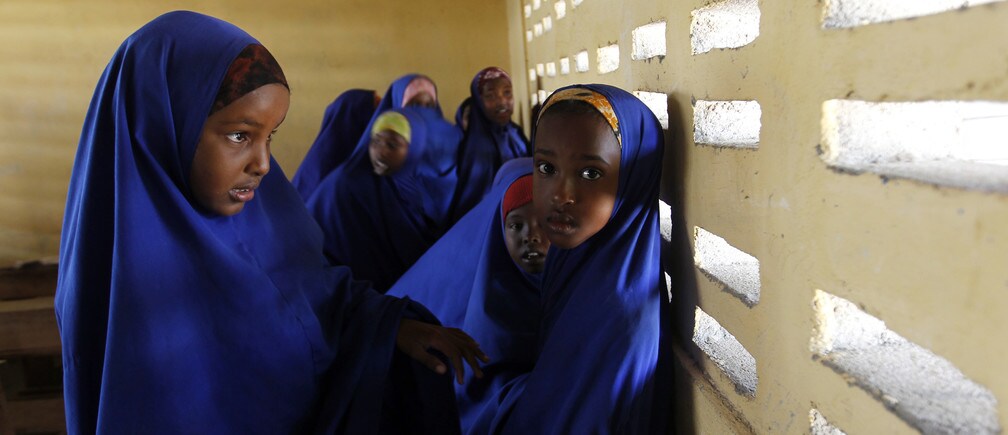
图片:女孩们站在位于多布利镇的一所小学教室内,该镇距肯尼亚与索马里边境10公里(6英里)。REUTERS/Thomas Mukoya